Osaka Gas Transforms AI into Capable Subordinate
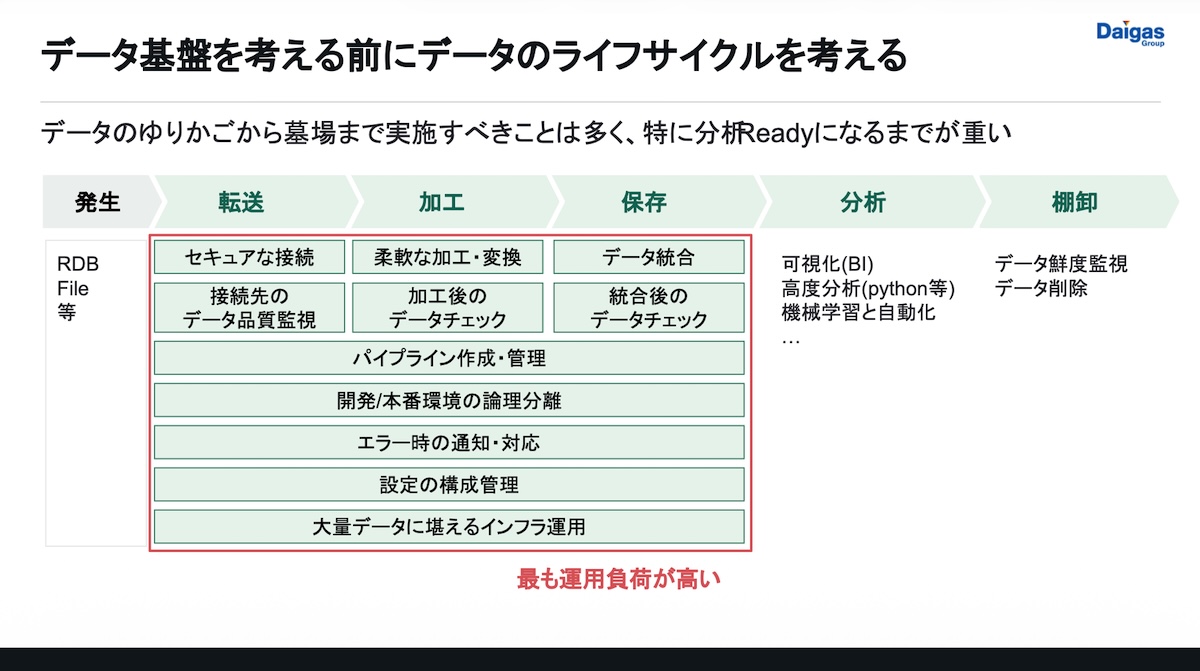
💡Learn how energy giant uses gen AI as 'subordinate' for agile data ops (enterprise blueprint)
⚡ 30-Second TL;DR
What Changed
Osaka Gas faces intensified competition in energy industry
Why It Matters
This showcases enterprise adoption of gen AI for operational efficiency, potentially inspiring similar strategies in traditional industries to boost competitiveness via data platforms.
What To Do Next
Review Osaka Gas case study for gen AI integration in enterprise data pipelines.
Key Points
- •Osaka Gas faces intensified competition in energy industry
- •Building AI-driven data platform for business growth
- •Uses generative AI as 'capable subordinate' for agility
🧠 Deep Insight
AI-generated analysis for this event — not the original article.
🔑 Enhanced Key Takeaways
- •Osaka Gas utilizes a proprietary 'Data Utilization Platform' that integrates internal siloed data with generative AI to automate routine reporting and complex data analysis tasks previously requiring manual intervention.
- •The initiative focuses on 'democratizing data' by enabling non-technical staff to query complex energy consumption and infrastructure datasets using natural language, significantly reducing the burden on the IT department.
- •The company has implemented a strict 'human-in-the-loop' governance framework to ensure that AI-generated insights regarding gas infrastructure safety and maintenance scheduling are verified by domain experts before execution.
🛠️ Technical Deep Dive
- •Architecture: Employs a RAG (Retrieval-Augmented Generation) framework to ground LLM outputs in Osaka Gas's specific operational manuals and historical maintenance logs.
- •Data Integration: Utilizes a centralized data lakehouse architecture to unify disparate data streams from IoT sensors, customer billing systems, and field service management software.
- •Security: Implements a private cloud deployment of LLMs to ensure sensitive infrastructure data does not leave the corporate environment, adhering to strict Japanese energy sector cybersecurity guidelines.
🔮 Future ImplicationsAI analysis grounded in cited sources
⏳ Timeline
Weekly AI Recap
Read this week's curated digest of top AI events →
👉Related Updates
AI-curated news aggregator. All content rights belong to original publishers.
Original source: ITmedia AI+ (日本) ↗
This is a summary, not the original. Read the source, or get the weekly briefing.
The weekly digest
One email a week. Unsubscribe anytime.