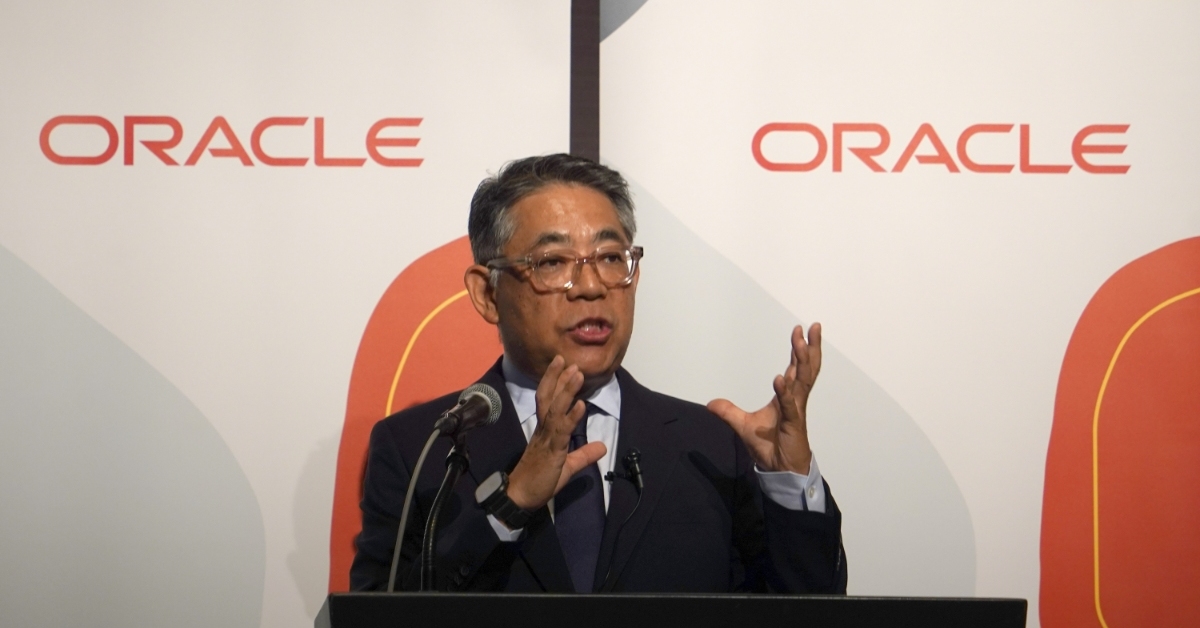
Oracle Japan CEO: 90% of IT budget lost to overhead
💡Understand the economic barriers preventing enterprise AI adoption and how to optimize IT budgets.
⚡ 30-Second TL;DR
What Changed
90% of IT budget is currently tied to maintenance and personnel costs
Why It Matters
Companies failing to modernize their IT stack will likely be unable to afford the compute costs required for modern AI initiatives.
What To Do Next
Audit your current IT spend to identify how much is 'maintenance' vs 'innovation' to justify cloud migration.
Key Points
- •90% of IT budget is currently tied to maintenance and personnel costs
- •Legacy on-premise systems hinder digital transformation and AI adoption
- •Shift to cloud-native infrastructure is essential for competitive AI investment
🧠 Deep Insight
AI-generated analysis for this event — not the original article.
🔑 Enhanced Key Takeaways
- •The '90% overhead' figure is frequently cited by Japanese government reports, specifically the Ministry of Economy, Trade and Industry (METI) '2025 Digital Cliff' report, which warned that legacy systems could cause economic losses of up to 12 trillion yen per year.
- •Oracle Japan is aggressively positioning its 'Oracle Cloud Infrastructure (OCI) Dedicated Region' as the primary solution for Japanese firms, allowing them to maintain data sovereignty while offloading maintenance overhead.
- •Japanese enterprises face a unique 'vendor lock-in' challenge where custom-built legacy systems are often maintained by third-party system integrators (SIs) rather than internal IT teams, complicating the transition to cloud-native architectures.
- •Oracle's strategy involves integrating AI-driven automation into their cloud management tools to specifically reduce the 'run' costs (maintenance) that currently consume the majority of the IT budget.
- •Recent industry surveys indicate that while Japanese firms are increasing their total IT spending, the ratio of 'new investment' versus 'maintenance' has remained stagnant for over a decade, highlighting the difficulty of breaking the legacy cycle.
📊 Competitor Analysis▸ Show
| Feature | Oracle Cloud (OCI) | AWS | Microsoft Azure |
|---|---|---|---|
| Legacy Migration Focus | High (Dedicated Regions) | Moderate (VMware Cloud) | High (Azure Arc) |
| AI Infrastructure | Integrated AI/ML Stack | SageMaker/Bedrock | OpenAI/Copilot Stack |
| Pricing Model | Consumption-based/Predictable | Consumption-based | Consumption-based |
| Target Market | Enterprise/Government | Broad/Developer-centric | Enterprise/Hybrid |
🛠️ Technical Deep Dive
- Oracle Cloud Infrastructure (OCI) utilizes a distributed cloud architecture that allows for 'Dedicated Regions' where the full suite of OCI services runs within a customer's own data center.
- The shift to cloud-native involves moving from monolithic legacy applications to microservices architectures orchestrated via OCI Container Engine for Kubernetes (OKE).
- Oracle's AI infrastructure relies on high-performance RDMA (Remote Direct Memory Access) clusters using NVIDIA GPUs to minimize latency in large-scale model training.
- Automation of legacy maintenance is facilitated by Oracle Autonomous Database, which uses machine learning to automate patching, tuning, and backups, effectively reducing human-led overhead.
🔮 Future ImplicationsAI analysis grounded in cited sources
⏳ Timeline
Weekly AI Recap
Read this week's curated digest of top AI events →
👉Related Updates
AI-curated news aggregator. All content rights belong to original publishers.
Original source: ITmedia AI+ (日本) ↗
This is a summary, not the original. Read the source, or get the weekly briefing.
Weekly AI briefing
One email a week. Unsubscribe anytime.