OpenClaw Ignites AI Agent FOMO Craze
💡Open-source agent hyped like Linux; master token optimization before costs explode.
⚡ 30-Second TL;DR
What Changed
Tencent hosts free installs with thousands queuing; Pony Ma posts surprise at popularity.
Why It Matters
Drives hardware market shifts toward storage/CPU; redefines productivity KPIs via Token usage; early hype risks cost overruns for adopters.
What To Do Next
Deploy OpenClaw on a high-storage machine and monitor Token burn rate during initial autonomous tasks.
Key Points
- •Tencent hosts free installs with thousands queuing; Pony Ma posts surprise at popularity.
- •Nvidia CEO Huang compares OpenClaw to Linux at conferences.
- •Users report 1200万 Token weekly costs; data traces fill hard drives quickly.
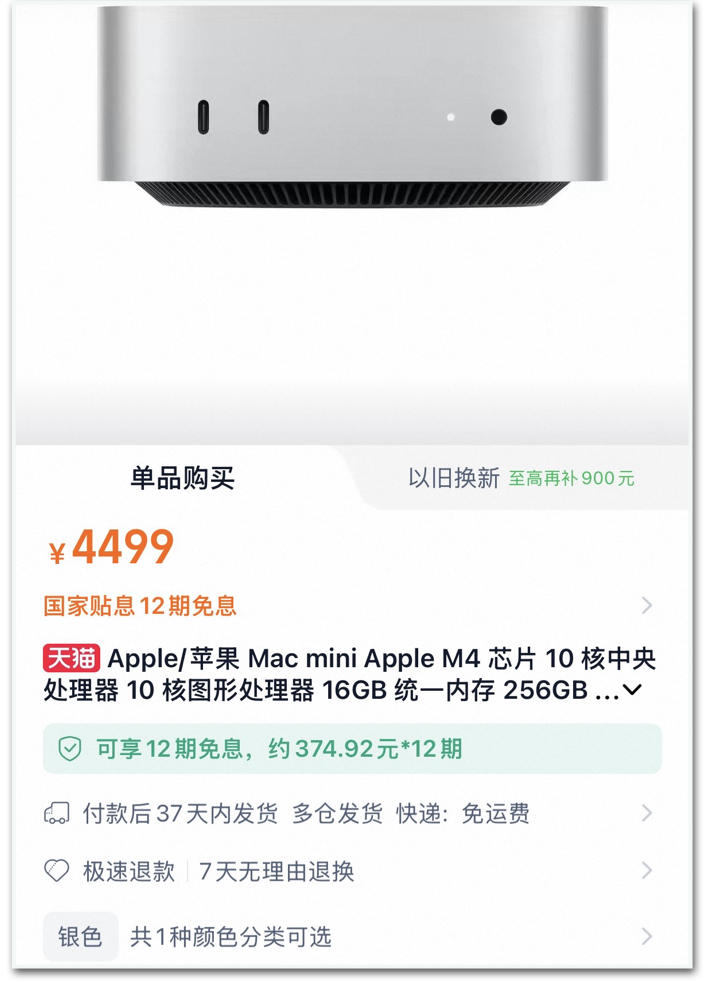
- •Global memory shortages projected to 2030 due to inference workloads.
- •Agent's open-domain endless loop consumes tokens like a 'gold-eating beast'.
🧠 Deep Insight
AI-generated analysis for this event — not the original article.
🔑 Enhanced Key Takeaways
- •The 'Linux Moment' for Agents: The comparison to Linux by Nvidia's CEO highlights a shift from centralized, closed-loop AI to open-source 'Agentic Operating Systems' that allow local execution and custom tool integration, bypassing the restrictions of proprietary platforms.
- •The Inference-to-Memory Bottleneck: Unlike LLM training which is compute-bound (GPU-heavy), 24/7 autonomous agents are memory-bound. They require massive high-speed RAM (LPDDR5X/HBM) to maintain 'live' context of the OS state and multi-step planning logs, driving the projected 2030 memory shortage.
- •Agentic Debris Management: The 'data garbage' mentioned refers to 'telemetry bloat'—millions of intermediate screenshots and JSON state-logs generated by Vision-Language Models (VLMs) to 'see' the screen. Current frameworks lack automated pruning, leading to the reported storage overload.
- •Token-Burn Economy: At current SOTA rates (e.g., using Claude 3.5 or GPT-4o backends), a high-frequency agent costs approximately $0.10 to $0.50 per action. A 24/7 operation at one action per minute can exceed $10,000 monthly, creating a massive market for 'Small Language Model' (SLM) local inference.
📊 Competitor Analysis▸ Show
| Feature | OpenClaw | Manus AI | Microsoft UFO | OpenDevin / OpenHands |
|---|---|---|---|---|
| License | Open Source | Proprietary | Open Source | Open Source |
| Primary Goal | General OS Operation | General Task Solving | Windows UI Automation | Software Engineering |
| Architecture | VLM + Action Mapping | Black-box Generalist | GPT-4V + Windows API | ReAct + Code Sandbox |
| Platform | Cross-platform | Web/Cloud | Windows Only | OS Agnostic (Docker) |
| Cost Model | Token-based (BYO Key) | Subscription/Usage | Token-based (BYO Key) | Token-based (BYO Key) |
🛠️ Technical Deep Dive
Detailed technical architecture for autonomous computer agents like OpenClaw typically includes:
- Multimodal Perception Layer: Uses Vision-Language Models (VLMs) to parse UI screenshots into structured metadata (coordinates, element types) without requiring source code access.
- Recursive ReAct Loop: Implements a 'Reasoning + Acting' framework where the agent critiques its own previous action and visual feedback before committing to the next step.
- Action Space Mapping: Translates high-level natural language goals into low-level OS primitives (e.g., mouse clicks, keystrokes, CLI commands) via libraries like PyAutoGUI or AppleScript.
- State Persistence & RAG: Utilizes Vector Databases to store and retrieve past 'computer states' and successful workflows to prevent the 'endless loops' common in open-domain tasks.
- Sandboxed Execution: Operates within virtual machines or Docker containers to isolate the agent's autonomous actions from the host system's critical files.
🔮 Future ImplicationsAI analysis grounded in cited sources
Weekly AI Recap
Read this week's curated digest of top AI events →
👉Related Updates

AI-curated news aggregator. All content rights belong to original publishers.
Original source: 虎嗅 ↗
This is a summary, not the original. Read the source, or get the weekly briefing.
The weekly digest
One email a week. Unsubscribe anytime.