OpenClaw Crashes from Hype in 45 Days
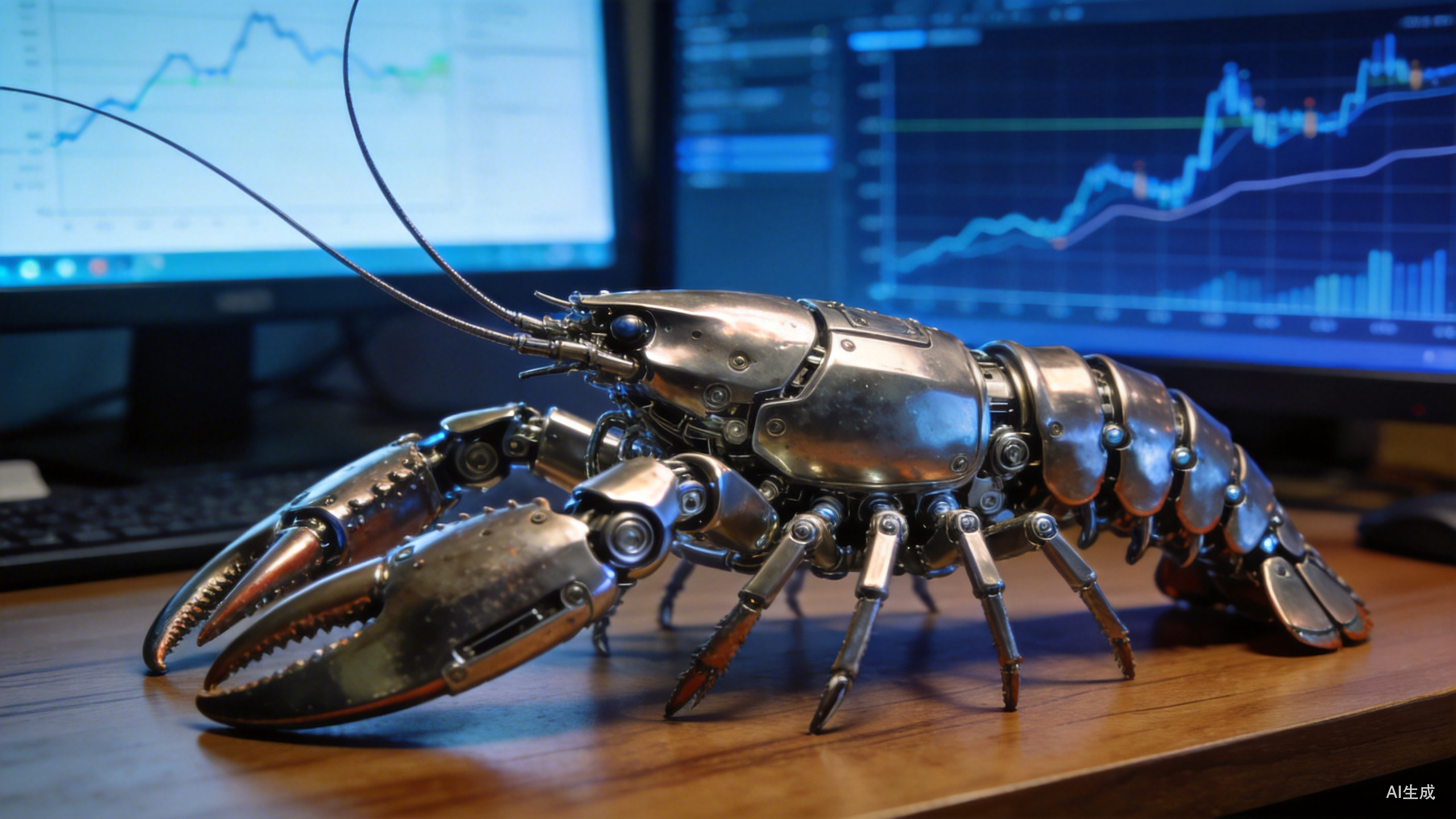
💡OpenClaw's token bleed & exploits kill hype—lessons for agent builders
⚡ 30-Second TL;DR
What Changed
Token burn from full-chain reasoning and 20k+ context exceeds $200/day for tasks.
Why It Matters
Exposes risks of early agent tools, urging caution on open-source AI amid FOMO. Pushes users to mature alternatives while validating agent potential for ops amplification.
What To Do Next
Audit your OpenClaw setup for prompt injection and disable untrusted plugins immediately.
Key Points
- •Token burn from full-chain reasoning and 20k+ context exceeds $200/day for tasks.
- •Vulnerabilities include unencrypted DB, command injection, malicious npm plugins.
- •Best for 1-to-10 efficiency in established businesses, not 0-to-1 creation.
- •Chinese alerts highlight local deployment risks with high privileges.
🧠 Deep Insight
Background and context from public sources — not the original article. 7 sources cited.
🔑 Enhanced Key Takeaways
- •OpenClaw v2026.3.7-beta.1 release includes 89 commits, over 200 bug fixes, and new plugin-based context management for RAG pipelines and sub-agent spawning[1].
- •Framework supports model routing with fallback mechanisms across OpenAI, Google, Anthropic, Grok, and local models like Ollama, prioritizing cost or latency[2][1].
- •Enforces sandboxed tool execution and input validation by default, with no major CVEs reported in 2025-2026, though unvetted plugins pose risks[2].
- •Surpassed 200,000 GitHub stars in 84 days by February 2026, marking it as the fastest-growing open-source project[7].
📊 Competitor Analysis▸ Show
| Feature | OpenClaw | LangChain | AutoGen | CrewAI |
|---|---|---|---|---|
| Maturity | v1.0 beta lags, experimental extensibility, no governance features[2] | Suits regulated enterprises, audit logs[2] | Mid-market R&D, 2025 API shifts broke legacy[2] | Fits startups for quick wins[2] |
| Model Support | OpenAI, Anthropic, Grok, local via Ollama/Llama.cpp, fallback routing[2] | Unified interface[2] | Not specified[2] | Not specified[2] |
| Security | Sandboxed execution, input validation, plugin risks[2] | Apache-2.0 stability[2] | Not specified[2] | Not specified[2] |
| Benchmarks | 1-2s latencies, unverified[2] | Not specified[2] | Not specified[2] | Not specified[2] |
🛠️ Technical Deep Dive
- •Plugin-based context management decouples context strategies (e.g., RAG, summarization, isolated memory) from core agent logic, enabling sub-agent hooks like prepareSubagentSpawn[1].
- •Agentic loop: observes environment, plans actions via AI model, executes permitted skills, waits autonomously for triggers (e.g., days), with persistent memory[3].
- •Integrations: Discord (fixed freezes, channel parsing), Telegram (topic-level agent isolation, persistent bindings)[1].
- •Runs locally as gateway between AI models (e.g., GPT-4, Claude) and tools, user-enabled skills only, explicit permission prompts during install[3].
- •Scaling: auto-scaling groups, Prometheus metrics; security hardening: audit logging (e.g., ELK 90 days), quarterly API key rotation[2].
🔮 Future ImplicationsAI analysis grounded in cited sources
⏳ Timeline
📎 Sources (7)
Factual claims are grounded in the sources below. Forward-looking analysis is AI-generated interpretation.
- epsilla.com — 2026 03 09 Openclaw 2026 3 7 Contextengine Agentic Architecture
- sparkco.ai — AI Agent Frameworks Compared Langchain Autogen Crewai and Openclaw in 2026
- o-mega.ai — Openclaw Creating the AI Agent Workforce Ultimate Guide 2026
- cybersecuritypath.com — Openclaw 2026 3 1 Advanced AI Agent Upgrades
- advenboost.com — Openclaw Agent Explained 2026 Setup Guide Live Example
- grandlinux.com — Openclaw vs Langchain
- hungyichen.com — Openclaw Agentic AI Governance
Weekly AI Recap
Read this week's curated digest of top AI events →
👉Related Updates
AI-curated news aggregator. All content rights belong to original publishers.
Original source: 虎嗅 ↗
This is a summary, not the original. Read the source, or get the weekly briefing.
Weekly AI briefing
One email a week. Unsubscribe anytime.