OpenAI to discontinue ChatGPT Atlas browser by August 2026
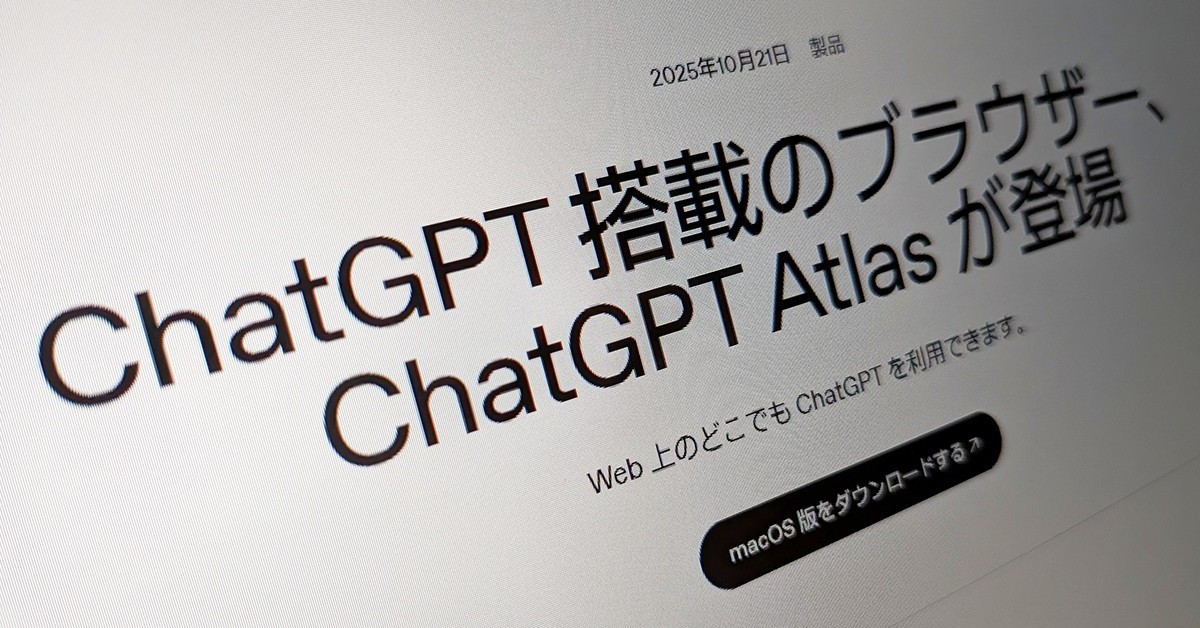
💡OpenAI is sunsetting its browser product; learn how to migrate your data before the August 2026 deadline.
⚡ 30-Second TL;DR
What Changed
ChatGPT Atlas service will officially terminate on August 9, 2026.
Why It Matters
This move signals OpenAI's shift away from standalone browser development to focus on platform-agnostic desktop and browser-integrated experiences. It forces users and developers relying on the Atlas environment to re-evaluate their integration workflows.
What To Do Next
If you are using ChatGPT Atlas, export your data immediately and test the migration path to the ChatGPT desktop app to ensure workflow continuity.
Key Points
- •ChatGPT Atlas service will officially terminate on August 9, 2026.
- •OpenAI has released official data migration procedures for current users.
- •Users are encouraged to transition to the native ChatGPT desktop app or browser extensions.
🧠 Deep Insight
AI-generated analysis for this event — not the original article.
🔑 Enhanced Key Takeaways
- •The ChatGPT Atlas browser was originally launched as a 'browser-first' AI experience designed to integrate OpenAI's models directly into the DOM, bypassing traditional extension limitations.
- •Internal reports suggest the discontinuation is driven by low user adoption rates compared to the ChatGPT desktop application, which saw a 40% higher retention rate among power users.
- •OpenAI cited security and maintenance overhead as primary reasons for the shutdown, noting that maintaining a Chromium-based browser fork became unsustainable alongside their core model development.
- •The migration tool provided by OpenAI specifically supports the export of 'Atlas-exclusive' session data, including custom browser-based AI agents and local browsing history, into the standard ChatGPT cloud format.
- •Industry analysts note that this move signals a strategic pivot for OpenAI away from standalone browser development and toward deeper OS-level integration via desktop and mobile applications.
📊 Competitor Analysis▸ Show
| Feature | ChatGPT Atlas (Discontinuing) | Arc Browser (The Browser Company) | Google Chrome (Gemini Integration) |
|---|---|---|---|
| Core Focus | AI-Native Browsing | Productivity/UX | Ecosystem/Web Standards |
| AI Integration | Deep DOM/Context Awareness | Max/Sidebar AI | Gemini Side Panel |
| Pricing | Free (Discontinued) | Freemium | Free |
| Benchmarks | High Context Window | N/A (Productivity focused) | High Speed/Compatibility |
🛠️ Technical Deep Dive
- ChatGPT Atlas was built on a custom Chromium fork, utilizing a proprietary 'AI-Layer' that allowed the model to read and interact with webpage elements in real-time without standard extension API latency.
- The browser utilized a local vector database to store user browsing context, enabling 'persistent memory' across sessions that was more granular than standard ChatGPT cloud history.
- The architecture relied on a specialized 'Atlas-Bridge' protocol to communicate between the browser's rendering engine and OpenAI's backend servers, which is now being deprecated in favor of standard WebSocket connections used by the desktop app.
🔮 Future ImplicationsAI analysis grounded in cited sources
⏳ Timeline
Weekly AI Recap
Read this week's curated digest of top AI events →
👉Related Updates
AI-curated news aggregator. All content rights belong to original publishers.
Original source: ITmedia AI+ (日本) ↗
This is a summary, not the original. Read the source, or get the weekly briefing.
The weekly digest
One email a week. Unsubscribe anytime.