📋TestingCatalog•Stalecollected in 16m
OpenAI Launches Realtime Voice & Translation Models
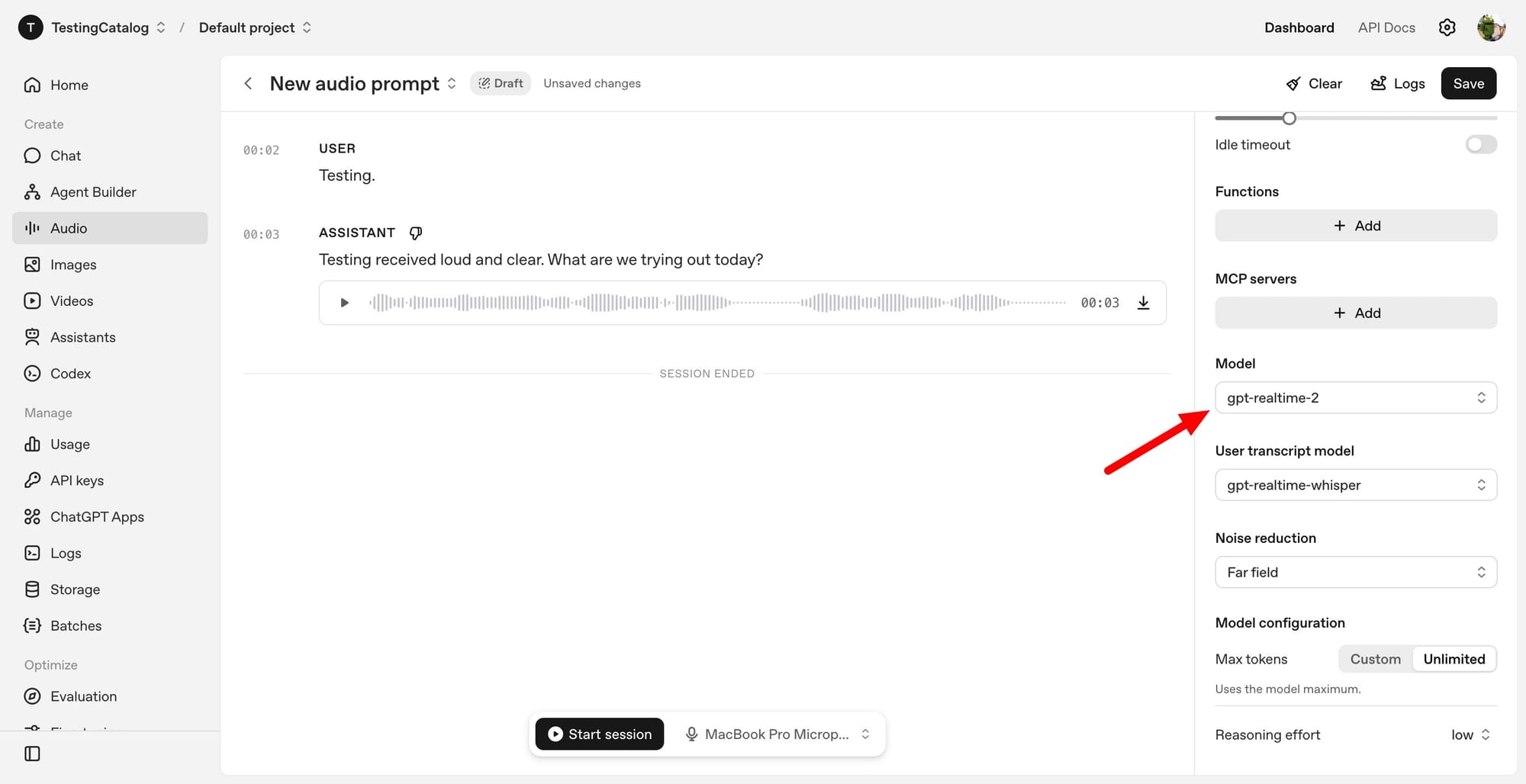
💡OpenAI's 3 new real-time audio models unlock live voice agents & instant translation via API—devs, integrate now!
⚡ 30-Second TL;DR
What Changed
Introduces three real-time audio models
Why It Matters
This launch accelerates development of real-time voice applications, lowering barriers for building multilingual agents and transcription tools. It positions OpenAI as a leader in audio AI, impacting competitive voice tech landscapes.
What To Do Next
Test OpenAI's new real-time audio API endpoints for voice agent prototypes.
Who should care:Developers & AI Engineers
Key Points
- •Introduces three real-time audio models
- •Supports live voice agents for developers
- •Enables instant translation capabilities
- •Provides streaming transcription via API
🧠 Deep Insight
AI-generated analysis for this event.
🔑 Enhanced Key Takeaways
- •The models utilize a native multimodal architecture that processes audio input directly without converting it to text first, significantly reducing latency compared to traditional speech-to-text pipelines.
- •Developers can leverage fine-grained control over voice parameters, including emotional inflection and speaking rate, to create more naturalistic conversational agents.
- •The API integration supports low-latency streaming via WebSockets, specifically optimized for real-time bidirectional communication in mobile and web applications.
📊 Competitor Analysis▸ Show
| Feature | OpenAI Realtime | Google Gemini Live | Anthropic Claude (Audio) |
|---|---|---|---|
| Architecture | Native Multimodal | Native Multimodal | Text-to-Text/Vision (External STT) |
| Latency | Ultra-low (ms) | Low | Moderate |
| API Access | Public/Developer | Public/Developer | Limited/Beta |
🛠️ Technical Deep Dive
- Architecture: End-to-end multimodal model that maps audio tokens directly to audio tokens, bypassing intermediate transcription steps.
- Latency: Achieves sub-300ms round-trip latency in optimal network conditions.
- Protocol: Full-duplex streaming over WebSockets, allowing for interruption (barge-in) capabilities.
- Input/Output: Supports raw PCM audio streaming for both input and output, with configurable sample rates.
🔮 Future ImplicationsAI analysis grounded in cited sources
Customer service call centers will shift to fully automated, voice-native AI agents by 2027.
The reduction in latency and improvement in emotional nuance make these models indistinguishable from human agents in standard support scenarios.
Real-time translation will become a standard feature in consumer-grade wearable devices.
The API's ability to handle streaming audio allows for seamless, near-instantaneous cross-language communication without the need for manual push-to-talk interfaces.
⏳ Timeline
2023-09
OpenAI introduces initial voice capabilities for ChatGPT.
2024-05
Launch of GPT-4o, featuring native multimodal audio processing.
2024-10
OpenAI releases Realtime API in beta for developers.
2026-05
OpenAI expands real-time audio model suite with enhanced translation and streaming capabilities.
📰
Weekly AI Recap
Read this week's curated digest of top AI events →
👉Related Updates
AI-curated news aggregator. All content rights belong to original publishers.
Original source: TestingCatalog ↗