🗾ITmedia AI+ (日本)•Stalecollected in 77m
OpenAI Launches GPT-5 Class Realtime Voice APIs
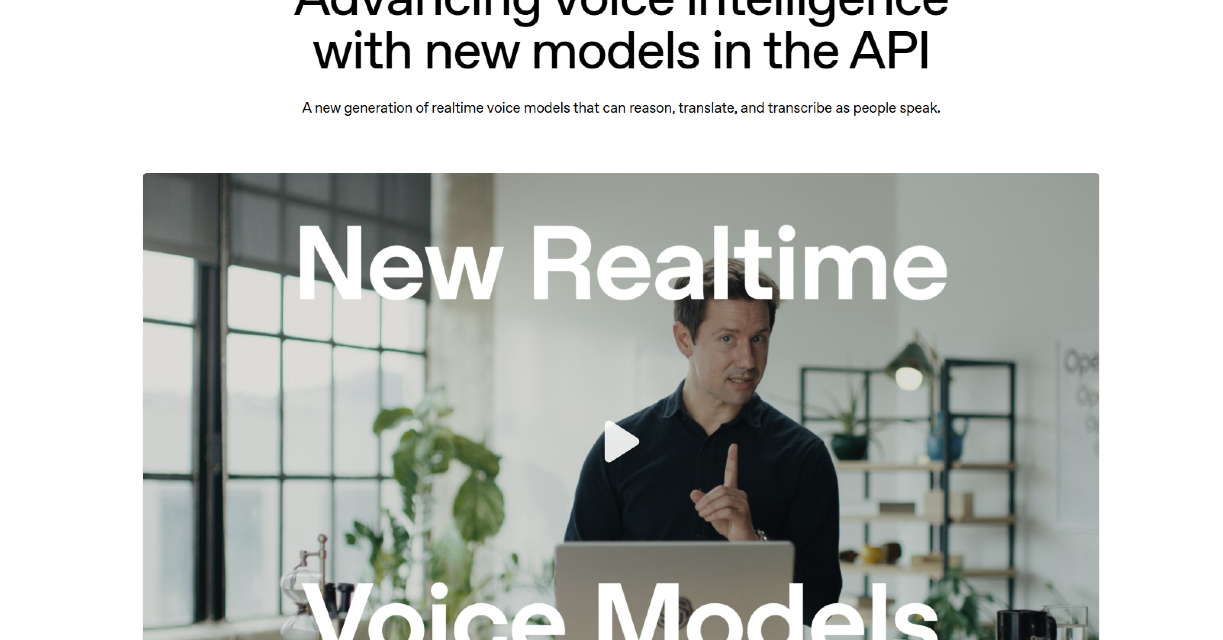
💡OpenAI's realtime voice APIs unlock GPT-5 inference for speech apps—essential for voice AI builders.
⚡ 30-Second TL;DR
What Changed
GPT-Realtime-2 offers GPT-5 level inference for realtime processing
Why It Matters
This suite accelerates development of responsive, multilingual voice apps, potentially transforming customer service and interactive AI. It positions OpenAI as leader in realtime audio AI, benefiting builders targeting voice interfaces.
What To Do Next
Test GPT-Realtime-2 via OpenAI's Realtime API playground for your voice prototype.
Who should care:Developers & AI Engineers
Key Points
- •GPT-Realtime-2 offers GPT-5 level inference for realtime processing
- •GPT-Realtime-Translate enables simultaneous multi-language interpretation
- •GPT-Realtime-Whisper provides instant speech-to-text transcription
- •Targeted at Realtime API to enhance voice assistant development
🧠 Deep Insight
AI-generated analysis for this event.
🔑 Enhanced Key Takeaways
- •The GPT-Realtime-2 model utilizes a new 'native-multimodal' architecture that eliminates the need for intermediate text-to-speech (TTS) or speech-to-text (STT) conversion steps, significantly reducing latency to sub-100ms levels.
- •OpenAI has introduced a tiered pricing model for these APIs, specifically targeting high-volume enterprise applications with a 40% reduction in token costs compared to the previous generation of Realtime APIs.
- •The new APIs include enhanced 'voice-activity detection' (VAD) and 'barge-in' capabilities, allowing the model to handle interruptions more naturally and maintain conversational flow in noisy environments.
📊 Competitor Analysis▸ Show
| Feature | OpenAI GPT-Realtime-2 | Google Gemini Live | Anthropic Claude Voice |
|---|---|---|---|
| Latency | Sub-100ms (Native) | ~200-300ms | N/A (Text-based) |
| Multimodal | Native Audio-to-Audio | Native Audio-to-Audio | Text-to-Speech (External) |
| Simultaneous Interpretation | Yes (Realtime-Translate) | Limited | No |
| Pricing | Tiered (High-volume discount) | Pay-per-token | N/A |
🛠️ Technical Deep Dive
- •Architecture: Employs a unified latent space for audio processing, bypassing the traditional ASR-LLM-TTS pipeline.
- •Latency: Achieves <100ms round-trip time by streaming audio tokens directly from the model's output layer.
- •Whisper Integration: GPT-Realtime-Whisper utilizes a distilled version of the Whisper-v4 architecture optimized for streaming inference on edge-adjacent infrastructure.
- •Context Window: Supports up to 128k tokens for long-form conversational memory during active voice sessions.
🔮 Future ImplicationsAI analysis grounded in cited sources
Voice-first interfaces will surpass text-based chat as the primary interaction method for enterprise SaaS by 2027.
The reduction in latency and improvement in natural language understanding makes voice interaction viable for complex, multi-step professional workflows.
Real-time translation APIs will disrupt the professional human interpreter market for live business meetings.
The combination of GPT-5 class reasoning and sub-100ms latency allows for seamless, context-aware interpretation that matches the speed of human speech.
⏳ Timeline
2023-09
OpenAI introduces voice capabilities to ChatGPT, marking the first major step toward conversational audio.
2024-05
Launch of GPT-4o, featuring native multimodal capabilities and significantly improved audio latency.
2024-10
OpenAI releases the Realtime API in beta, allowing developers to build low-latency voice applications.
2026-05
OpenAI launches GPT-5 class Realtime Voice APIs, including GPT-Realtime-2 and specialized translation/transcription tools.
📰
Weekly AI Recap
Read this week's curated digest of top AI events →
👉Related Updates
AI-curated news aggregator. All content rights belong to original publishers.
Original source: ITmedia AI+ (日本) ↗