📋TestingCatalog•Stalecollected in 8m
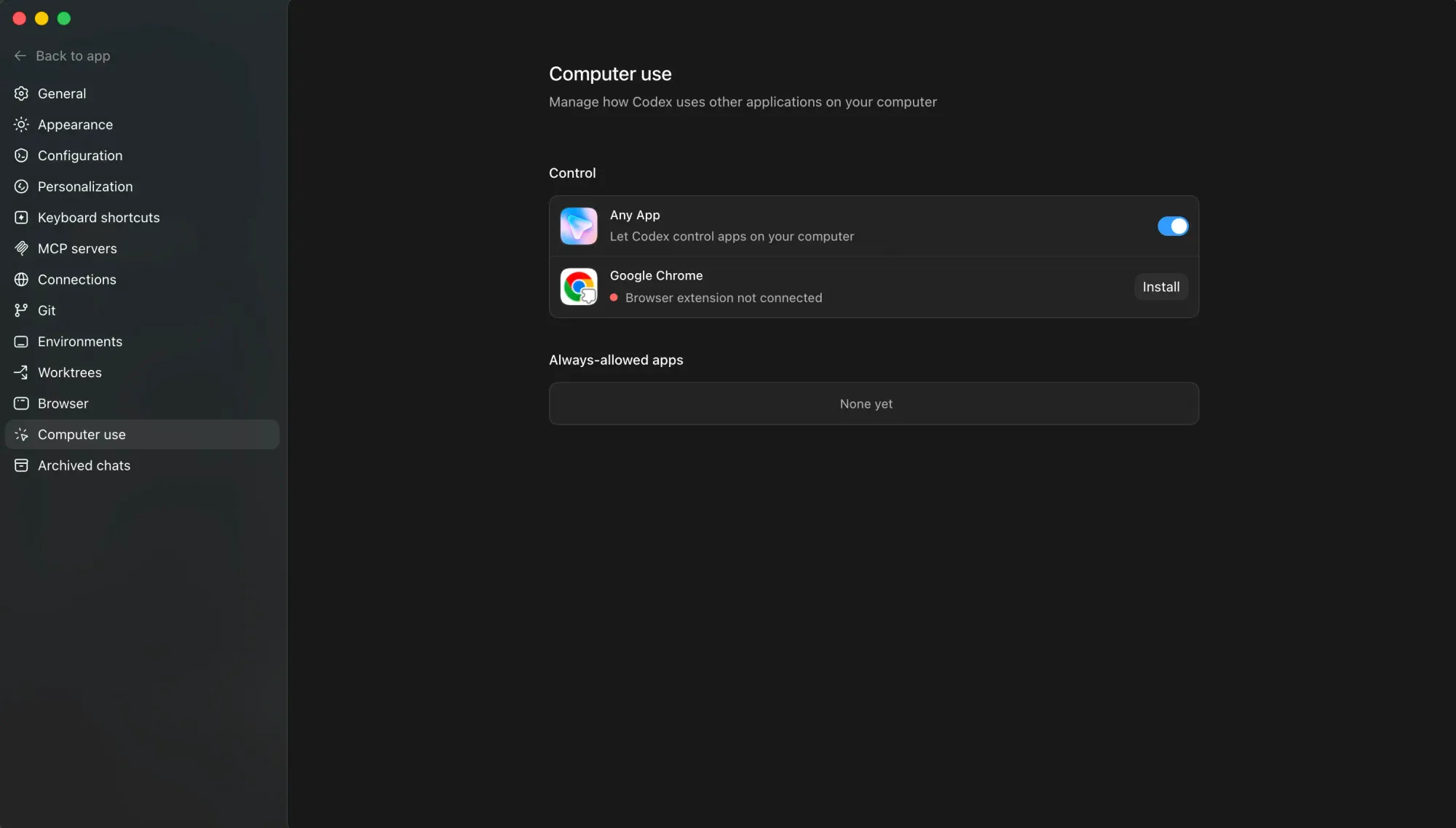
OpenAI Launches Codex Chrome Extension
💡AI agents now control browsers independently—key for agentic coding automation
⚡ 30-Second TL;DR
What Changed
Chrome extension allows Codex agents to run browser sessions independently
Why It Matters
This boosts AI agent autonomy in web tasks, streamlining automation for developers building browser-interacting apps. It positions OpenAI ahead in agentic AI workflows.
What To Do Next
Install the Codex Chrome extension and test agent browser sessions today.
Who should care:Developers & AI Engineers
Key Points
- •Chrome extension allows Codex agents to run browser sessions independently
- •Testing Remote Control for enhanced agent interaction
- •Voice Mode under testing for audio-enabled operations
🧠 Deep Insight
AI-generated analysis for this event.
🔑 Enhanced Key Takeaways
- •The Codex Chrome extension utilizes a specialized 'Browser-Use' framework that allows the model to interpret DOM structures and execute JavaScript directly within the user's browser context.
- •Security protocols for the extension include a mandatory 'Human-in-the-loop' verification step for sensitive actions like form submissions, financial transactions, or account settings changes.
- •The extension is currently restricted to OpenAI's 'Pro' and 'Enterprise' tier subscribers, signaling a strategic move to monetize agentic workflows within professional developer environments.
📊 Competitor Analysis▸ Show
| Feature | OpenAI Codex Extension | Anthropic Computer Use | Google Project Jarvis |
|---|---|---|---|
| Primary Interface | Chrome Extension | API/SDK-based | Browser-integrated |
| Pricing | Subscription (Pro/Ent) | Usage-based (API) | TBD (Preview) |
| Core Strength | Code/Dev Workflow | General Task Automation | Ecosystem Integration |
🛠️ Technical Deep Dive
- •Architecture: Employs a vision-language model (VLM) backbone that maps screen pixels to coordinate-based action sequences (click, type, scroll).
- •DOM Interaction: Uses a custom-built 'Accessibility Tree' parser to identify interactive elements, reducing reliance on fragile CSS selectors.
- •Execution Environment: Runs in an isolated sandboxed tab to prevent cross-site scripting (XSS) and unauthorized data exfiltration.
- •Latency Optimization: Implements a 'Speculative Execution' layer that predicts the next UI state to minimize perceived latency during multi-step browser tasks.
🔮 Future ImplicationsAI analysis grounded in cited sources
Browser-based AI agents will replace traditional browser automation tools like Selenium or Playwright for non-technical users.
The shift toward natural language instruction for browser tasks lowers the barrier to entry for complex web automation compared to script-based testing frameworks.
OpenAI will integrate the Codex extension with local file systems to enable cross-platform data synchronization.
Connecting browser-based agent actions with local data processing is the logical next step to increase the utility of autonomous agents in professional workflows.
⏳ Timeline
2021-08
OpenAI introduces Codex via private beta API.
2022-06
OpenAI announces the deprecation of the original Codex API in favor of newer GPT-3.5/4 models.
2025-11
OpenAI pivots Codex branding toward agentic browser-based automation tools.
2026-05
Official launch of the Codex Chrome extension for browser-based agentic tasks.
📰
Weekly AI Recap
Read this week's curated digest of top AI events →
👉Related Updates
AI-curated news aggregator. All content rights belong to original publishers.
Original source: TestingCatalog ↗