OpenAgents launches zero-code multi-agent workspace
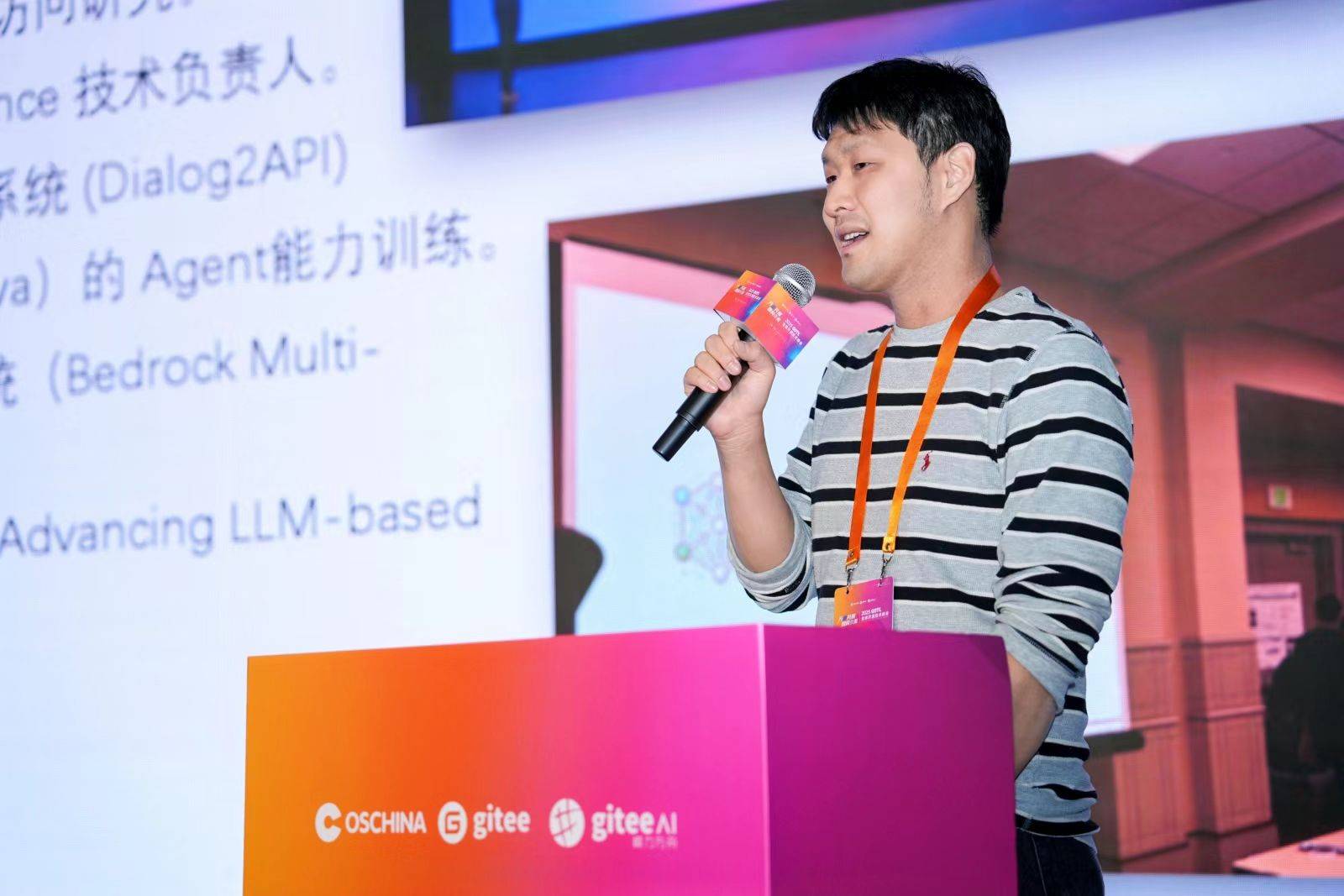
💡Learn why a former AWS researcher believes multi-agent collaboration is the next critical AI frontier.
⚡ 30-Second TL;DR
What Changed
Transitioned from a developer-only library to a UI-based zero-code workspace.
Why It Matters
This shift highlights the industry trend of moving from complex agent orchestration to accessible, user-friendly interfaces for non-technical professionals.
What To Do Next
Evaluate your current agent stack; if you're struggling with adoption, consider building or adopting a UI-first workspace to lower the barrier for non-technical users.
Key Points
- •Transitioned from a developer-only library to a UI-based zero-code workspace.
- •Focuses on multi-agent collaboration rather than single-agent workflows.
- •Addresses the 'efficiency bottleneck' where humans become the limiting factor in AI-driven production.
- •Supports MacOS, Windows, and Linux for seamless agent configuration.
🧠 Deep Insight
Web-grounded analysis with 25 cited sources.
🔑 Enhanced Key Takeaways
- •OpenAgents has secured $1.3 million in pre-seed funding in April 2026, following its graduation from the BitcoinFi accelerator, indicating growing investor confidence in its decentralized AI infrastructure vision.
- •The platform introduces Pylon, a distributed compute network that enables everyday PC owners and gamers to earn Bitcoin by contributing their idle GPU processing power to AI workloads, aiming to decentralize AI infrastructure.
- •OpenAgents offers three core specialized agents: a Data Agent for Python/SQL data analysis, a Plugins Agent with over 200 API tools for diverse tasks, and a Web Agent for autonomous web browsing, making advanced AI functionalities accessible to general users.
- •It supports a hybrid model usage, allowing the combination of cloud-based Large Language Models (LLMs) with local runtimes, providing flexibility for users to balance cost and performance based on their specific needs.
- •The workspace facilitates seamless collaboration by allowing agents to share files, a common browser, and context within a unified environment, eliminating the need for manual copy-pasting or complex glue code between different agent outputs.
📊 Competitor Analysis▸ Show
| Feature/Platform | OpenAgents (Zero-code Workspace) | Microsoft AutoGen / Azure AI Foundry Agent Service | Google Vertex AI Agent Builder | LangChain / LangGraph | UiPath Agentic Automation Platform |
|---|---|---|---|---|---|
| Primary Focus | Zero-code multi-agent collaboration, decentralized compute, open-source. | Conversational multi-agent workflows, enterprise-grade governance, CI/CD-ready. | Managed platform for building and orchestrating AI agents at scale within Google Cloud. | LLM application development, custom LLM pipelines, stateful orchestration. | RPA and agentic automation, enterprise agents, BPMN-based workflow modeling. |
| Target User | General users, developers, researchers, PC owners contributing compute. | Enterprises on Microsoft stack, developers needing secure, scalable deployments. | Teams within Google Cloud ecosystem, developers needing managed deployment. | Developers building custom AI applications from scratch. | Enterprises combining automation with AI models. |
| Key Differentiator | Open-source, zero-code UI, Bitcoin-native distributed compute (Pylon), shared workspace for real-time agent collaboration. | Focus on enterprise governance, secure deployment, native integration with Azure DevOps/OpenAI. | Native integration with Google ADK and Gemini models, managed memory bank, multi-agent coordination. | Open-source framework, extensive integrations, graph execution with cycles, branching, checkpointing. | Combines RPA with AI, Maestro orchestration for BPMN workflows, decision-making and execution by agents. |
| Pricing Model | Free (open-source), potential for compute contribution earnings. | Usage-based, enterprise agreements. | Usage-based, integrates with Google Cloud pricing. | Open-source (free framework), but infrastructure/development costs apply. | Enterprise-grade, likely subscription/usage-based. |
🛠️ Technical Deep Dive
- Architecture: OpenAgents employs a modular, event-driven architecture designed for reliable message delivery and scalable coordination among agents.
- Protocols & Connectivity: It supports a protocol-agnostic approach, integrating various transport layers including WebSocket, gRPC, HTTP, and libp2p, and features native support for MCP (Model Context Protocol) and A2A (Agent-to-Agent) protocols.
- Development & Deployment: The platform offers a Python SDK for agent development and a Studio frontend. Deployment options include Docker and PyPI packages.
- Workspace Backend: The OpenAgents Workspace utilizes a Next.js Web App for the user interface, a Neon Serverless Postgres database for storing chats, sessions, and telemetry, and a Vercel Workflows engine for durable, resumable background execution of agent loops.
- Secure Execution: Agents operate within isolated Vercel sandboxes, providing a secure environment with filesystem, network, and runtime access for executing commands like bash without affecting the local machine.
- ML Framework: OpenAgents is developing Psionic, a Rust-based machine learning framework specifically designed for distributed workloads, encompassing inference, fine-tuning, embeddings, image generation, and distributed training.
- Extensibility: The platform is designed to be extensible with LLMs, tools, and agent methods, allowing developers to integrate new models and tools easily.
🔮 Future ImplicationsAI analysis grounded in cited sources
⏳ Timeline
📎 Sources (25)
Factual claims are grounded in the sources below. Forward-looking analysis is AI-generated interpretation.
- tracxn.com
- bitcoinproducts.com
- bitcoinmagazine.com
- metaschool.so
- luoxuanweng.site
- arxiv.org
- github.com
- youtube.com
- jimmysong.io
- github.com
- reddit.com
- domo.com
- redwerk.com
- redis.io
- digitalapplied.com
- zapier.com
- aiagentstore.ai
- getmonetizely.com
- readthedocs.io
- openagents.org
- openagents.org
- reddit.com
- open-agents.dev
- github.com
- github.com
Weekly AI Recap
Read this week's curated digest of top AI events →
👉Related Updates



AI-curated news aggregator. All content rights belong to original publishers.
Original source: 虎嗅 ↗