NVIDIA’s GPU Lifespan Message Doesn’t Add Up
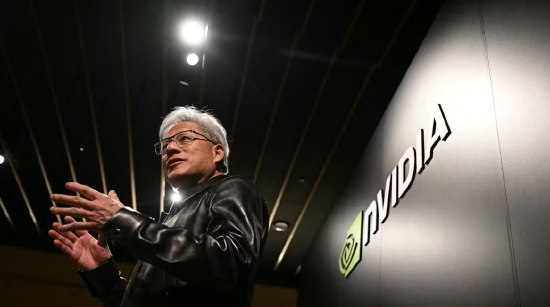
💡GPU prices and replacement cycles may undermine the idea that AI chips are durable assets.
⚡ 30-Second TL;DR
What Changed
OpenAI’s planned 8-gigawatt computing capacity will use NVIDIA’s next-generation chips.
Why It Matters
AI infrastructure buyers may need to reassess GPU depreciation, resale value, and replacement cycles rather than assuming that high-demand accelerators are durable investments. The issue could also affect long-term data-center budgeting and total-cost-of-ownership calculations.
What To Do Next
Build a GPU total-cost-of-ownership model that compares next-generation NVIDIA accelerators with existing hardware across utilization, depreciation, energy, and replacement-cycle assumptions.
Key Points
- •OpenAI’s planned 8-gigawatt computing capacity will use NVIDIA’s next-generation chips.
- •Jensen Huang estimates $150–200 billion in revenue from each new hardware generation.
- •The article highlights a contradiction between rapid hardware replacement and claims that GPUs retain long-term asset value.
- •Higher performance and substantially higher prices are helping NVIDIA sustain exceptionally high margins.
🧠 Deep Insight
AI-generated analysis for this event.
🔑 Enhanced Key Takeaways
- •The 8-gigawatt capacity target represents a massive escalation in data center power requirements, necessitating specialized liquid cooling infrastructure and grid-scale energy partnerships.
- •NVIDIA's 'Blackwell' and subsequent architectures utilize a disaggregated compute model, shifting the focus from individual GPU lifespan to the lifecycle of the entire rack-scale system.
- •Financial analysts note that NVIDIA's depreciation schedules for data center GPUs have been compressed to 3-4 years, contradicting the narrative of long-term asset retention.
- •SB Energy's involvement highlights the critical bottleneck of power availability, where compute capacity is now directly tethered to dedicated renewable energy generation projects.
- •The $150-200 billion revenue projection per generation relies heavily on the 'AI Factory' business model, where customers lease compute cycles rather than purchasing hardware outright.
📊 Competitor Analysis▸ Show
| Feature | NVIDIA (Blackwell/Next-Gen) | AMD (Instinct MI300/MI400) | Google (TPU v5p/v6) |
|---|---|---|---|
| Architecture | Blackwell/Rubin (Disaggregated) | CDNA 3/4 (Chiplet) | Custom ASIC (POD-based) |
| Interconnect | NVLink (Proprietary) | Infinity Fabric | Custom Optical/ICI |
| Pricing Strategy | Premium/High Margin | Competitive/Volume | Internal/Cloud-only |
| Primary Strength | Ecosystem/CUDA Software | Memory Bandwidth/Cost | Power Efficiency/Scale |
🛠️ Technical Deep Dive
- Blackwell architecture introduces the second-generation Transformer Engine, utilizing 4-bit floating point (FP4) precision to double throughput for inference tasks.
- Implementation of NVLink Switch System allows for 1.8 TB/s bidirectional bandwidth per GPU, enabling massive multi-node clusters to function as a single logical unit.
- Shift toward rack-scale design (GB200 NVL72) integrates 72 GPUs and 36 Grace CPUs into a single liquid-cooled chassis to minimize latency and energy loss.
- Adoption of high-bandwidth memory (HBM3e) is critical for sustaining the data throughput required by trillion-parameter models.
🔮 Future ImplicationsAI analysis grounded in cited sources
⏳ Timeline
Weekly AI Recap
Read this week's curated digest of top AI events →
👉Related Updates

AI-curated news aggregator. All content rights belong to original publishers.
Original source: cnBeta (Full RSS) ↗