SourcecnBeta (Full RSS)•Stalecollected in 85m
NVIDIA-TSMC 30 Years No Contracts
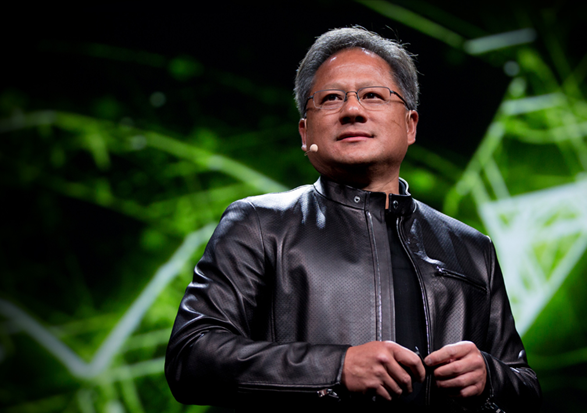
💡NVIDIA's secret to reliable AI chip supply: zero contracts
⚡ 30-Second TL;DR
What Changed
30+ years NVIDIA-TSMC collaboration without contracts
Why It Matters
Reveals trust-based models powering AI chip supply chains, influencing founder decisions on foundry partnerships.
What To Do Next
Assess TSMC for custom AI silicon production partnerships.
Who should care:Founders & Product Leaders
Key Points
- •30+ years NVIDIA-TSMC collaboration without contracts
- •TSMC praised for tech leadership and customer-centricity
- •Revelation by CEO Huang on Lex Fridman podcast
🧠 Deep Insight
AI-generated analysis for this event — not the original article.
🔑 Enhanced Key Takeaways
- •The partnership is built on a 'handshake' culture rooted in mutual trust, which allows NVIDIA to iterate rapidly on chip designs without the legal overhead of traditional supply agreements.
- •TSMC's 'Open Innovation Platform' (OIP) has been a critical technical enabler, allowing NVIDIA to integrate its proprietary GPU architectures directly into TSMC's advanced process nodes like CoWoS (Chip-on-Wafer-on-Substrate).
- •This unique business model creates a high barrier to entry for competitors, as the deep integration of NVIDIA's engineering teams with TSMC's manufacturing process is difficult to replicate through standard foundry contracts.
🛠️ Technical Deep Dive
- •CoWoS (Chip-on-Wafer-on-Substrate) integration: NVIDIA utilizes TSMC's 2.5D/3D packaging technology to connect high-bandwidth memory (HBM) with GPU dies, essential for AI performance.
- •Process Node Co-Development: NVIDIA engineers often work alongside TSMC teams during the early stages of node development (e.g., 4nm, 3nm) to optimize power, performance, and area (PPA) specifically for AI workloads.
- •Design Rule Alignment: The lack of formal contracts is supported by a deep alignment in EDA (Electronic Design Automation) toolsets and design rule manuals, ensuring NVIDIA's designs are 'foundry-ready' for TSMC's specific manufacturing capabilities.
🔮 Future ImplicationsAI analysis grounded in cited sources
NVIDIA will maintain its lead in AI hardware supply chain resilience.
The deep, non-contractual integration allows for faster priority allocation of TSMC's advanced packaging capacity compared to competitors bound by rigid legal frameworks.
TSMC will remain the exclusive foundry for NVIDIA's flagship AI GPUs.
The 30-year history of co-engineering creates a technical dependency that would require years of R&D to migrate to an alternative foundry.
⏳ Timeline
1995-01
NVIDIA and TSMC establish their initial manufacturing relationship.
1998-04
NVIDIA releases the RIVA TNT, a pivotal product manufactured by TSMC.
2006-11
NVIDIA introduces CUDA, relying on TSMC's process scaling to support massive parallel computing.
2016-04
NVIDIA launches the Pascal architecture, utilizing TSMC's 16nm FinFET process.
2022-09
NVIDIA announces the Hopper architecture, heavily utilizing TSMC's 4N process and CoWoS packaging.
📰
Weekly AI Recap
Read this week's curated digest of top AI events →
👉Related Updates
AI-curated news aggregator. All content rights belong to original publishers.
Original source: cnBeta (Full RSS) ↗
This is a summary, not the original. Read the source, or get the weekly briefing.
The weekly digest
One email a week. Unsubscribe anytime.