Nvidia GTC: AI Agents Revive CPUs
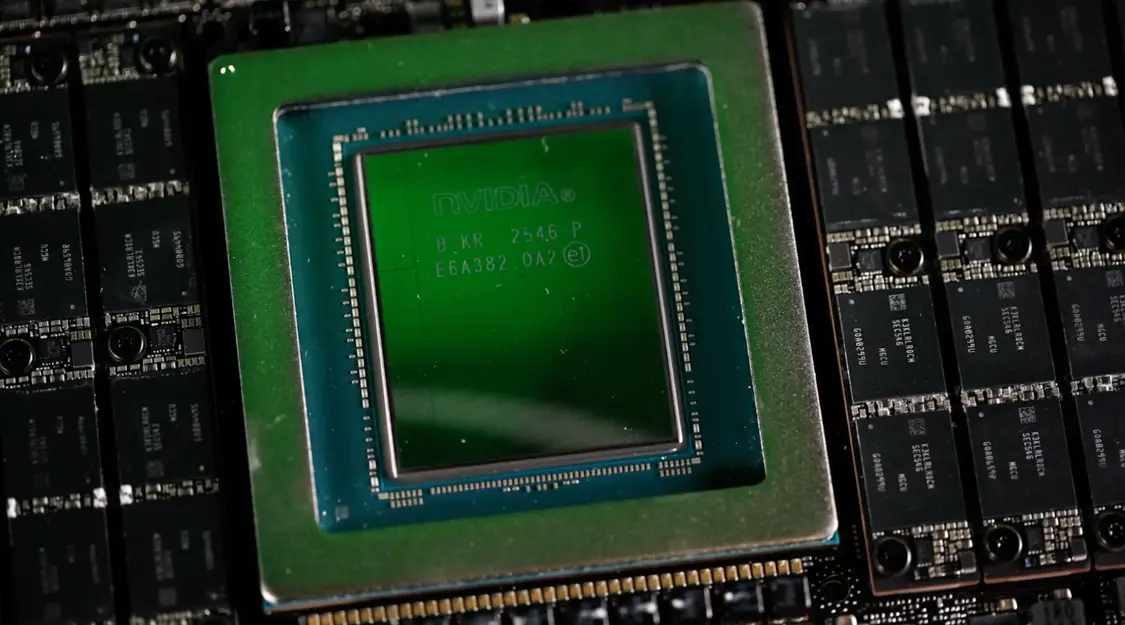
💡Nvidia GTC: CPUs back for AI agents—shift from GPU dominance impacts infra builds
⚡ 30-Second TL;DR
What Changed
Nvidia GTC highlights AI chip evolution
Why It Matters
This pivot expands hardware options for AI workloads, potentially lowering costs for agent-based systems.
What To Do Next
Benchmark Nvidia CPUs like Grace for AI agent inference at GTC demos.
Key Points
- •Nvidia GTC highlights AI chip evolution
- •AI agents boost demand for CPUs
- •GPUs remain hot but CPUs resurging
- •Reported March 14 by CNBC
🧠 Deep Insight
Background and context from public sources — not the original article. 6 sources cited.
🔑 Enhanced Key Takeaways
- •Nvidia's Groq acquisition for $20 billion in December 2025 signals strategic pivot toward specialized inference computing, complementing GPU dominance with dedicated inference acceleration capabilities[3]
- •The Feynman architecture represents a fundamental shift from training-optimized to real-time agentic AI workloads, enabling on-device decision-making without constant cloud reliance[2]
- •Nvidia's N1X Arm-based CPU with integrated GPU capabilities aims to create a four-way competitive race in the laptop/PC market against Intel, Qualcomm, and Apple, establishing CPU-GPU integration as essential for physical AI factory efficiency[2]
📊 Competitor Analysis▸ Show
| Competitor | Strategy | Target Market | Key Differentiator |
|---|---|---|---|
| AMD | MI300 series as credible GPU alternative | Data center AI training | Cost-competitive GPU acceleration |
| Intel | Gaudi chips for inference | Enterprise AI workloads | Specialized inference optimization |
| Qualcomm | Laptop/mobile processors | Consumer devices | Mobile-first AI integration |
| Apple | Custom silicon (M-series) | High-end laptops | Integrated CPU-GPU performance |
| Custom silicon (Meta, Google, Tesla) | In-house ASICs | Hyperscaler infrastructure | Workload-specific optimization, reduced Nvidia reliance |
🛠️ Technical Deep Dive
- Feynman Architecture: Engineered for real-time agentic AI tasks with optimized decision-making workloads rather than raw training throughput; enables practical on-device AI without cloud dependency
- N1X CPU Specifications: Arm-based System-on-Chip with 20 custom cores, integrated GPU matching RTX 5070 standalone performance, designed for high-end laptop market integration
- Vera Rubin Platform: Current production benchmark featuring custom Olympus Armv9 CPU cores and HBM4 memory; early samples show 5x inference performance leap over previous generation
- Co-Packaged Optics (CPO): Light-based data transmission replacing copper interconnects within data center racks; addresses power wall bottleneck in gigawatt-scale AI factories
- Inference Optimization: Industry shift from training to inference workloads creates CPU bottleneck at orchestration layer, requiring integrated CPU-GPU solutions for agentic AI fleet management
🔮 Future ImplicationsAI analysis grounded in cited sources
⏳ Timeline
📎 Sources (6)
Factual claims are grounded in the sources below. Forward-looking analysis is AI-generated interpretation.
- techbuzz.ai — Nvidia S Gtc 2026 Kicks Off with Jensen Huang Keynote
- ainvest.com — Nvidia Gtc 2026 Reveal Feynman AI Chip Infrastructure Curve Inflection 2603
- thenews.com.pk — 1395552 Gtc 2026 Nvidia to Unveil Next Gen AI Breakthroughs to Outpace Rivals
- markets.financialcontent.com — Marketminute 2026 3 11 Nvidia Gtc 2026 the World Surprising Chip and the Dawn of the Agentic AI Era
- youtube.com — Watch
- blogs.nvidia.com — Gtc 2026 News
Weekly AI Recap
Read this week's curated digest of top AI events →
👉Related Updates

AI-curated news aggregator. All content rights belong to original publishers.
Original source: cnBeta (Full RSS) ↗
This is a summary, not the original. Read the source, or get the weekly briefing.
Weekly AI briefing
One email a week. Unsubscribe anytime.