Nvidia Eyes AI to Fix Quantum Errors
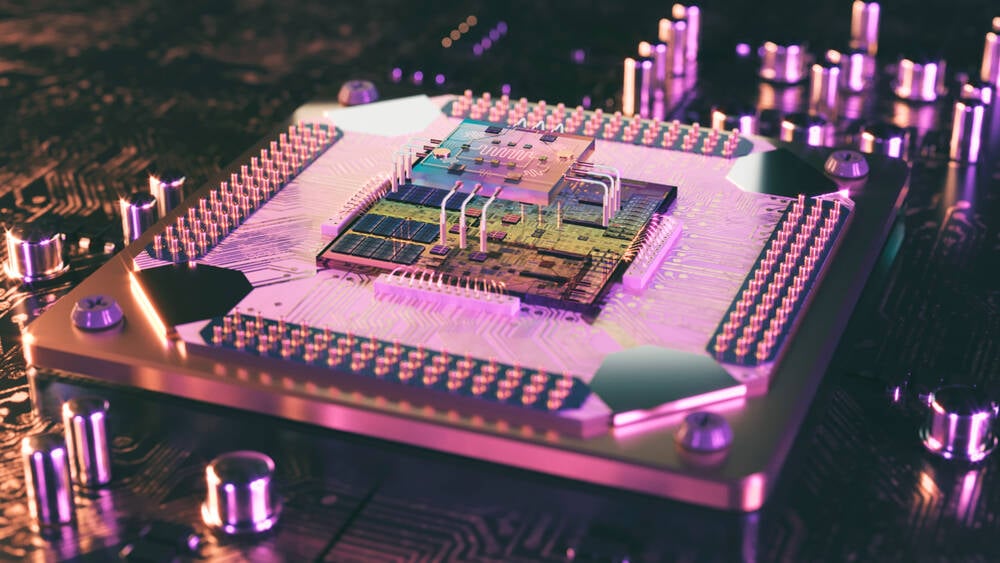
💡Nvidia's AI fix for quantum errors unlocks hybrid compute for AI apps
⚡ 30-Second TL;DR
What Changed
Quantum error rate: one per 1,000 operations too high
Why It Matters
This could accelerate hybrid AI-quantum systems, expanding Nvidia's dominance into emerging compute paradigms. AI practitioners gain new tools for simulation-heavy workloads.
What To Do Next
Test Nvidia's cuQuantum library for AI-enhanced quantum simulations.
Key Points
- •Quantum error rate: one per 1,000 operations too high
- •AI models to enable reliable quantum computing
- •Targets materials science, logistics, financial modeling
- •Nvidia applies GPU/AI expertise to quantum challenges
🧠 Deep Insight
AI-generated analysis for this event — not the original article.
🔑 Enhanced Key Takeaways
- •Nvidia's approach utilizes the cuQuantum SDK to simulate quantum circuits, allowing AI models to learn error patterns from classical simulations before deployment on physical hardware.
- •The strategy focuses on 'Quantum Error Mitigation' (QEM) rather than full 'Quantum Error Correction' (QEC), aiming to improve results on Noisy Intermediate-Scale Quantum (NISQ) devices without the massive qubit overhead required for fault tolerance.
- •Nvidia is integrating these AI-driven error mitigation workflows directly into its DGX Quantum systems, which combine GPU-accelerated classical compute with quantum processing units (QPUs) via a unified control plane.
📊 Competitor Analysis▸ Show
| Feature | Nvidia (cuQuantum/DGX) | IBM (Qiskit/Quantum System Two) | Google (Quantum AI/Sycamore) |
|---|---|---|---|
| Primary Focus | Hybrid Classical-Quantum AI integration | Full-stack hardware/software ecosystem | Hardware-centric error correction (surface codes) |
| Error Strategy | AI-based error mitigation (QEM) | Error suppression & QEC research | Physical qubit error correction |
| Platform | GPU-accelerated simulation & control | Cloud-based QPU access | Proprietary superconducting hardware |
🛠️ Technical Deep Dive
- Neural Error Mitigation: Nvidia employs deep learning models (often Transformers or Graph Neural Networks) trained on simulated noisy quantum data to predict and subtract systematic noise from measurement outcomes.
- cuQuantum Integration: The framework leverages the cuTensorNet library to perform high-performance tensor network contractions, which are essential for simulating quantum circuits and generating the training data for error-correction models.
- Hybrid Control Plane: The DGX Quantum architecture utilizes a low-latency interface between the GPU-based classical controller and the QPU, enabling real-time feedback loops where AI models adjust pulse sequences to compensate for decoherence in milliseconds.
🔮 Future ImplicationsAI analysis grounded in cited sources
⏳ Timeline
Weekly AI Recap
Read this week's curated digest of top AI events →
👉Related Updates
AI-curated news aggregator. All content rights belong to original publishers.
Original source: The Register - AI/ML ↗
This is a summary, not the original. Read the source, or get the weekly briefing.
The weekly digest
One email a week. Unsubscribe anytime.