Nvidia CEO Struggles to Wow Audiences
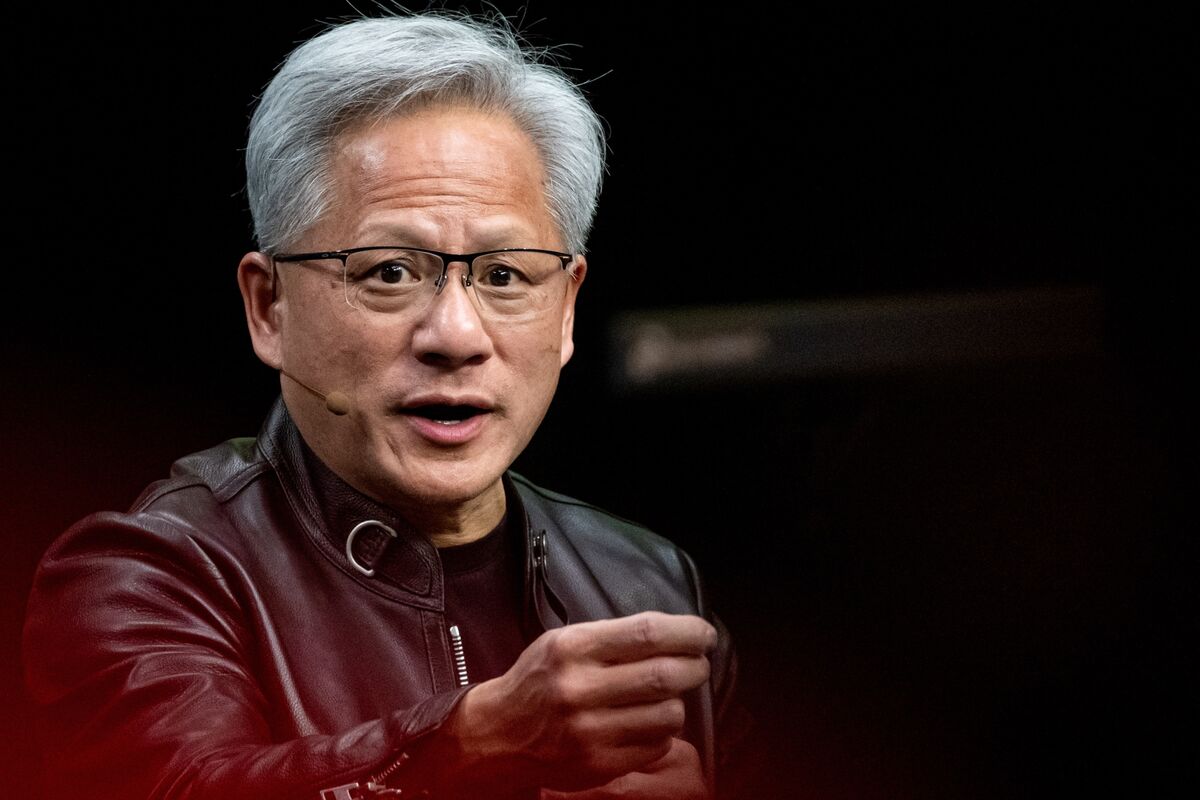
💡Nvidia CEO admits hype struggles—clue to AI infra strategy pivot?
⚡ 30-Second TL;DR
What Changed
Jensen Huang faces growing difficulty wowing audiences
Why It Matters
Highlights maturing AI sector where hype yields to substance, pressuring Nvidia to refine pitches. AI practitioners may anticipate more focus on technical roadmaps over spectacle.
What To Do Next
Analyze Nvidia's latest earnings call transcript for shifts in AI GPU messaging.
Key Points
- •Jensen Huang faces growing difficulty wowing audiences
- •CEO senses incomplete message delivery in presentations
- •Signals potential shift in Nvidia's communication approach
- •Tied to evolving expectations in AI hardware market
🧠 Deep Insight
Background and context from public sources — not the original article. 13 sources cited.
🔑 Enhanced Key Takeaways
- •Reframing as 'Token Manufacturing': Huang is pivoting Nvidia's identity from a chip designer to a 'manufacturer of tokens,' arguing that AI infrastructure is a permanent industrial base rather than a temporary capital expenditure cycle, a concept that is more abstract and harder to sell than raw hardware speed.
- •The 'Agentic AI' Pivot: The 2026 GTC keynote shifted focus from large language model training to 'Agentic AI'—autonomous systems capable of independent reasoning—signaling a move toward complex software ecosystems like the NemoClaw platform.
- •Sovereign AI Revenue Growth: Nation-state AI infrastructure has surged to represent approximately 14% of Nvidia's total revenue ($30B+ in FY2026), requiring Huang to adopt a more diplomatic, bureaucratic communication style that lacks his traditional high-energy 'gamer' aesthetic.
- •Technical Complexity of Rubin: The transition to the 'Rubin' architecture involves intricate multi-chip module designs and HBM4 integration that are significantly more difficult to simplify for non-technical stakeholders compared to previous generational leaps.
📊 Competitor Analysis▸ Show
| Feature | Nvidia Rubin (R100) | AMD Instinct MI400 | Intel Gaudi 4 |
|---|---|---|---|
| Process Node | TSMC 3nm (N3) | TSMC 3nm | Intel 18A |
| Memory | 288GB HBM4 | 256GB+ HBM4 | 128GB HBM3e |
| Bandwidth | 22 TB/s | ~18-20 TB/s (Est.) | 4.8 TB/s |
| Interconnect | NVLink 6 (3.6 TB/s) | Infinity Fabric (UALink) | Ethernet-based |
| Architecture | Rubin (Unified) | CDNA 4 | Panther Lake / Gaudi Next |
🛠️ Technical Deep Dive
Detailed specifications for the Vera Rubin platform (2026):
- Rubin GPU (R200): Features 336 billion transistors (1.6x Blackwell) using a multi-chip module design on TSMC 3nm.
- HBM4 Integration: First-generation use of 8-stack HBM4 providing 288GB capacity and 22 TB/s bandwidth per GPU.
- Vera CPU: Custom-designed 'Olympus' cores (88 cores) optimized for AI factory orchestration and Arm v9.2 compatibility.
- NVLink 6: Sixth-generation scale-up fabric delivering 3.6 TB/s bidirectional GPU-to-GPU bandwidth.
- Kyber Rack (NVL144): A liquid-cooled rack-scale system integrating 144 GPUs and 72 CPUs, delivering 3.6 EFLOPS of FP4 inference compute.
🔮 Future ImplicationsAI analysis grounded in cited sources
⏳ Timeline
📎 Sources (13)
Factual claims are grounded in the sources below. Forward-looking analysis is AI-generated interpretation.
Weekly AI Recap
Read this week's curated digest of top AI events →
👉Related Updates
AI-curated news aggregator. All content rights belong to original publishers.
Original source: Bloomberg Technology ↗
This is a summary, not the original. Read the source, or get the weekly briefing.
The weekly digest
One email a week. Unsubscribe anytime.