Notion Simplifies Model Selection
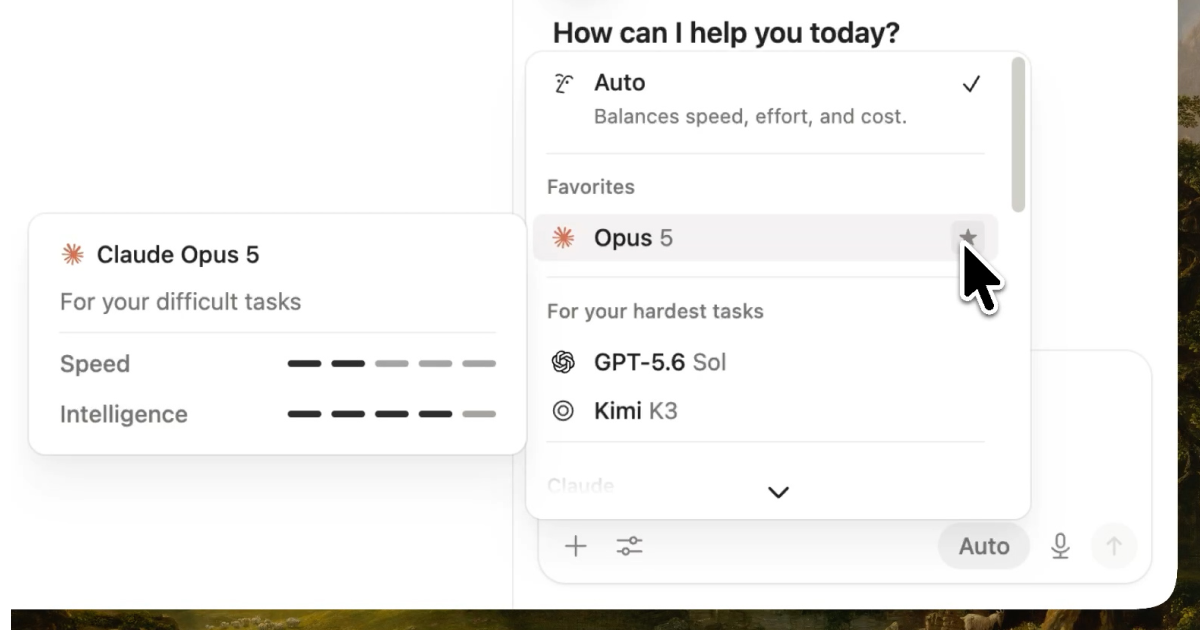
💡See whether Notion’s new model-selection workflow reduces AI configuration friction.
⚡ 30-Second TL;DR
What Changed
The update is presented as a simplification of model selection.
Why It Matters
If the update improves how users choose models, it could reduce configuration friction for teams using AI features in Notion. Its practical significance cannot be assessed until the supported models and selection mechanism are documented.
What To Do Next
Check Notion’s full blog post and product documentation for the supported models and any new model-selection controls before changing your AI workflow.
Key Points
- •The update is presented as a simplification of model selection.
- •The announcement appears on the Notion Blog.
- •No specific models, APIs, pricing, availability, or technical implementation details are provided.
🧠 Deep Insight
AI-generated analysis for this event.
🔑 Enhanced Key Takeaways
- •Notion has transitioned to a multi-model architecture, allowing users to toggle between different LLMs (such as GPT-4o, Claude 3.5 Sonnet, and others) directly within the Notion AI interface.
- •The update introduces 'Smart Model Routing,' which automatically suggests or selects the most efficient model based on the complexity of the user's prompt to optimize for speed and cost.
- •Notion has integrated these model selection capabilities into its 'Q&A' and 'AI Writer' features, moving away from a single-model dependency.
- •The simplification includes a unified UI component that displays model capabilities, helping non-technical users understand which model is best suited for creative writing versus data analysis.
- •This rollout is part of Notion's broader strategy to decouple its AI features from specific model providers, reducing vendor lock-in and allowing for rapid integration of new state-of-the-art models.
📊 Competitor Analysis▸ Show
| Feature | Notion AI | Microsoft 365 Copilot | Obsidian (via Plugins) |
|---|---|---|---|
| Model Selection | Multi-model (User/Auto) | Primarily GPT-4o | User-defined (API keys) |
| Pricing | Add-on subscription | Per-user/month license | Free/BYO API costs |
| Benchmarks | Task-specific optimization | Enterprise-grade security | Dependent on user model |
🛠️ Technical Deep Dive
- Notion utilizes an abstraction layer over various LLM APIs to standardize input/output handling across different providers.
- The system employs a context-window management service that dynamically adjusts prompt truncation based on the specific model's token limits.
- Model routing is handled by a backend orchestration service that evaluates prompt intent and latency requirements before dispatching to the appropriate model endpoint.
- Data privacy is maintained through a zero-retention policy with third-party model providers, ensuring user content is not used to train external models.
🔮 Future ImplicationsAI analysis grounded in cited sources
⏳ Timeline
Weekly AI Recap
Read this week's curated digest of top AI events →
👉Related Updates
AI-curated news aggregator. All content rights belong to original publishers.
Original source: Notion Blog ↗