Nokia Shrinks China Footprint, Risks AI-RAN Data
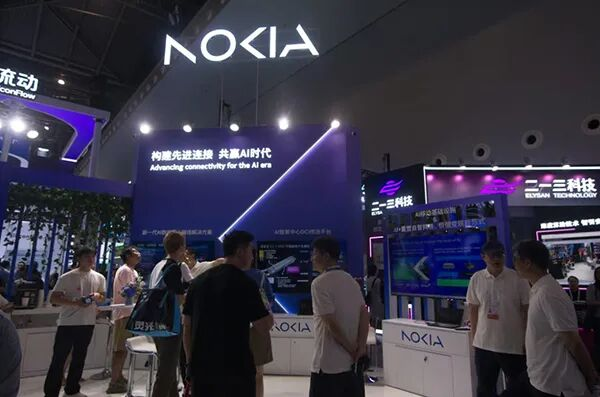
💡Nokia’s China retreat could reshape access to the real-world 5G data needed for AI-RAN and 6G.
⚡ 30-Second TL;DR
What Changed
Nokia is expected to complete most mainland China layoffs by the end of the year and close multiple offices and factories.
Why It Matters
For AI infrastructure builders, Nokia’s retreat highlights how access to large-scale, real-world network data can become a strategic constraint in telecom AI. It may also intensify competition between Chinese and Western vendors in AI-RAN and 6G, where deployment data and local ecosystem access are important advantages.
What To Do Next
Benchmark your telecom-AI pipeline across multiple regional datasets now, so future restrictions on Chinese 5G data do not create a single-region dependency.
Key Points
- •Nokia is expected to complete most mainland China layoffs by the end of the year and close multiple offices and factories.
- •The company recently confirmed the closure of its Hangzhou R&D center, affecting approximately 1,600 jobs.
- •Nokia’s China revenue fell from nearly €2.2 billion in 2018 to €913 million in 2025.
- •Nokia is increasing its 2026 restructuring estimate to €800 million, including about €350 million related to simplifying China operations.
- •Its reduced presence in China could limit access to real-world 5G data for the AI-RAN platform being developed with Nvidia.
🧠 Deep Insight
AI-generated analysis for this event.
🔑 Enhanced Key Takeaways
- •Nokia's strategic pivot is heavily influenced by the 'Nokia G2' restructuring program, which aims to achieve €800 million to €1.2 billion in savings by 2026 to offset declining demand in North American and Chinese markets.
- •The reduction in China operations coincides with Nokia's increasing reliance on the Indian market, which has become a critical growth engine for its Mobile Networks business group following massive 5G rollouts.
- •Nokia's collaboration with Nvidia on AI-RAN (Artificial Intelligence Radio Access Network) focuses on utilizing GPU acceleration to optimize radio resource management, a task previously handled by dedicated baseband hardware.
- •Local Chinese competitors, particularly Huawei and ZTE, have significantly increased their market share in China's domestic 5G infrastructure, leaving Nokia and Ericsson with dwindling opportunities for large-scale network equipment contracts.
- •The restructuring includes a shift in R&D focus toward 'Network as Code' initiatives, which aim to expose network capabilities via APIs to developers, moving away from traditional hardware-centric infrastructure development.
📊 Competitor Analysis▸ Show
| Feature | Nokia (AI-RAN) | Huawei (5G-Advanced) | Ericsson (Cloud RAN) |
|---|---|---|---|
| AI Integration | High (Nvidia Partnership) | High (Native AI/ML) | Moderate (Cloud-native) |
| China Market Share | Declining | Dominant | Declining |
| Primary Focus | Open RAN / AI-RAN | End-to-End 5G-A | Cloud RAN / Open RAN |
🛠️ Technical Deep Dive
- AI-RAN Architecture: Integrates AI/ML models directly into the Radio Access Network (RAN) stack to perform predictive resource allocation and beamforming optimization.
- GPU Acceleration: Utilizes Nvidia Aerial software suite to offload compute-intensive baseband processing from custom ASICs to general-purpose GPUs.
- Network as Code: Implements a software-defined architecture that allows third-party developers to access network telemetry and control functions through standardized APIs.
- Energy Efficiency: Employs AI-driven sleep modes and dynamic power management to reduce the carbon footprint of massive MIMO antenna arrays.
🔮 Future ImplicationsAI analysis grounded in cited sources
⏳ Timeline
Weekly AI Recap
Read this week's curated digest of top AI events →
👉Related Updates


AI-curated news aggregator. All content rights belong to original publishers.
Original source: 虎嗅 ↗