Nobel Laureate Kosterlitz on Scientific Discovery and AI
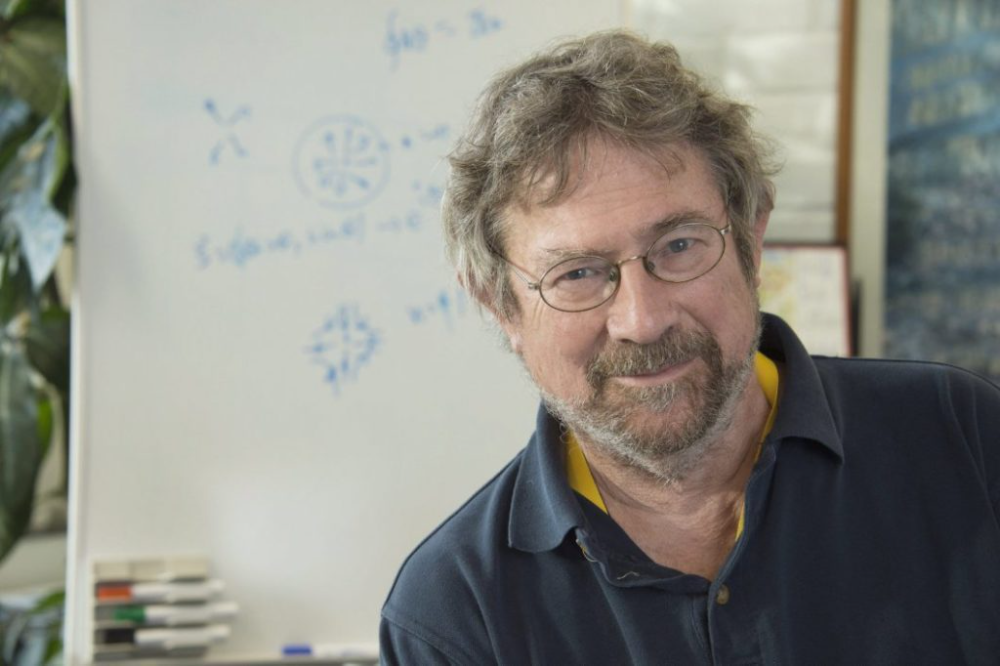
💡A Nobel laureate's perspective on why human intuition remains superior to AI in scientific discovery.
⚡ 30-Second TL;DR
What Changed
Scientific success often relies on luck and being in the right place at the right time.
Why It Matters
Kosterlitz's perspective reinforces the importance of human-centric research and the limitations of current AI in scientific innovation.
What To Do Next
Focus on interdisciplinary problem-solving rather than relying solely on AI for hypothesis generation.
Key Points
- •Scientific success often relies on luck and being in the right place at the right time.
- •'Ignorance' of traditional field boundaries can be an advantage in cross-disciplinary research.
- •AI is viewed as a powerful computational tool that cannot replace human intuition in problem formulation.
🧠 Deep Insight
Web-grounded analysis with 21 cited sources.
🔑 Enhanced Key Takeaways
- •The Berezinskii-Kosterlitz-Thouless (BKT) transition, for which Kosterlitz shared the Nobel Prize, describes a topological phase transition in two-dimensional systems where bound vortex-antivortex pairs unbind at a critical temperature, explaining phenomena like superconductivity and superfluidity in thin films.
- •Kosterlitz's theoretical discoveries, made with David Thouless, revolutionized the understanding of phase transitions in 2D materials, which were previously thought impossible due to thermal fluctuations, and have implications for developing quantum computing and advanced electronics.
- •Contrary to Kosterlitz's view of AI primarily as a computational tool, recent advancements in AI, particularly large language models, are being developed to generate novel and plausible scientific hypotheses by analyzing vast datasets and identifying non-obvious patterns, thereby augmenting human intuition in problem formulation.
- •AI is increasingly integrated into scientific discovery to accelerate research by helping generate hypotheses, design experiments, and interpret large datasets, moving beyond merely amplifying existing capabilities to reshaping the scientific method itself.
🛠️ Technical Deep Dive
- The Berezinskii-Kosterlitz-Thouless (BKT) transition is a phase transition observed in two-dimensional (2D) systems, such as the XY model in statistical physics.
- It is characterized by a transition from a low-temperature phase where vortices and anti-vortices are bound in pairs to a higher-temperature phase where these topological defects unbind and move freely.
- This transition is considered 'topological' because it involves changes in the system's topological properties (specifically, the behavior of vortices) rather than a change in symmetry, which is a hallmark of traditional Landau theory phase transitions.
- The BKT transition provides a mechanism for phase transitions in 2D systems despite the Mermin-Wagner theorem, which generally states that continuous symmetries cannot be spontaneously broken in two dimensions at finite temperatures, leading to 'quasi-long-range order' at low temperatures.
- Applications of the BKT transition include explaining phenomena in thin films of superfluids (e.g., Helium-4), superconductors, and 2D electron gases.
- In the context of AI, advanced algorithms, including Large Language Models (LLMs), are being developed to generate scientific hypotheses by processing extensive scientific literature and experimental data.
- These AI systems can identify subtle correlations and patterns across millions of data points, suggesting new research directions that may not be immediately obvious to human researchers.
- Some AI frameworks, such as MIT's SciAgents, utilize multi-agent AI systems and ontological knowledge graphs to organize scientific concepts and employ 'graph reasoning' methods, enabling the AI to extrapolate and create new knowledge rather than just recalling learned information.
- AI-driven hypothesis generation can be integrated into closed-loop experimental workflows, where agentic reasoning systems can design and execute experiments, iteratively refine models based on results, and assess generated insights.
- Key challenges in AI-driven hypothesis generation include ensuring the quality and reliability of input data, mitigating algorithmic biases, and addressing the potential for AI models to produce 'hallucinations'—plausible but factually incorrect or physically impossible hypotheses.
🔮 Future ImplicationsAI analysis grounded in cited sources
⏳ Timeline
📎 Sources (21)
Factual claims are grounded in the sources below. Forward-looking analysis is AI-generated interpretation.
Weekly AI Recap
Read this week's curated digest of top AI events →
👉Related Updates



AI-curated news aggregator. All content rights belong to original publishers.
Original source: 虎嗅 ↗