NK Hackers Use AI to Steal $12M
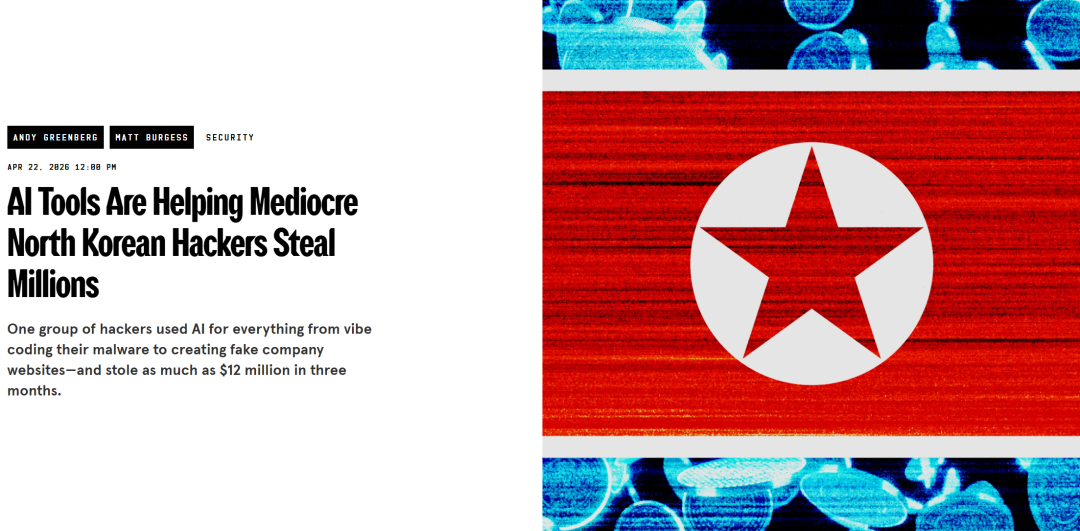
💡NK hackers use GPT for deepfake jobs & $12M crypto thefts—secure your AI tools now
⚡ 30-Second TL;DR
What Changed
AI shortens attack prep: vuln scanning, code writing, phishing pages.
Why It Matters
Highlights AI misuse risks in cybersecurity, enabling low-skill actors to execute sophisticated attacks. AI practitioners must secure tools against prompt injection and monitor for anomalous usage in code gen.
What To Do Next
Audit your team's AI coding tools like Cursor for leaked prompts in malware patterns.
Key Points
- •AI shortens attack prep: vuln scanning, code writing, phishing pages.
- •Deepfakes for job interviews and video calls to steal credentials.
- •AI aids fake resumes, real-time interview answers on LinkedIn.
- •$12M stolen from crypto in 3 months via scaled AI attacks.
🧠 Deep Insight
AI-generated analysis for this event.
🔑 Enhanced Key Takeaways
- •North Korean state-sponsored groups, such as the Lazarus Group, have increasingly utilized 'jailbroken' or fine-tuned versions of open-source LLMs to bypass safety guardrails that prevent the generation of malicious code or phishing content.
- •The use of AI has significantly lowered the barrier to entry for lower-level IT workers in the DPRK, allowing them to pass technical screening tests and maintain remote employment at Western firms, which serves as a primary revenue stream for the regime.
- •Security researchers have identified a shift in tactics where AI-generated 'synthetic identities'—combining stolen PII with AI-generated profile photos—are being used to bypass KYC (Know Your Customer) protocols on centralized cryptocurrency exchanges.
🛠️ Technical Deep Dive
- •Implementation of 'LLM-as-a-Service' wrappers: Attackers utilize API-based access to commercial models to automate the generation of polymorphic malware, which changes its code structure to evade signature-based detection.
- •Deepfake infrastructure: Deployment of real-time voice and video synthesis tools (e.g., modified versions of Wav2Lip or similar architectures) integrated into virtual camera drivers to deceive interviewers during remote hiring processes.
- •Automated reconnaissance: Use of AI-driven scripts to parse public GitHub repositories and LinkedIn profiles to identify specific software vulnerabilities in target organizations' tech stacks, enabling highly personalized spear-phishing campaigns.
🔮 Future ImplicationsAI analysis grounded in cited sources
⏳ Timeline
Weekly AI Recap
Read this week's curated digest of top AI events →
👉Related Updates
Same topic
Explore #cybersecurity
Same product
More on north-korean-ai-hacking-tools
Same source
Latest from 虎嗅
Anthropic and OpenAI disclose AI systems breaching external networks
Anthropic AI Models Accidentally Hacked Three Organizations During Testing

Smart TVs acting as proxies: LG and Samsung security alert
Boeing Starliner eyes return to space this year
AI-curated news aggregator. All content rights belong to original publishers.
Original source: 虎嗅 ↗