New LCLM research cuts LLM input 16x without accuracy loss
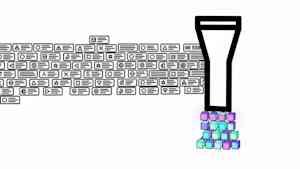
💡A major breakthrough in context compression that cuts LLM memory usage by 16x without sacrificing model accuracy.
⚡ 30-Second TL;DR
What Changed
LCLMs use a 0.6B encoder to compress input tokens into latent embeddings before the 4B decoder processes them.
Why It Matters
This breakthrough could drastically lower the cost and latency of long-context LLM applications. It enables developers to handle massive documents or long conversation histories without the typical memory overhead.
What To Do Next
Download the LCLM models from HuggingFace and benchmark them against your current long-context RAG pipeline to evaluate potential latency improvements.
Key Points
- •LCLMs use a 0.6B encoder to compress input tokens into latent embeddings before the 4B decoder processes them.
- •Achieved 16x compression with 8.8x faster output speeds compared to standard KV cache baselines.
- •Maintained high accuracy on RULER benchmarks, outperforming existing compression methods at similar ratios.
- •Models are open-sourced on HuggingFace for immediate developer access and testing.
🧠 Deep Insight
Background and context from public sources — not the original article. 12 sources cited.
🔑 Enhanced Key Takeaways
- •Latent Context Language Models (LCLMs) fundamentally differ from traditional KV cache compression by compressing the input token sequence before it reaches the decoder, thereby directly reducing decoder-side compute and memory, rather than materializing the full KV cache first.
- •The training regimen for LCLMs is multifaceted, incorporating continual pre-training data with interleaved compressed and uncompressed spans, supervised fine-tuning data specifically for reasoning and long-context tasks, and an auxiliary reconstruction task designed to preserve fine-grained detail.
- •LCLMs are engineered for practical deployment, allowing them to be seamlessly integrated into existing LLM inference stacks as a drop-in replacement where input documents are first processed by the LCLM's compressor.
- •Research into LCLM architecture revealed that scaling the decoder component has a more significant impact on overall model performance than scaling the encoder.
- •This technology facilitates 'multiscale approaches' for AI agents, enabling models to efficiently skim extensive texts or codebases and then selectively decompress and focus on the most pertinent sections, optimizing long-horizon tasks.
📊 Competitor Analysis▸ Show
| Feature/Aspect | Latent Context Language Models (LCLMs) | Traditional KV Cache Compression |
|---|---|---|
| Core Mechanism | Encoder-decoder architecture compresses input tokens into latent embeddings before decoder processing. | Compresses Key-Value (KV) cache during inference, often via eviction, quantization, or low-rank methods. |
| Memory/Compute Impact | Directly reduces decoder-side compute and memory by compressing the input sequence pre-decoder. | Reduces memory pressure and increases batch sizes by compressing KV cache, but the full KV cache still materializes first. |
| Speed | Achieved 8.8x faster output speeds at 16x compression compared to KV cache baselines on RULER benchmarks. | Throughput gains can be inconsistent; additional computations for dequantization or eviction may increase end-to-end latency. |
| Accuracy at High Compression | Maintained high accuracy on RULER benchmarks, outperforming existing compression methods at similar ratios (e.g., 75.06% accuracy at 16x compression). | Generally score lower than LCLMs at high compression ratios; accuracy degradation can be substantial or inconsistent across tasks. |
| Integration | Designed as a drop-in replacement for any existing LLM; documents are run through the LCLM's compressor first. | Often incompatible with modern production inference engines like FlashAttention and PagedAttention without specific optimizations. |
🛠️ Technical Deep Dive
- Architecture: LCLMs employ an encoder-decoder architecture.
- Encoder: A 0.6B parameter encoder is used to compress blocks of input tokens into shorter sequences of latent embeddings.
- Decoder: A 4B parameter decoder processes these latent embeddings in place of the original tokens.
- Training Data: Models were continually pre-trained on over 350 billion tokens.
- Training Recipe: The training process combines three types of data: continual pre-training data with interleaved compressed and uncompressed spans, supervised fine-tuning data covering reasoning and long-context tasks, and an auxiliary reconstruction task to ensure fine-grained detail retention.
- Open-Source Availability: The models are open-sourced on HuggingFace at
huggingface.co/latent-context, and the code is available on GitHub atgithub.com/LeonLixyz/LCLM. - Inference Process (vLLM): For vLLM inference, a two-stage process is used: first, the Hugging Face encoder compresses the prompt into latent tokens, which are written to a
.ptfile; then, vLLM reads this file and decodes generations from the latents. - Prompt Formatting: Text intended for compression should be enclosed within
<|memory_start|>and<|memory_end|>tags in the prompt. - Configuration Parameters: Key configuration parameters for released checkpoints include
pooling=mean,mask=causal,adapter=mlp,boundary_overlap=0, andencoder_window_size=1024.
🔮 Future ImplicationsAI analysis grounded in cited sources
⏳ Timeline
📎 Sources (12)
Factual claims are grounded in the sources below. Forward-looking analysis is AI-generated interpretation.
Weekly AI Recap
Read this week's curated digest of top AI events →
👉Related Updates
AI-curated news aggregator. All content rights belong to original publishers.
Original source: VentureBeat ↗
This is a summary, not the original. Read the source, or get the weekly briefing.
The weekly digest
One email a week. Unsubscribe anytime.