New 'AI Recommendation Power' Metric for Consumer Brands
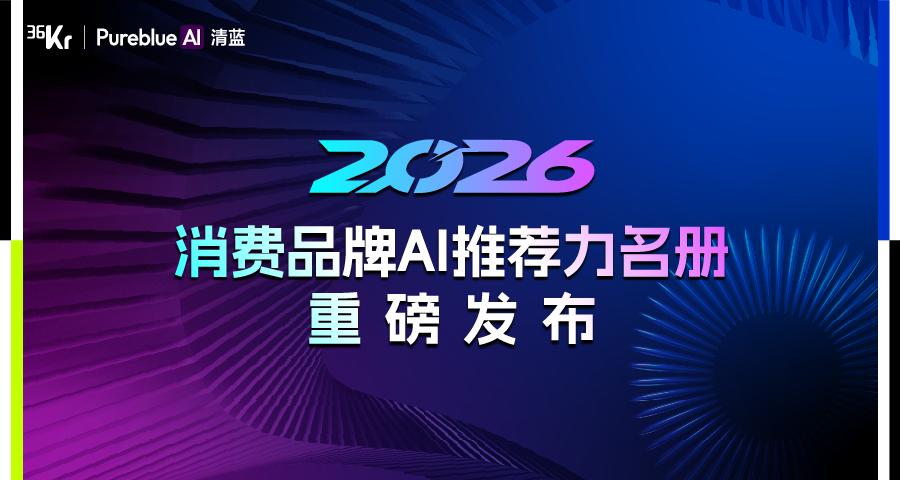
💡Learn how to optimize brand visibility in AI-generated answers as LLMs replace traditional search engines.
⚡ 30-Second TL;DR
What Changed
Introduces a quantitative model measuring AI recommendation priority, frequency, and sentiment.
Why It Matters
This report signals a shift in digital marketing from SEO to 'AIO' (AI Optimization), where brands must manage their reputation within LLM training data and inference outputs.
What To Do Next
Audit your brand's presence by querying mainstream LLMs like DeepSeek or Doubao with category-specific prompts to identify your current 'AI recommendation' ranking.
Key Points
- •Introduces a quantitative model measuring AI recommendation priority, frequency, and sentiment.
- •Identifies clear 'head-effect' in automotive and mobile categories where top brands dominate AI answers.
- •Highlights AI as the new 'first entry point' for consumer decision-making, bypassing traditional search.
- •Provides actionable data for brands to optimize their presence in LLM-generated responses.
🧠 Deep Insight
Web-grounded analysis with 19 cited sources.
🔑 Enhanced Key Takeaways
- •The 'AI Recommendation Power' metric extends beyond mere brand mentions, quantitatively evaluating a brand's visibility, priority, frequency, and sentiment within AI-generated responses across various large language models (LLMs) like ChatGPT, Gemini, Perplexity, and Google AI Overviews.
- •Traditional SEO rankings and metrics do not reliably predict or correlate with a brand's visibility in AI-generated recommendations, necessitating a distinct 'Generative Engine Optimization (GEO)' strategy for brands to influence AI outputs.
- •LLMs primarily recommend brands based on statistical associations learned from their training data, prioritizing factors such as the frequency and recency of mentions, the authority of source material, and content that addresses specific problems or use cases.
- •While AI serves as a critical 'first entry point' for consumer discovery, a significant majority (98%) of consumers still verify AI recommendations through traditional search engines, review sites, and social media before making a purchase, highlighting the continued importance of a holistic brand presence.
- •PureblueAI Qinglan, the co-launcher of the report with 36Kr, is a Beijing-based AI marketing solutions company founded in 2024, which recently secured angel funding in March 2026 to further develop its AI-powered content optimization and digital employee platforms.
📊 Competitor Analysis▸ Show
| Feature / Company | PureblueAI Qinglan | Nightwatch.io | Meltwater (GenAI Lens) | LLM Pulse | Click Insights | Similarweb (AI Brand Visibility) | Visiblie |
|---|---|---|---|---|---|---|---|
| Primary Focus | AI-powered marketing solutions, content optimization for AI search | LLM Visibility Tracking Framework | AI mention tracking, media & competitive signals | AI visibility, trend & competitive analysis | LLM visibility, brand share of voice | AI sentiment analysis, brand visibility | AI brand sentiment tracking |
| LLM Visibility Tracking | Yes (via 'AI Recommendation Power') | Yes (AI Share of Voice, Mention Rate, Mention Position) | Yes (Frequency, Coverage across models) | Yes (Visibility Score, Mention Rate) | Yes (Overall mentions, average rank, #1 count) | Yes (AI-generated brand mentions) | Yes (Brand mention rate) |
| Sentiment Analysis | Yes (via 'AI Recommendation Power') | Yes (Sentiment Score) | Yes (Sentiment of mentions) | Yes (Mention Quality) | Not explicitly detailed | Yes (Positive, Neutral, Negative, by topic) | Yes (Endorsement, Neutral, Cautious, Negative, Hallucinations) |
| Source Attribution | Not explicitly detailed | Not explicitly detailed | Not explicitly detailed | Not explicitly detailed | Yes (Featured sources) | Yes (Identifies sources LLM relies on) | Not explicitly detailed |
| Competitive Benchmarking | Yes (via 'head-effect' analysis) | Yes | Yes | Yes | Yes (Share of voice vs competitors) | Yes (Competitor sentiment heatmap) | Yes (Compares sentiment vs competitors) |
| Multi-platform Support | Yes (implied by 'AI-generated consumer advice') | Yes (ChatGPT, Perplexity, Google AI Mode, Gemini) | Yes (Across LLMs) | Yes (ChatGPT, Gemini, Perplexity, Google AI Overview, Google AI Mode) | Yes (ChatGPT, Gemini, deepSeek, Perplexity, Grok) | Yes (AI-generated brand mentions & prompts) | Yes (ChatGPT, Gemini, Perplexity) |
| Technical Details | Hybrid model architecture, optimization algorithms, digital employee platform | Framework for tracking | Automates tracking, connects to broader media | Visibility score = mentions ÷ total prompt executions | Keyword-driven prompt discovery | NLP, ML for sentiment classification | Qualitative positioning analysis |
| Pricing | Not public | Not public | Not public | Not public (offers free trial) | Starts at £10 for add-on | Not public | Not public (offers free trial) |
🛠️ Technical Deep Dive
- The 'AI Recommendation Power' metric quantifies brand performance in AI-generated responses by measuring priority, frequency, and sentiment. [Article]
- Sentiment analysis, a core component, utilizes Natural Language Processing (NLP) and machine learning algorithms to interpret and classify the emotional tone (positive, negative, or neutral) of AI-generated text mentioning a brand.
- Advanced sentiment analysis can extend to aspect-based sentiment, breaking down feedback by specific product features or service aspects, and detecting nuanced emotions beyond simple positive/negative classifications.
- LLM visibility tracking typically involves systematically querying various AI answer engines (e.g., ChatGPT, Gemini, Perplexity, Google AI Overviews) with relevant prompts to monitor brand mentions.
- Due to the current lack of analytics APIs from LLM platforms, tracking is often performed 'from the outside-in' through structured prompt testing, citation audits, and diagnostic analysis that mimics how AI systems process information.
- PureblueAI Qinglan's methodology is based on a self-developed hybrid model architecture, optimization algorithms, and a digital employee platform to enhance AI recognition and influence for brands.
🔮 Future ImplicationsAI analysis grounded in cited sources
⏳ Timeline
📎 Sources (19)
Factual claims are grounded in the sources below. Forward-looking analysis is AI-generated interpretation.
- Google Search Source
- Google Search Source
- Google Search Source
- Google Search Source
- Google Search Source
- Google Search Source
- Google Search Source
- Google Search Source
- Google Search Source
- Google Search Source
- Google Search Source
- Google Search Source
- Google Search Source
- Google Search Source
- Google Search Source
- Google Search Source
- Google Search Source
- Google Search Source
- Google Search Source
Weekly AI Recap
Read this week's curated digest of top AI events →
👉Related Updates

AI-curated news aggregator. All content rights belong to original publishers.
Original source: 36氪 ↗