NetEase 520 Event: AI-Driven Gaming and New Titles
💡See how a major gaming giant is scaling production and UGC with AI-native workflows.
⚡ 30-Second TL;DR
What Changed
NetEase is integrating AI for game development, NPC interaction, and UGC creation tools.
Why It Matters
NetEase's aggressive AI adoption signals a new industry standard where AI is not just a tool but a core infrastructure for game production, potentially lowering costs and increasing content velocity for developers.
What To Do Next
Explore integrating Tripo AI or similar 3D generation models into your game's UGC pipeline to lower user creation barriers.
Key Points
- •NetEase is integrating AI for game development, NPC interaction, and UGC creation tools.
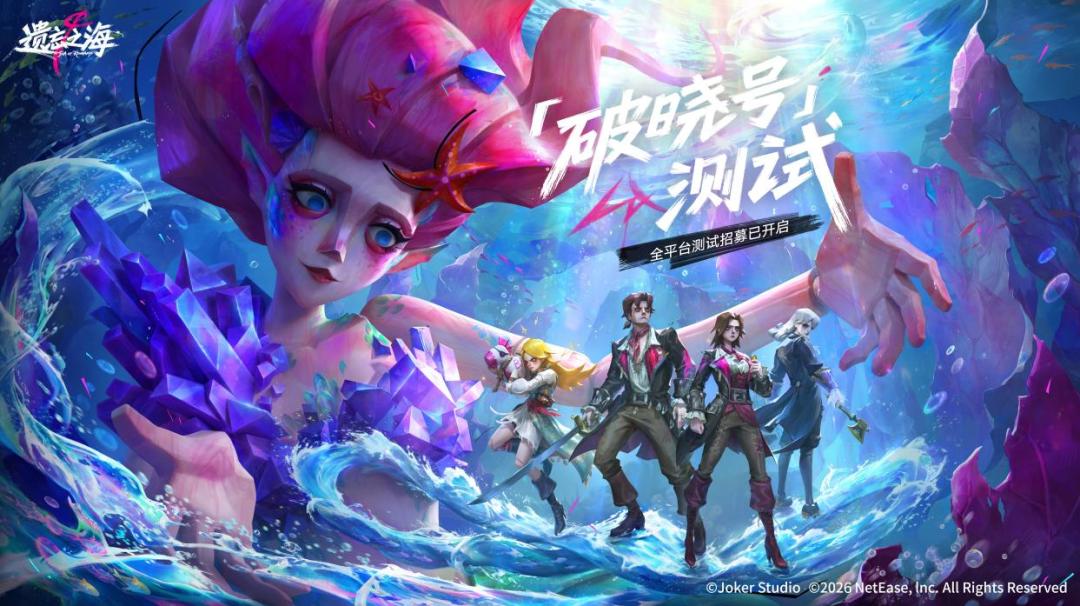
- •New titles like 'Forgotten Sea' and 'Wanmin Changge: Three Kingdoms' leverage AI for content production.
- •Strategic shift from broad market coverage to high-quality, specialized game segments.
- •Collaboration with VAST to integrate Tripo AI 3D models into UGC systems.
🧠 Deep Insight
Web-grounded analysis with 18 cited sources.
🔑 Enhanced Key Takeaways
- •NetEase employs proprietary AI tools like CodeMaker, DreamMaker, and Danqing to streamline game development across design, programming, art, and quality assurance, leading to reduced costs and enhanced efficiency.
- •The company's dedicated Fuxi AI Lab, advised by Dr. Harry Shum, conducts specialized research in areas such as digital twins, reinforcement learning, and natural language processing to innovate game AI and user experience.
- •NetEase maintains a substantial annual R&D investment, dedicating 15-18% of its revenue to advance core game engines and AI technologies, underscoring its long-term strategic focus on innovation.
- •Beyond image-to-3D, the integrated Tripo AI technology from VAST also enables text-to-3D generation and includes features like auto-retopology and AI Texturing, facilitating the creation of production-ready 3D assets for UGC.
- •NetEase has already implemented advanced AI in games like 'Where Winds Meet', featuring over 10,000 NPCs with dynamic memories and relationships that evolve based on player choices, departing from fixed-dialogue conventions.
🛠️ Technical Deep Dive
- Tripo AI utilizes deep neural networks and computer vision algorithms for converting 2D images into 3D models.
- It supports text-to-3D generation, allowing users to create 3D models from textual descriptions.
- The platform includes intelligent auto-retopology to optimize polygon count for real-time rendering in games and supports exporting in mainstream formats like USD, FBX, OBJ, STL, GLB, and 3MF for seamless integration with major 3D software and game engines such as Unity and Unreal Engine.
- AI Texturing features automatically generate physically accurate material textures and support Physically Based Rendering (PBR) workflows for realistic material effects.
- NetEase's Fuxi AI Lab conducts research in areas including big data platforms, user persona, reinforcement learning, computer vision & graphics, natural language processing, and speech synthesis & music generation.
- The Lamarckian platform, developed by NetEase Fuxi AI Lab, is an open-source platform for evolutionary reinforcement learning, designed for scalability to distributed computing resources and optimized for training speed and data efficiency in asynchronous commercial games.
- AI in 'Where Winds Meet' manages over 10,000 NPCs, enabling dynamic changes in their memories and relationships based on player choices, creating a more immersive and 'living space' game world.
- NetEase previously developed a method for auto-creating game characters from selfies using deep convolutional neural networks and multi-task learning for face-to-parameter translation.
🔮 Future ImplicationsAI analysis grounded in cited sources
⏳ Timeline
📎 Sources (18)
Factual claims are grounded in the sources below. Forward-looking analysis is AI-generated interpretation.
Weekly AI Recap
Read this week's curated digest of top AI events →
👉Related Updates
AI-curated news aggregator. All content rights belong to original publishers.
Original source: 36氪 ↗