Neanderthals used dental drilling 59,000 years ago
💡Fascinating insight into the evolution of problem-solving, a core component of human intelligence and AI development.
⚡ 30-Second TL;DR
What Changed
Evidence of dental drilling in Neanderthals 59,000 years ago
Why It Matters
This research informs our understanding of the evolution of intelligence and tool use, which are foundational concepts in the study of artificial general intelligence.
What To Do Next
Consider how evolutionary biology and cognitive science research can inform the development of more human-like reasoning in AI models.
Key Points
- •Evidence of dental drilling in Neanderthals 59,000 years ago
- •Indicates early medical intervention and problem-solving
- •Challenges previous assumptions about prehistoric cognitive capabilities
🧠 Deep Insight
Web-grounded analysis with 18 cited sources.
🔑 Enhanced Key Takeaways
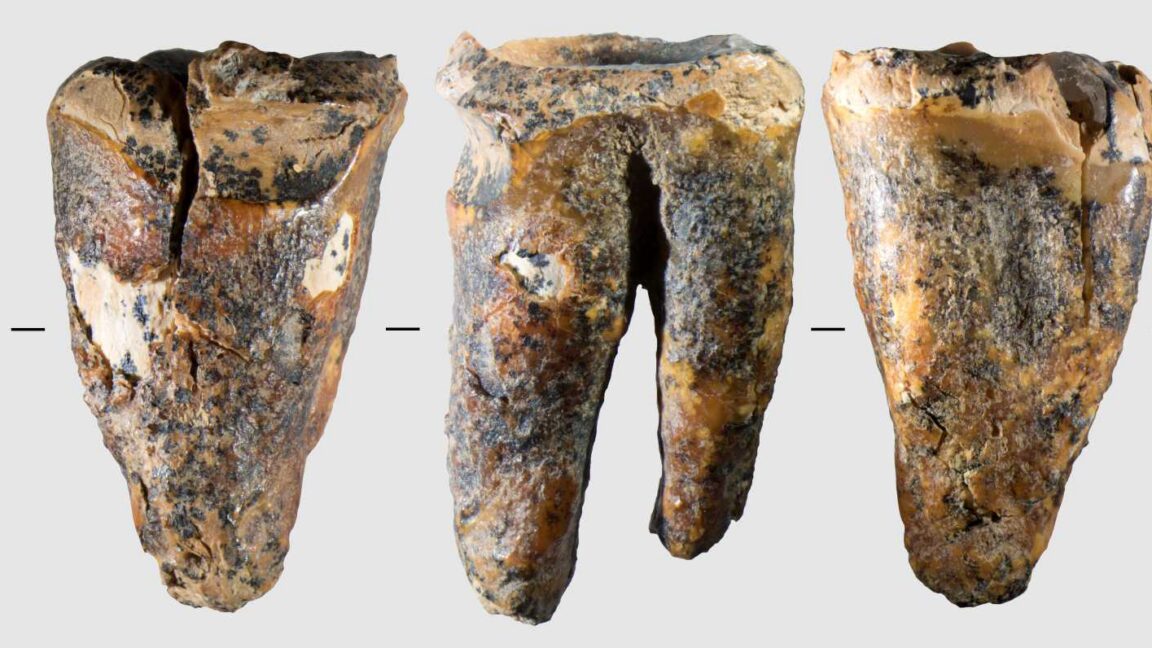
- •The discovery was made on a Neanderthal molar (Chagyrskaya 64) unearthed from Chagyrskaya Cave in the Altai Mountains of Siberia, Russia.
- •Microscopic analysis, including scanning electron microscopy and microtomography, confirmed that the deep hole in the tooth was intentionally drilled by a sharp stone tool, likely twirled between the fingers.
- •This evidence of invasive dental treatment by Neanderthals predates the earliest known similar procedures by Homo sapiens by more than 40,000 years.
- •The same Neanderthal individual also showed evidence of using toothpicks, indicating a broader understanding of oral hygiene and pain management beyond just drilling.
🛠️ Technical Deep Dive
- **Location of Discovery:** Chagyrskaya Cave, Altai Mountains, southwestern Siberia, Russia.
- **Specimen:** A 59,000-year-old Neanderthal molar, identified as "Chagyrskaya 64".
- **Procedure Identified:** Drilling of a deep hole from the chewing surface of the molar into the pulp cavity.
- **Tools Used:** A sharp, thin stone tool, likely manipulated with precise finger movements (twirled between fingertips).
- **Purpose:** To remove infected tissue (decaying enamel and inner tooth material) and alleviate pain caused by a carious lesion (cavity).
- **Analytical Methods:** Microscopic analysis (including scanning electron microscopy and microtomography) of the tooth's surface revealed parallel linear scratch marks and V-shaped grooves.
- **Experimental Replication:** Researchers conducted experiments by manually drilling into modern human teeth with prehistoric-style stone tools to replicate the observed marks and confirm the feasibility of the procedure.
- **Associated Findings:** The tooth also exhibited a groove consistent with the use of wooden toothpicks, suggesting additional methods for pain relief and oral hygiene.
🔮 Future ImplicationsAI analysis grounded in cited sources
⏳ Timeline
📎 Sources (18)
Factual claims are grounded in the sources below. Forward-looking analysis is AI-generated interpretation.
- Google Search Source
- Google Search Source
- Google Search Source
- Google Search Source
- Google Search Source
- Google Search Source
- Google Search Source
- Google Search Source
- Google Search Source
- Google Search Source
- Google Search Source
- Google Search Source
- Google Search Source
- Google Search Source
- Google Search Source
- Google Search Source
- Google Search Source
- Google Search Source
Weekly AI Recap
Read this week's curated digest of top AI events →
👉Related Updates
AI-curated news aggregator. All content rights belong to original publishers.
Original source: Ars Technica ↗