NASA partners with Relativity Space for 2028 Mars mission
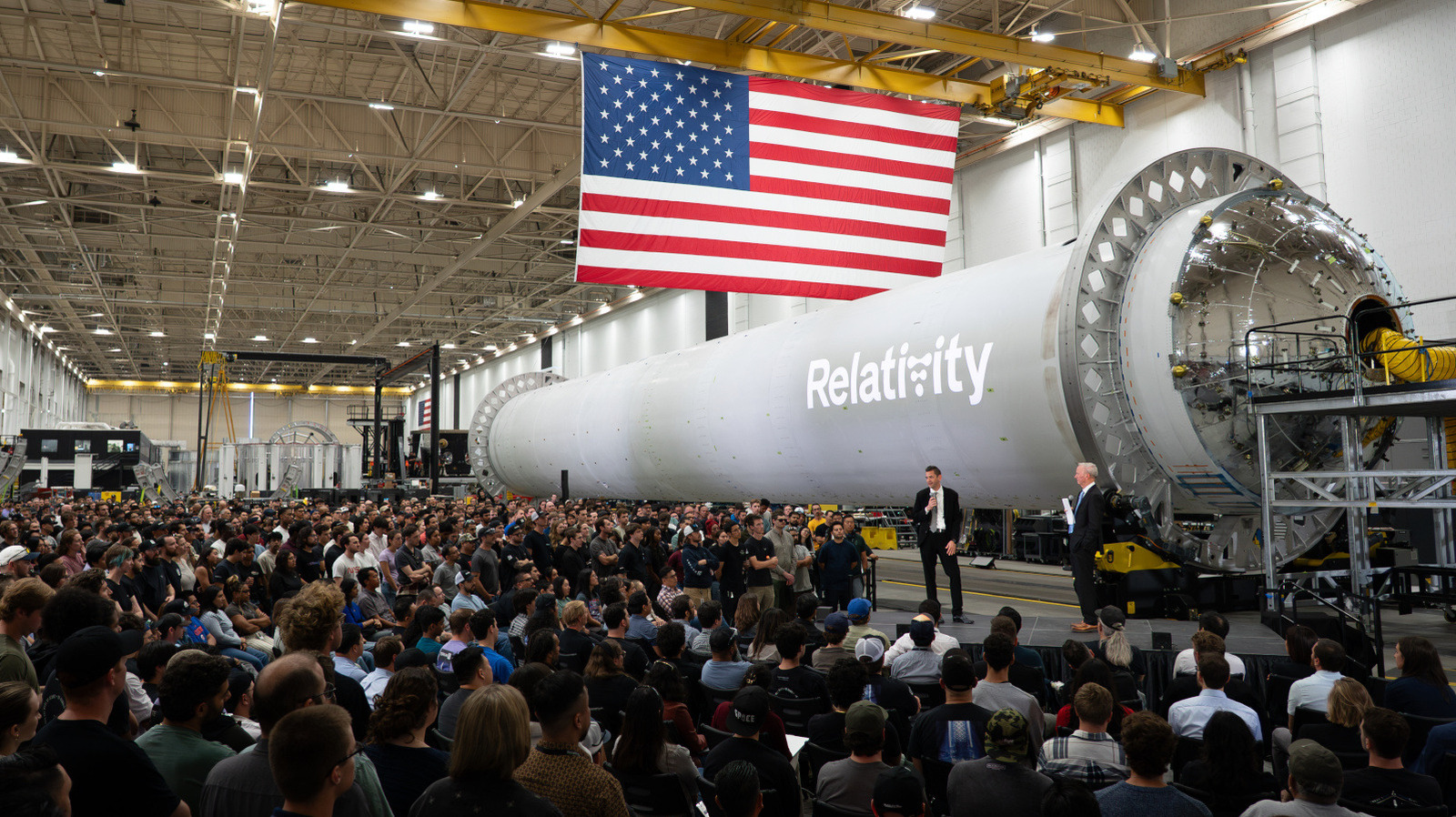
💡Major aerospace partnership using 3D-printing and advanced manufacturing for deep space exploration.
⚡ 30-Second TL;DR
What Changed
NASA and Relativity Space signed a partnership for a 2028 Mars mission.
Why It Matters
The collaboration signals a shift toward private-public partnerships in deep space exploration, potentially lowering costs for future interplanetary missions.
What To Do Next
Monitor the integration of AI-driven generative design in aerospace manufacturing to see how it accelerates hardware development cycles.
Key Points
- •NASA and Relativity Space signed a partnership for a 2028 Mars mission.
- •The mission involves sending an orbiter to study the Martian environment.
- •Relativity Space is known for its 3D-printed rocket technology.
🧠 Deep Insight
Background and context from public sources — not the original article. 17 sources cited.
🔑 Enhanced Key Takeaways
- •The 2028 Mars mission, named Aeolus, is a public-private partnership where NASA provides a four-instrument atmospheric-science payload suite, and Relativity Space is responsible for the spacecraft, the Terran R rocket, and cruise operations to Mars.
- •Relativity Space was co-founded in 2015 by Tim Ellis and Jordan Noone, not Eric Schmidt, who later became CEO in March 2025 after taking a controlling interest in the company.
- •The mission will utilize Relativity's Terran R, a heavy-lift, partially reusable rocket that is largely 3D-printed and powered by liquid oxygen and methane, capable of delivering 23,500 kg to Low Earth Orbit (LEO) in a reusable configuration.
- •The Aeolus instrument suite will provide the first daily, global view of Martian winds, temperatures, dust, and clouds, which will aid in improving atmospheric models and planning safer future landings for both robotic and human missions.
- •Prior to this NASA partnership, Relativity Space had announced a separate, exclusive agreement with Impulse Space in July 2022 for a commercial Mars mission, aiming to deliver a lander to the Martian surface as early as 2024, also using the Terran R rocket.
📊 Competitor Analysis▸ Show
| Company | Primary Rocket | 3D Printing Usage | Payload to LEO (Reusable) | Cost per Launch (USD) |
|---|---|---|---|---|
| Relativity Space | Terran R | Significant portion of rocket (Stargate printers) | 23,500 kg | $55 million |
| SpaceX | Falcon 9 / Starship | Parts (e.g., Raptor engines) | Falcon 9: Aims to exceed by Terran R | Falcon 9: $62 million |
| Rocket Lab | Electron | Rutherford engines | Small-lift | $7 million |
| ABL Space Systems | RS1 | Used in manufacturing | 1,350 kg | $12 million |
🛠️ Technical Deep Dive
- Stargate 3D Printers: Relativity Space employs proprietary 4th Generation Stargate metal 3D printers. These machines move horizontally, feeding multiple wires into a single print head, and are controlled by customized software and machine learning techniques.
- Manufacturing Efficiency: The Stargate printers are designed to radically simplify manufacturing supply chains, capable of producing a rocket with 100 times fewer parts in a matter of months, aiming for a 60-day build time from raw material to flight.
- Terran R Specifications: The Terran R is an 87-meter tall, 5.4-meter diameter, two-stage, partially reusable heavy-lift launch vehicle.
- Propulsion: Its first stage is powered by 13 Aeon R engines, and the second stage by one Aeon Vac engine, both utilizing liquid oxygen (LOX) and methane as propellants.
- Reusability: The first stage of Terran R is designed for up to 20 reuses, employing a high-angle-of-attack reentry.
- Payload Capacity: Terran R can deliver 23,500 kg to LEO with a reusable first stage, or 33,500 kg if fully expended.
🔮 Future ImplicationsAI analysis grounded in cited sources
⏳ Timeline
📎 Sources (17)
Factual claims are grounded in the sources below. Forward-looking analysis is AI-generated interpretation.
Weekly AI Recap
Read this week's curated digest of top AI events →
👉Related Updates
AI-curated news aggregator. All content rights belong to original publishers.
Original source: Engadget ↗
This is a summary, not the original. Read the source, or get the weekly briefing.
Weekly AI briefing
One email a week. Unsubscribe anytime.