🇨🇳cnBeta (Full RSS)•Stalecollected in 3h
NASA Mars Copter Hits Supersonic Speeds
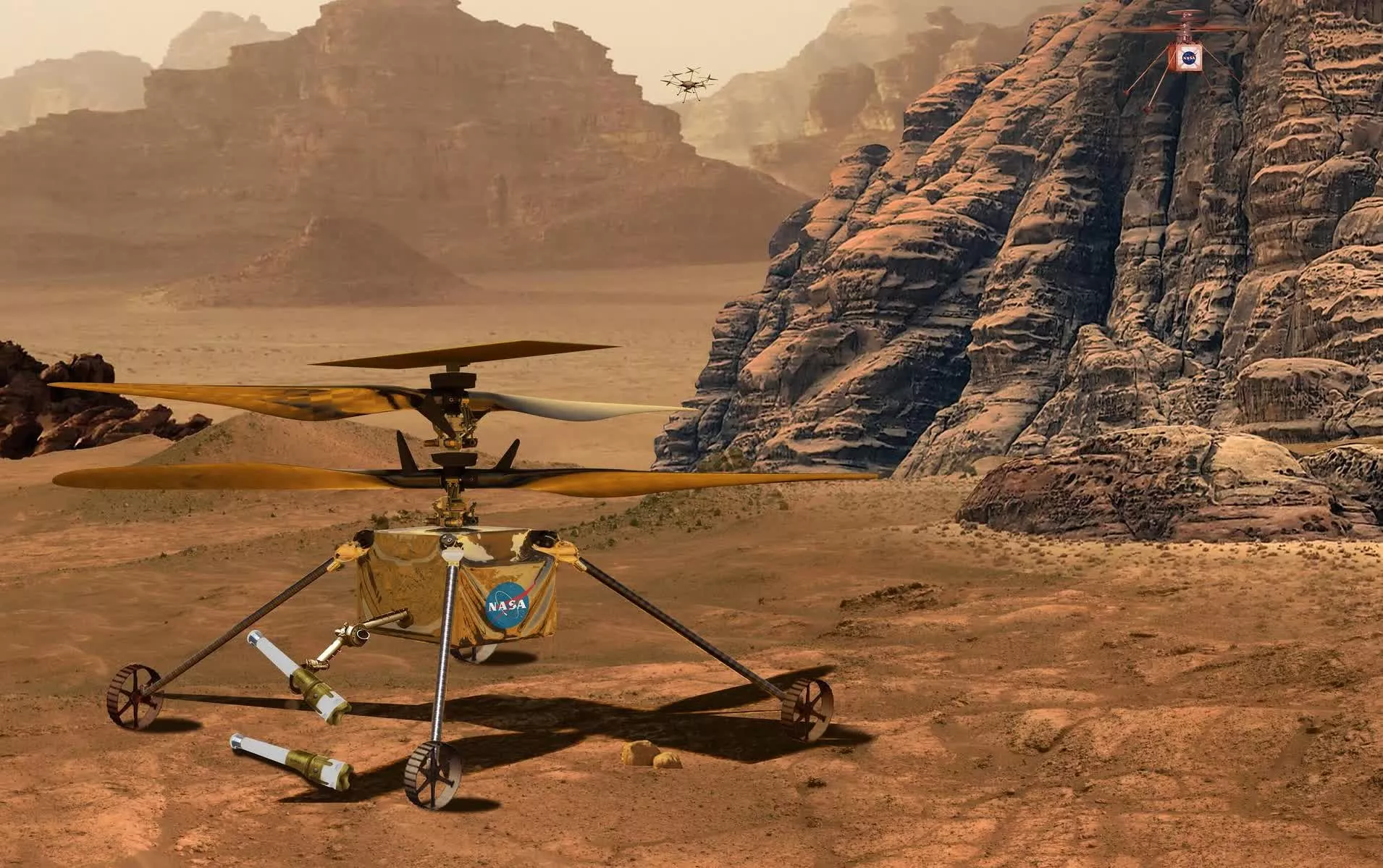
💡Mars supersonic rotors boost drone lift—vital for embodied AI in harsh envs
⚡ 30-Second TL;DR
What Changed
Rotor tips exceed Mach 1 in Mars atmosphere sim
Why It Matters
Paves way for more capable Mars drones, inspiring extreme-environment robotics and autonomy tech for AI practitioners.
What To Do Next
Incorporate Mars atmosphere sims into drone RL training for robust autonomy.
Who should care:Researchers & Academics
Key Points
- •Rotor tips exceed Mach 1 in Mars atmosphere sim
- •Passed critical ground simulation tests
- •Boosts lift and payload capacities significantly
- •Tailored for Mars' extremely thin air
🧠 Deep Insight
AI-generated analysis for this event.
🔑 Enhanced Key Takeaways
- •The next-generation rotorcraft, designated as the Mars Science Helicopter (MSH), utilizes a coaxial rotor design with six blades, a significant departure from the Ingenuity helicopter's four-blade configuration.
- •Testing was conducted in the Jet Propulsion Laboratory's 25-foot Space Simulator, which was specifically modified to replicate the low-pressure, CO2-rich environment of the Martian atmosphere.
- •The transition to supersonic rotor tip speeds is facilitated by advanced carbon-fiber composite materials that mitigate aeroelastic instability and structural fatigue under high-Mach conditions.
🛠️ Technical Deep Dive
- Rotor Configuration: Coaxial, counter-rotating design to eliminate the need for a tail rotor and maximize lift efficiency in low-density air.
- Tip Speed Management: Blades feature optimized airfoils designed to delay the onset of shock-induced drag at Mach 1.0+.
- Structural Composition: High-modulus carbon fiber composites engineered for extreme thermal cycling and high-frequency vibration resistance.
- Power System: Enhanced solar array efficiency and high-energy-density solid-state battery integration to support increased payload mass.
🔮 Future ImplicationsAI analysis grounded in cited sources
The MSH will enable autonomous aerial exploration of deep Martian craters.
Increased lift capacity allows for the integration of heavier, high-resolution scientific instrumentation capable of analyzing terrain inaccessible to rovers.
Supersonic rotor technology will become the standard for future planetary rotorcraft.
The successful demonstration of stable flight at Mach 1+ in low-pressure environments provides a scalable solution for aerial mobility on other thin-atmosphere bodies like Titan.
⏳ Timeline
2021-04
Ingenuity helicopter achieves first powered flight on Mars.
2024-01
Ingenuity mission officially concludes after rotor damage.
2025-06
NASA initiates ground-based testing for next-generation Mars rotorcraft prototypes.
2026-03
Successful high-speed rotor tests conducted in simulated Martian atmosphere.
📰
Weekly AI Recap
Read this week's curated digest of top AI events →
👉Related Updates
AI-curated news aggregator. All content rights belong to original publishers.
Original source: cnBeta (Full RSS) ↗