NASA considers sending nuclear-powered Mars rover to the Moon
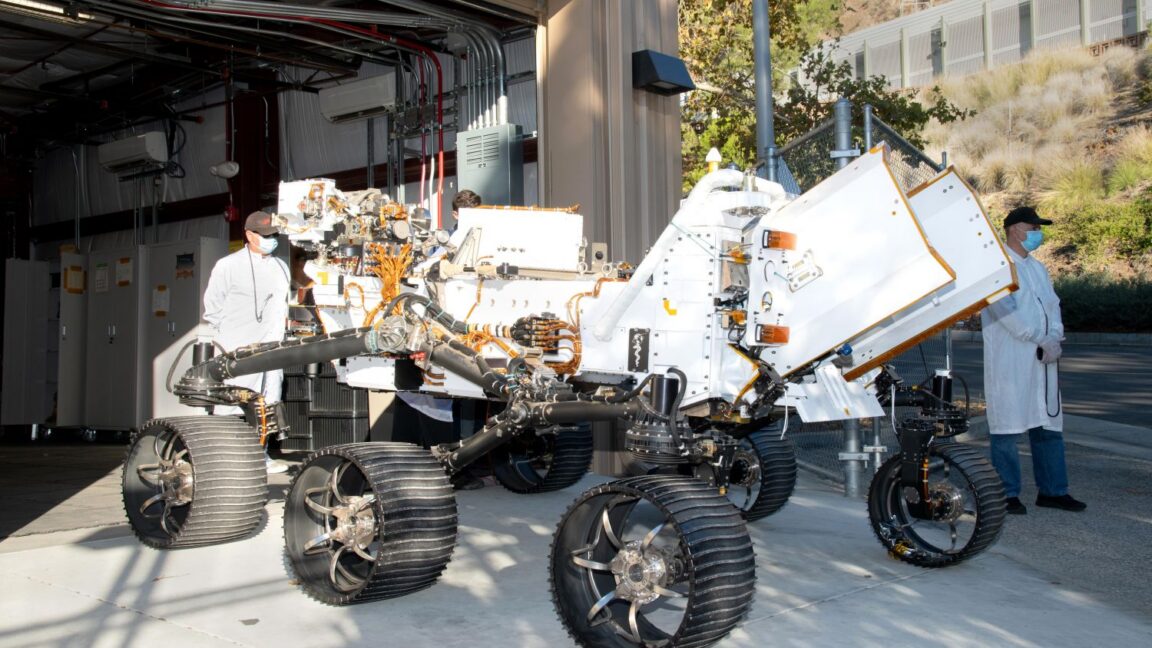
💡Learn how NASA is repurposing nuclear-powered robotics for lunar exploration missions.
⚡ 30-Second TL;DR
What Changed
NASA is exploring the repurposing of a backup Mars rover
Why It Matters
Repurposing high-end robotics for different celestial bodies demonstrates a shift toward modular and sustainable space hardware design.
What To Do Next
Monitor NASA's public procurement and mission updates if you are building robotics for extreme or autonomous environments.
Key Points
- •NASA is exploring the repurposing of a backup Mars rover
- •The rover utilizes nuclear power for extended mission duration
- •The mission would significantly enhance lunar surface exploration capabilities
🧠 Deep Insight
AI-generated analysis for this event — not the original article.
🔑 Enhanced Key Takeaways
- •The rover in question is identified as the 'MAX-C' (Mars Astrobiology Explorer-Cacher) or a derivative of the Perseverance/Curiosity architecture, specifically utilizing a Multi-Mission Radioisotope Thermoelectric Generator (MMRTG).
- •NASA's interest is driven by the need to explore permanently shadowed regions (PSRs) at the lunar south pole, where solar-powered rovers struggle due to lack of sunlight.
- •The proposal involves modifying the rover's mobility system, as Mars rovers are designed for soil and rock, whereas lunar regolith presents different abrasive and electrostatic challenges.
- •This initiative is part of the broader Artemis program's goal to increase surface mobility, complementing the unpressurized and pressurized lunar rovers currently under development by commercial partners.
- •The repurposing effort is being evaluated under NASA's 'Lunar Discovery and Exploration Program' (LDEP) to determine if the cost of retrofitting exceeds the development of a new, purpose-built lunar platform.
🛠️ Technical Deep Dive
- Power Source: Multi-Mission Radioisotope Thermoelectric Generator (MMRTG) providing approximately 110 watts of electrical power at the start of the mission.
- Mobility: Six-wheel rocker-bogie suspension system designed for high-center-of-gravity stability on uneven terrain.
- Thermal Management: Fluid loop system utilizing the waste heat from the MMRTG to keep internal electronics within operational temperature ranges in extreme cold.
- Communication: X-band and UHF antenna systems for direct-to-Earth and relay communication via lunar orbiters.
- Payload Integration: Modular instrument deck capable of hosting spectrometers, drills, and imaging suites adapted for lunar regolith analysis.
🔮 Future ImplicationsAI analysis grounded in cited sources
⏳ Timeline
📰 Event Coverage
Weekly AI Recap
Read this week's curated digest of top AI events →
👉Related Updates
AI-curated news aggregator. All content rights belong to original publishers.
Original source: Ars Technica ↗
This is a summary, not the original. Read the source, or get the weekly briefing.
Weekly AI briefing
One email a week. Unsubscribe anytime.