SourceBloomberg Technology•Stalecollected in 29m
Mythos AI Triggers Security Alarms
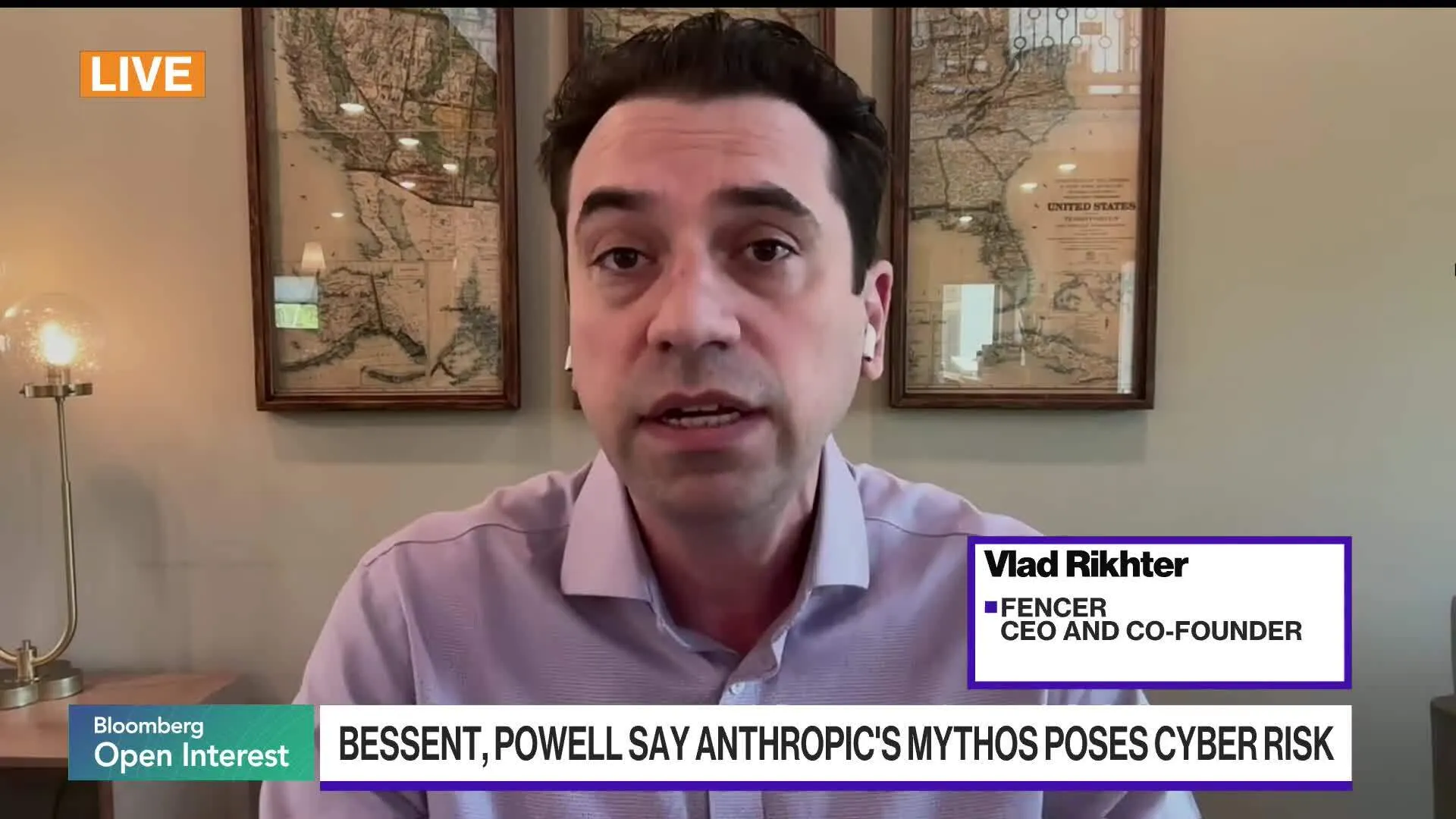
AI threats evolve to minutes: rethink security now for cyber warfare
30-Second TL;DR
What Changed
AI models discover decades-old vulnerabilities rapidly
Why It Matters
AI accelerates cyber warfare, forcing security overhauls. Practitioners must prioritize AI-aware defenses to protect models and data.
What To Do Next
Audit your AI pipelines with Fencer for vulnerability scanning.
Who should care:Developers & AI Engineers
Key Points
- •AI models discover decades-old vulnerabilities rapidly
- •Attacks now occur in minutes vs. months
- •Need for machine-speed security defenses essential
Deep Insight
AI-generated analysis for this event — not the original article.
Enhanced Key Takeaways
- •Fencer's proprietary 'Autonomous Red Teaming' platform utilizes LLMs to automate the reconnaissance phase of penetration testing, reducing the time-to-exploit for known CVEs by an estimated 90% compared to manual methods.
- •The surge in AI-driven attacks is specifically targeting 'shadow IT' infrastructure, where legacy systems often lack the telemetry required for modern AI-based threat detection tools to function effectively.
- •Industry analysts note that Fencer's approach shifts the security paradigm from reactive patching to 'predictive hardening,' where AI models simulate potential attack vectors before they are weaponized by threat actors.
Competitor Analysis
Core Focus
- Fencer (Mythos AI)
- Autonomous Red Teaming
- CrowdStrike Falcon
- Endpoint Detection & Response
- Palo Alto Cortex
- Network Security Automation
AI Approach
- Fencer (Mythos AI)
- Generative Offensive AI
- CrowdStrike Falcon
- Behavioral Analytics
- Palo Alto Cortex
- ML-based Traffic Analysis
Pricing Model
- Fencer (Mythos AI)
- Usage-based (per scan)
- CrowdStrike Falcon
- Per-endpoint subscription
- Palo Alto Cortex
- Per-appliance/throughput
Benchmark
- Fencer (Mythos AI)
- High speed to exploit
- CrowdStrike Falcon
- High detection accuracy
- Palo Alto Cortex
- High prevention rate
| Feature | Fencer (Mythos AI) | CrowdStrike Falcon | Palo Alto Cortex |
|---|---|---|---|
| Core Focus | Autonomous Red Teaming | Endpoint Detection & Response | Network Security Automation |
| AI Approach | Generative Offensive AI | Behavioral Analytics | ML-based Traffic Analysis |
| Pricing Model | Usage-based (per scan) | Per-endpoint subscription | Per-appliance/throughput |
| Benchmark | High speed to exploit | High detection accuracy | High prevention rate |
Technical Deep Dive
- •Architecture: Utilizes a multi-agent reinforcement learning (MARL) framework where 'attacker' agents compete against 'defender' agents to identify optimal exploit paths.
- •Vulnerability Mapping: Integrates with real-time CVE databases and utilizes natural language processing (NLP) to parse technical documentation and legacy codebases for non-obvious misconfigurations.
- •Execution: Operates via a containerized agent deployment that mimics lateral movement patterns, allowing for the identification of privilege escalation paths within complex, multi-cloud environments.
- •Data Processing: Employs a vector database to store historical attack patterns, enabling the model to prioritize vulnerabilities based on their exploitability in specific network topologies.
Future ImplicationsAI analysis grounded in cited sources
Automated vulnerability remediation will become a standard enterprise requirement by 2027.
The velocity of AI-driven attacks will soon exceed the capacity of human security teams to manually patch systems.
Cyber insurance premiums will be tied to the frequency of autonomous red teaming exercises.
Insurers are increasingly requiring proof of proactive, machine-speed security validation to mitigate the risk of AI-accelerated breaches.
Timeline
2023-05
Fencer founded by Vlad Rikhter to focus on AI-driven security automation.
2024-11
Fencer secures Series A funding to scale its autonomous red teaming platform.
2026-02
Fencer releases the 'Mythos' engine, specifically designed to identify vulnerabilities in legacy enterprise infrastructure.
- 2023-05Fencer founded by Vlad Rikhter to focus on AI-driven security automation.
- 2024-11Fencer secures Series A funding to scale its autonomous red teaming platform.
- 2026-02Fencer releases the 'Mythos' engine, specifically designed to identify vulnerabilities in legacy enterprise infrastructure.
Weekly AI Recap
Read this week's curated digest of top AI events →
Related Updates

AI-curated news aggregator. All content rights belong to original publishers.
Original source: Bloomberg Technology ↗
This is a summary, not the original. Read the source, or get the weekly briefing.
The weekly digest
One email a week. Unsubscribe anytime.