Musk loses OpenAI lawsuit over statute of limitations
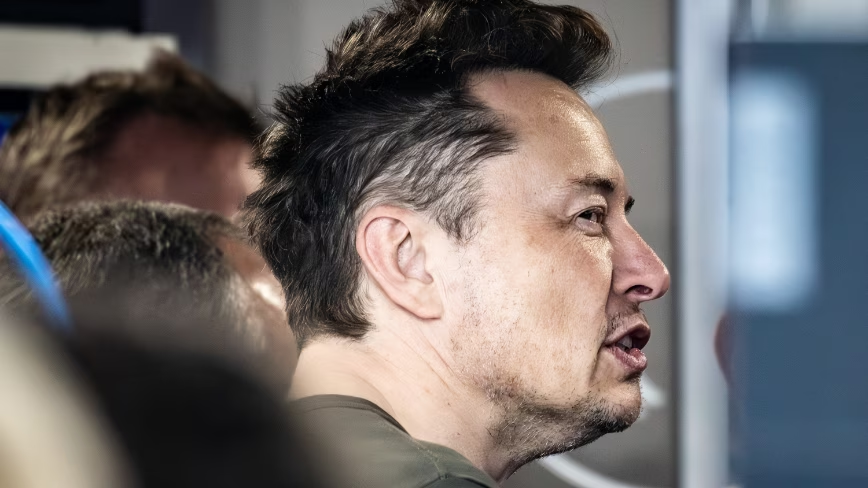
💡Legal clarity for the future of the OpenAI platform.
⚡ 30-Second TL;DR
What Changed
Unanimous jury verdict in Oakland court
Why It Matters
This legal outcome provides stability for OpenAI's current corporate structure and allows the company to focus on product development without the immediate threat of this specific litigation.
What To Do Next
Continue building on the OpenAI platform with increased confidence regarding their current legal and corporate stability.
Key Points
- •Unanimous jury verdict in Oakland court
- •Claims dismissed due to statute of limitations
- •Ends a major corporate governance trial regarding AI development
🧠 Deep Insight
Web-grounded analysis with 24 cited sources.
🔑 Enhanced Key Takeaways
- •Elon Musk's lawsuit alleged that OpenAI, Sam Altman, and Greg Brockman betrayed the company's founding mission as a nonprofit dedicated to benefiting humanity by transitioning to a for-profit model.
- •Musk, an OpenAI co-founder who invested approximately $38 million in its early years, sought over $100 billion in damages to be awarded to OpenAI's nonprofit arm and demanded the removal of Altman and Brockman.
- •The jury's unanimous verdict, which was advisory but accepted by Judge Yvonne Gonzalez Rogers, found that Musk waited too long to file his lawsuit, missing the three-year statute of limitations.
- •OpenAI and its executives argued that Musk was aware of the plans for a for-profit entity as early as 2017 and filed the lawsuit because he could not gain unilateral control over the company.
- •The dismissal means the court did not rule on the merits of Musk's claims regarding OpenAI's alleged betrayal of its founding mission, only on the timeliness of the filing.
🔮 Future ImplicationsAI analysis grounded in cited sources
⏳ Timeline
📎 Sources (24)
Factual claims are grounded in the sources below. Forward-looking analysis is AI-generated interpretation.
Weekly AI Recap
Read this week's curated digest of top AI events →
👉Related Updates

AI-curated news aggregator. All content rights belong to original publishers.
Original source: The Next Web (TNW) ↗