Moore Threads Nears the GPU Breakthrough
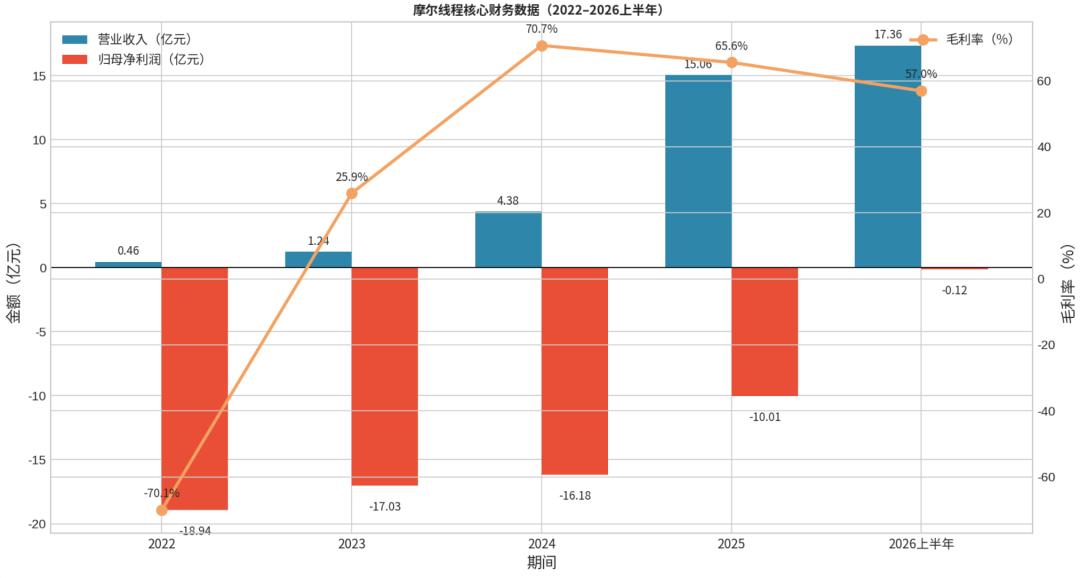
💡A look at whether Moore Threads can clear China’s GPU bottleneck—and justify extreme market expectations.
⚡ 30-Second TL;DR
What Changed
Moore Threads is portrayed as nearing a critical breakthrough in China’s domestic GPU industry.
Why It Matters
If Moore Threads continues closing the capability gap, Chinese AI developers could gain another domestic GPU option. However, the valuation suggests that execution risk and expectations are already exceptionally high.
What To Do Next
Benchmark your inference workload on Moore Threads hardware only after verifying framework support, operator coverage, and production-ready drivers.
Key Points
- •Moore Threads is portrayed as nearing a critical breakthrough in China’s domestic GPU industry.
- •The company’s 180x price-to-sales ratio highlights aggressive investor expectations.
- •The article frames domestic GPU progress as a difficult effort to overcome technical and commercial barriers.
- •The discussion is primarily an industry and valuation analysis rather than a specific product announcement.
🧠 Deep Insight
AI-generated analysis for this event.
🔑 Enhanced Key Takeaways
- •Moore Threads was founded in 2020 by Zhang Jianzhong, a former executive who led NVIDIA's China operations for over a decade, providing the company with deep industry expertise.
- •The company has faced significant headwinds due to U.S. export controls, which restricted its access to advanced manufacturing processes like TSMC's 5nm and 7nm nodes, forcing a pivot toward domestic foundry partnerships.
- •Moore Threads successfully completed a massive Series B financing round in 2022, raising billions of RMB, which solidified its status as a 'unicorn' despite the lack of immediate profitability.
- •The company's MUSA (Moore Threads Unified System Architecture) is designed to bridge the gap between graphics rendering and AI computing, aiming for software ecosystem compatibility with CUDA-based applications.
- •Moore Threads has been placed on the U.S. Entity List, which complicates its supply chain and ability to collaborate with international EDA tool providers and IP vendors.
📊 Competitor Analysis▸ Show
| Feature/Metric | Moore Threads (MTT S-Series) | Biren Technology (BR100) | Huawei (Ascend 910) |
|---|---|---|---|
| Primary Focus | Graphics & AI Hybrid | High-Performance AI Training | AI Training & Inference |
| Architecture | MUSA | BIRENSUPA | Da Vinci |
| Ecosystem | MUSA SDK (CUDA-compatible) | BIRENSUPA SDK | CANN (MindSpore) |
| Market Position | Consumer/Workstation/Data Center | Data Center/HPC | Data Center/Cloud |
🛠️ Technical Deep Dive
- MUSA Architecture: A proprietary unified architecture that integrates programmable graphics rendering and general-purpose compute (GPGPU) capabilities.
- MTT S80 GPU: Features 4096 MUSA cores, 16GB GDDR6 memory, and is notable for being one of the first domestic GPUs to support PCIe 5.0.
- Software Stack: MUSA SDK provides tools for developers to port CUDA code, though performance overhead remains a significant challenge compared to native NVIDIA implementations.
- Process Node: Early generations utilized 7nm/12nm processes, with ongoing efforts to optimize performance on domestic 14nm and 7nm-class nodes.
🔮 Future ImplicationsAI analysis grounded in cited sources
⏳ Timeline
Weekly AI Recap
Read this week's curated digest of top AI events →
👉Related Updates



AI-curated news aggregator. All content rights belong to original publishers.
Original source: 钛媒体 ↗