Monitor AI Agents in Production
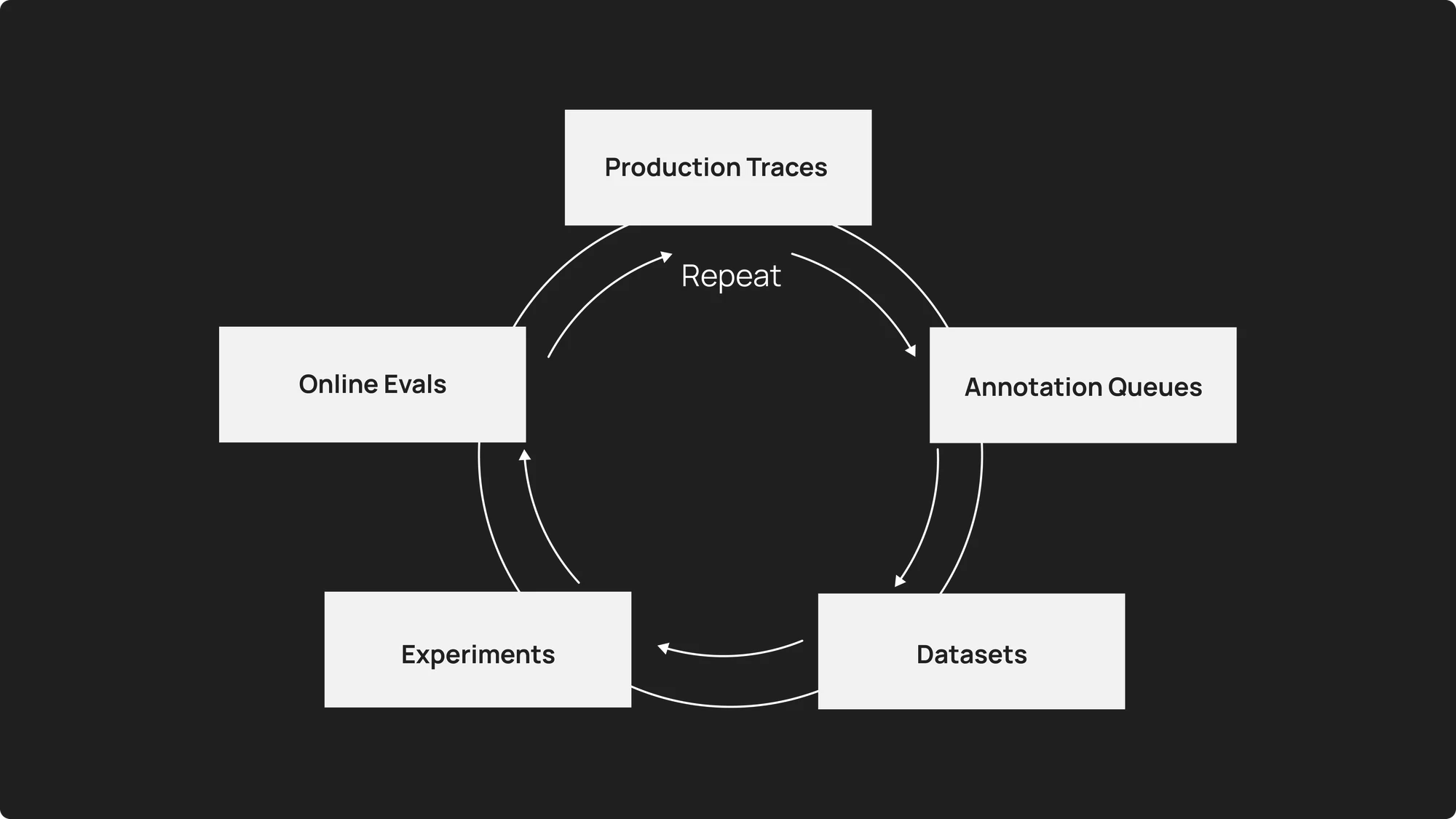
💡Learn how tracing and evaluation can make production AI agents measurable and improvable.
⚡ 30-Second TL;DR
What Changed
Production LLM agents require observability beyond traditional application monitoring.
Why It Matters
Teams deploying AI agents can gain better visibility into reliability and behavior after launch. This can reduce debugging time and create a more systematic path for improving production performance.
What To Do Next
Instrument one production agent with LangSmith tracing, then review failed runs and define an evaluation set for its most common tasks.
Key Points
- •Production LLM agents require observability beyond traditional application monitoring.
- •Tracing helps teams inspect agent execution and identify failure points.
- •Evaluation and monitoring support iterative improvements to agent behavior at scale.
🧠 Deep Insight
AI-generated analysis for this event.
🔑 Enhanced Key Takeaways
- •Modern observability stacks for AI agents now integrate 'LLM-as-a-judge' frameworks, which use stronger models to automatically score the outputs of smaller, production-grade agents.
- •Cost attribution at the per-agent-step level has become a critical requirement for enterprises to manage the high token consumption associated with recursive agentic loops.
- •Data privacy and PII redaction layers are increasingly being embedded directly into observability pipelines to ensure compliance before traces are stored in third-party monitoring platforms.
- •The industry is shifting toward 'semantic tracing,' which captures not just the execution path, but the intent and reasoning state of the agent at each decision node.
- •Integration with CI/CD pipelines now allows for 'eval-driven development,' where agent performance regressions are automatically blocked if they fail predefined evaluation benchmarks.
📊 Competitor Analysis▸ Show
| Feature | LangSmith (LangChain) | Arize Phoenix | Weights & Biases Prompts |
|---|---|---|---|
| Core Focus | Agentic Tracing & Dev Workflow | ML Observability & Evals | Experiment Tracking & LLM Ops |
| Pricing | Usage-based (Tiered) | Usage-based (Enterprise) | Per-seat/Usage-based |
| Benchmarks | High (Native LangChain integration) | High (Open-source flexibility) | High (Deep ML ecosystem integration) |
🛠️ Technical Deep Dive
- Tracing Architecture: Utilizes OpenTelemetry standards to capture parent-child relationships between agent steps, tool calls, and LLM invocations.
- Evaluation Frameworks: Implements RAGAS or custom prompt-based evaluators to measure faithfulness, answer relevance, and context precision.
- Data Storage: Employs vector databases for storing trace embeddings, enabling semantic search across historical agent execution logs.
- Feedback Loops: Supports human-in-the-loop (HITL) annotation interfaces that feed corrected data back into fine-tuning datasets for model improvement.
🔮 Future ImplicationsAI analysis grounded in cited sources
⏳ Timeline
Weekly AI Recap
Read this week's curated digest of top AI events →
👉Related Updates
AI-curated news aggregator. All content rights belong to original publishers.
Original source: LangChain Blog ↗