Mitsubishi Enters Humanoid Robotics Market
💡Major automotive player Mitsubishi joins the humanoid race, highlighting the shift toward embodied AI in manufacturing.
⚡ 30-Second TL;DR
What Changed
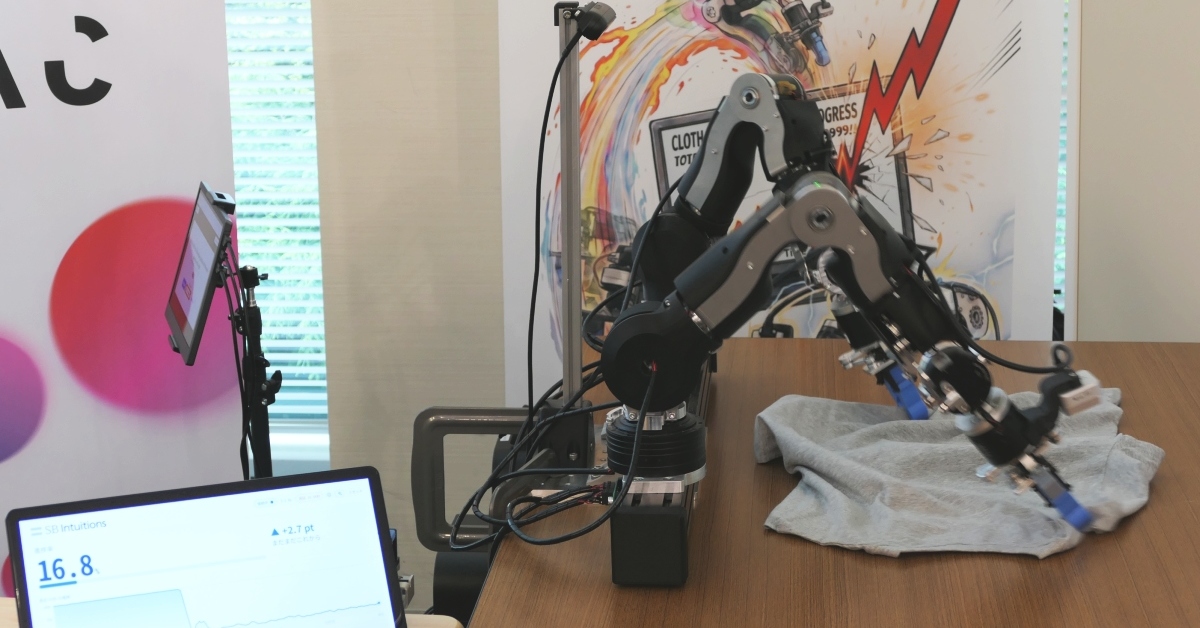
Mitsubishi will partner with Highlanders to mass-produce humanoid robots at its Kyoto plant.
Why It Matters
This move signals a broader trend of traditional automotive giants shifting from fixed industrial arms to flexible, embodied AI agents in manufacturing, potentially setting a new standard for factory automation.
What To Do Next
Monitor the 'Robot-as-a-Service' (RaaS) business model emerging in manufacturing to identify opportunities for deploying AI-driven automation without heavy upfront capital.
Key Points
- •Mitsubishi will partner with Highlanders to mass-produce humanoid robots at its Kyoto plant.
- •The initiative aims to address future labor shortages and improve manufacturing flexibility.
- •Mitsubishi has completed an equity investment in Highlanders to secure the technology.
- •The project focuses on integrating humanoid robots into existing automotive production lines.
🧠 Deep Insight
AI-generated analysis for this event — not the original article.
🔑 Enhanced Key Takeaways
- •Highlanders is a Tokyo-based robotics startup founded by former researchers from the University of Tokyo's JSK Lab, known for advanced bipedal locomotion research.
- •The partnership specifically targets the 'T-HR' series or similar humanoid platforms developed by Highlanders, which are designed for high-degree-of-freedom manipulation in constrained industrial spaces.
- •Mitsubishi Electric's investment is part of a broader 'Digital Manufacturing' strategy aimed at achieving 'Autonomous Factory' status by 2030.
- •The Kyoto plant deployment serves as a pilot program to test the robots' ability to handle non-repetitive tasks, such as cable routing and complex assembly, which traditional industrial arms struggle to perform.
- •The collaboration includes the development of proprietary AI vision systems that allow the robots to adapt to changing factory floor layouts without requiring extensive reprogramming.
📊 Competitor Analysis▸ Show
| Feature | Mitsubishi/Highlanders | Tesla (Optimus) | Figure AI | Toyota (T-HR3) |
|---|---|---|---|---|
| Primary Focus | Automotive Assembly | General Purpose/Logistics | General Purpose/Industrial | Research/Assistance |
| Deployment Stage | Pilot (Kyoto Plant) | Internal Factory Testing | Commercial Pilot | R&D/Prototyping |
| Key Advantage | Existing Factory Integration | AI/Compute Scale | Humanoid Dexterity | Established Robotics Legacy |
🛠️ Technical Deep Dive
- Robot Architecture: Utilizes high-torque, back-drivable actuators to ensure safety during human-robot collaboration (HRC).
- Control System: Employs Whole-Body Control (WBC) algorithms to maintain balance while performing manipulation tasks in dynamic environments.
- Vision System: Integrates multi-modal sensor fusion (LiDAR, depth cameras, and tactile sensors) for real-time object recognition and collision avoidance.
- Power Management: Designed for extended shift operations with modular battery packs compatible with existing industrial charging infrastructure.
🔮 Future ImplicationsAI analysis grounded in cited sources
⏳ Timeline
📰 Event Coverage
Weekly AI Recap
Read this week's curated digest of top AI events →
👉Related Updates


AI-curated news aggregator. All content rights belong to original publishers.
Original source: 虎嗅 ↗
This is a summary, not the original. Read the source, or get the weekly briefing.
The weekly digest
One email a week. Unsubscribe anytime.