Microsoft’s AI Ambitions Face a Chip Capacity Question
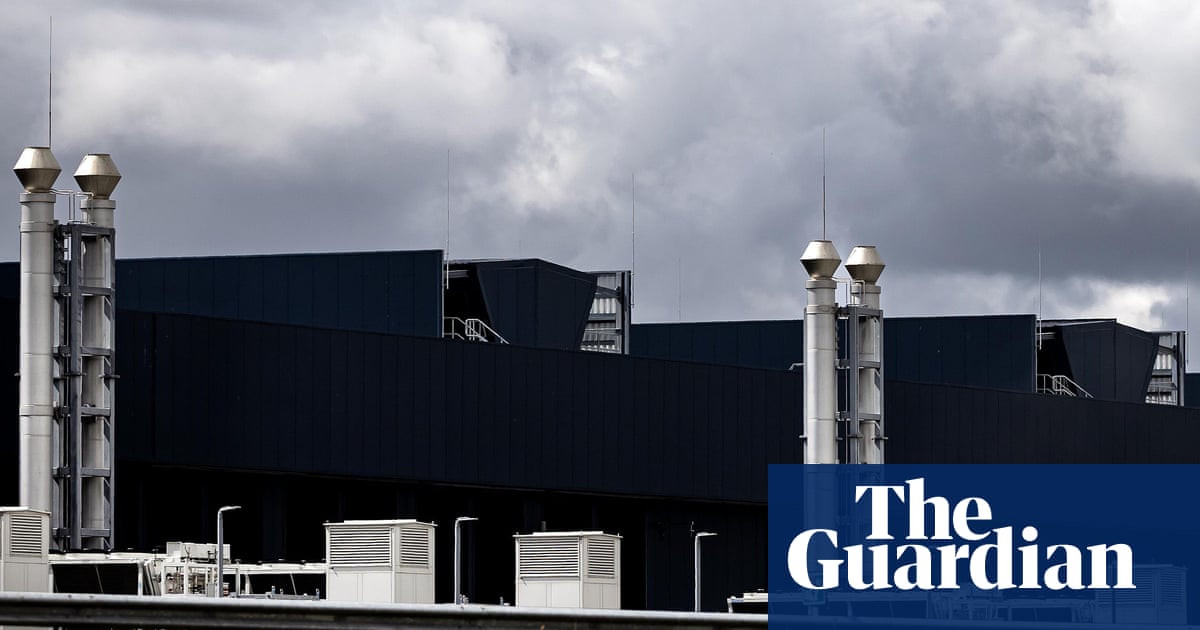
💡A potential chip-capacity gap could reshape Microsoft’s AI rollout—and your assumptions about accelerator access.
⚡ 30-Second TL;DR
What Changed
Advanced chips are essential for training and running large AI models.
Why It Matters
If the discrepancy reflects a genuine capacity shortfall, Microsoft could face limits on model training, inference scale, and the speed of new AI service rollouts. AI companies may also need to reassess assumptions about access to scarce accelerator capacity.
What To Do Next
Audit your current accelerator inventory, cloud quota, and expected inference demand before committing to larger model-training or production rollouts.
Key Points
- •Advanced chips are essential for training and running large AI models.
- •The Guardian found an apparent gap between Microsoft’s stated AI capacity and its operating chip inventory.
- •The investigation suggests hardware availability may be a constraint on Microsoft’s AI ambitions.
🧠 Deep Insight
AI-generated analysis for this event.
🔑 Enhanced Key Takeaways
- •Microsoft has increasingly shifted toward custom silicon development, specifically the Maia 100 AI accelerator, to reduce dependency on third-party GPU suppliers like NVIDIA.
- •The discrepancy identified by The Guardian may stem from Microsoft's reliance on 'capacity pooling' across its Azure data centers, where virtualized GPU resources are shared dynamically rather than dedicated to single instances.
- •Industry analysts note that Microsoft's capital expenditure (CapEx) on data center infrastructure reached record highs in early 2026, yet utilization rates remain opaque due to proprietary software-defined networking layers.
- •Supply chain reports indicate that Microsoft has been aggressively securing long-term supply agreements for H200 and Blackwell-class GPUs, potentially creating a 'bottleneck' in physical deployment timelines despite financial commitments.
- •The integration of Microsoft's 'Maia' chips into the Azure fleet is reportedly slower than internal projections, forcing the company to maintain a hybrid infrastructure that complicates capacity auditing.
📊 Competitor Analysis▸ Show
| Feature | Microsoft (Azure/Maia) | Google (TPU) | AWS (Trainium/Inferentia) |
|---|---|---|---|
| Primary Strategy | Hybrid (NVIDIA + Custom) | Vertical Integration (TPU-first) | Custom Silicon Focus |
| Pricing Model | Consumption-based/Reserved | Preemptible/Reserved | Savings Plans/On-demand |
| Benchmark Focus | General Purpose LLM Scaling | High-throughput Training | Cost-optimized Inference |
🛠️ Technical Deep Dive
- Microsoft Maia 100: Custom-designed AI accelerator built on a 5nm process, optimized for large language model (LLM) training and inference.
- Interconnect Architecture: Utilizes a proprietary Ethernet-based networking protocol designed to scale across thousands of GPUs without the latency overhead of traditional InfiniBand.
- Capacity Management: Employs a software-defined orchestration layer that abstracts physical GPU clusters into virtualized pools, complicating external audits of raw hardware counts.
- Power Density: Data centers are being retrofitted with advanced liquid cooling solutions to support the higher thermal design power (TDP) of next-generation AI accelerators.
🔮 Future ImplicationsAI analysis grounded in cited sources
⏳ Timeline
Weekly AI Recap
Read this week's curated digest of top AI events →
👉Related Updates


AI-curated news aggregator. All content rights belong to original publishers.
Original source: The Guardian Technology ↗