Microsoft Lags in Data Center Build-Out
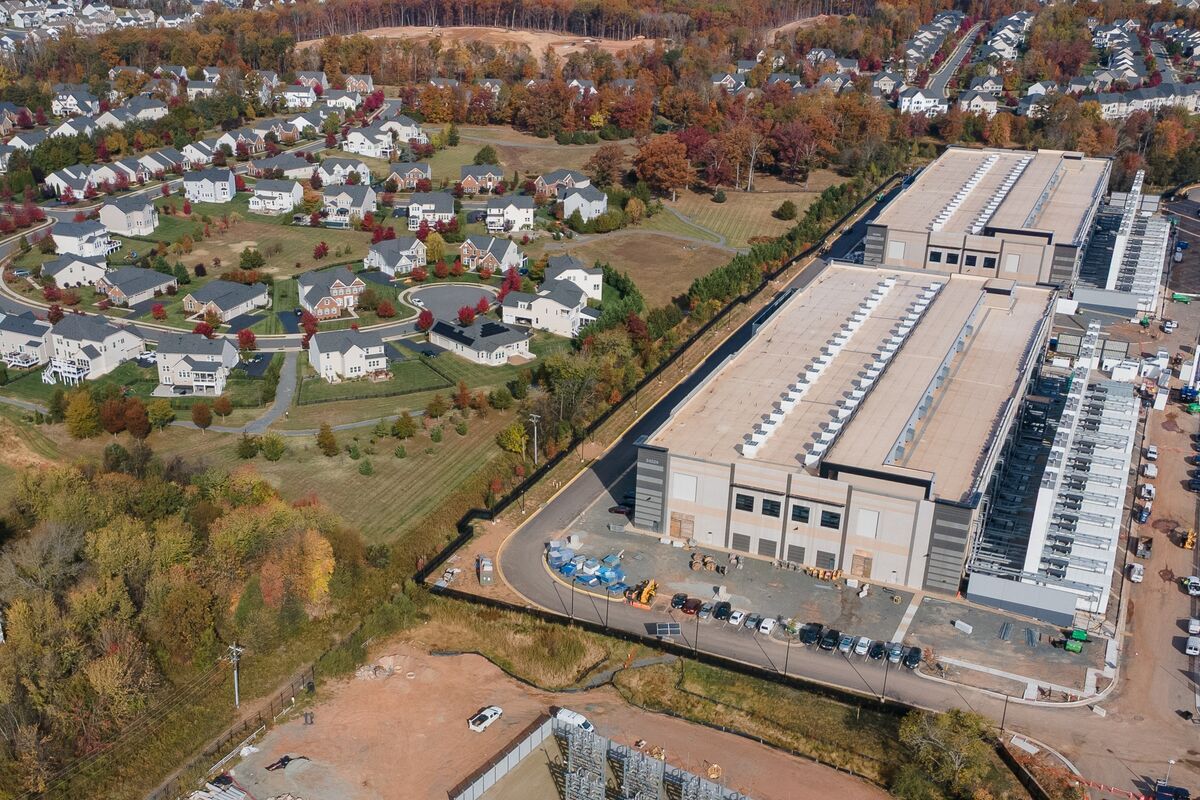
MSFT infra lag threatens AI scaling—check alternatives for reliable compute.
30-Second TL;DR
What Changed
Microsoft reduced data center spending previously
Why It Matters
Delays could constrain AI model training and inference scaling for Microsoft users. Competitors may gain market share in cloud AI services.
What To Do Next
Assess Azure data center availability for your AI workloads and consider multi-cloud strategies.
Key Points
- •Microsoft reduced data center spending previously
- •Now falling behind in build-out race
- •Impacts cloud and AI infrastructure capacity
Deep Insight
AI-generated analysis for this event — not the original article.
Enhanced Key Takeaways
- •Microsoft's infrastructure bottleneck is primarily attributed to delays in securing power grid interconnections and permitting for high-density AI clusters in key regions like Northern Virginia and the Pacific Northwest.
- •The company has shifted its capital expenditure strategy toward 'modular' data center designs to accelerate deployment timelines, attempting to bypass traditional multi-year construction cycles.
- •Internal reports suggest that Microsoft's Azure AI capacity utilization has reached near-peak levels, forcing the company to prioritize internal model training workloads over third-party enterprise customer requests.
Competitor Analysis
- Microsoft Azure
- Integrated OpenAI/Custom Silicon
- AWS
- Proprietary Trainium/Inferentia
- Google Cloud
- TPU-centric/Custom Silicon
- Microsoft Azure
- Moderate (Supply Chain Constrained)
- AWS
- High (Aggressive Global Expansion)
- Google Cloud
- Moderate (Focused on Core Regions)
- Microsoft Azure
- Aggressive (Nuclear/Renewable)
- AWS
- Aggressive (Direct Grid Investment)
- Google Cloud
- Moderate (Efficiency Focused)
| Feature | Microsoft Azure | AWS | Google Cloud |
|---|---|---|---|
| AI Infrastructure Strategy | Integrated OpenAI/Custom Silicon | Proprietary Trainium/Inferentia | TPU-centric/Custom Silicon |
| Build-out Velocity | Moderate (Supply Chain Constrained) | High (Aggressive Global Expansion) | Moderate (Focused on Core Regions) |
| Power Procurement | Aggressive (Nuclear/Renewable) | Aggressive (Direct Grid Investment) | Moderate (Efficiency Focused) |
Technical Deep Dive
- •Implementation of liquid cooling systems is now mandatory for all new data center builds housing GB200-class GPU clusters to manage thermal density exceeding 100kW per rack.
- •Deployment of high-speed InfiniBand networking fabrics is being prioritized over standard Ethernet to reduce latency in large-scale distributed training jobs.
- •Adoption of custom-designed 'Maia' AI accelerators is being accelerated to reduce reliance on third-party GPU supply chains, though integration with existing Azure software stacks remains a technical hurdle.
Future ImplicationsAI analysis grounded in cited sources
Timeline
- 2023-11Microsoft announces custom Maia 100 AI accelerator chip.
- 2024-05Microsoft commits $3.3 billion to Wisconsin data center expansion.
- 2025-02Microsoft reports record capital expenditures driven by AI infrastructure.
- 2025-09Microsoft slows data center construction starts due to power grid limitations.
Weekly AI Recap
Read this week's curated digest of top AI events →
AI-curated news aggregator. All content rights belong to original publishers.
Original source: Bloomberg Technology ↗
This is a summary, not the original. Read the source, or get the weekly briefing.
The weekly digest
One email a week. Unsubscribe anytime.