Mico Is Dropped from Copilot Voice
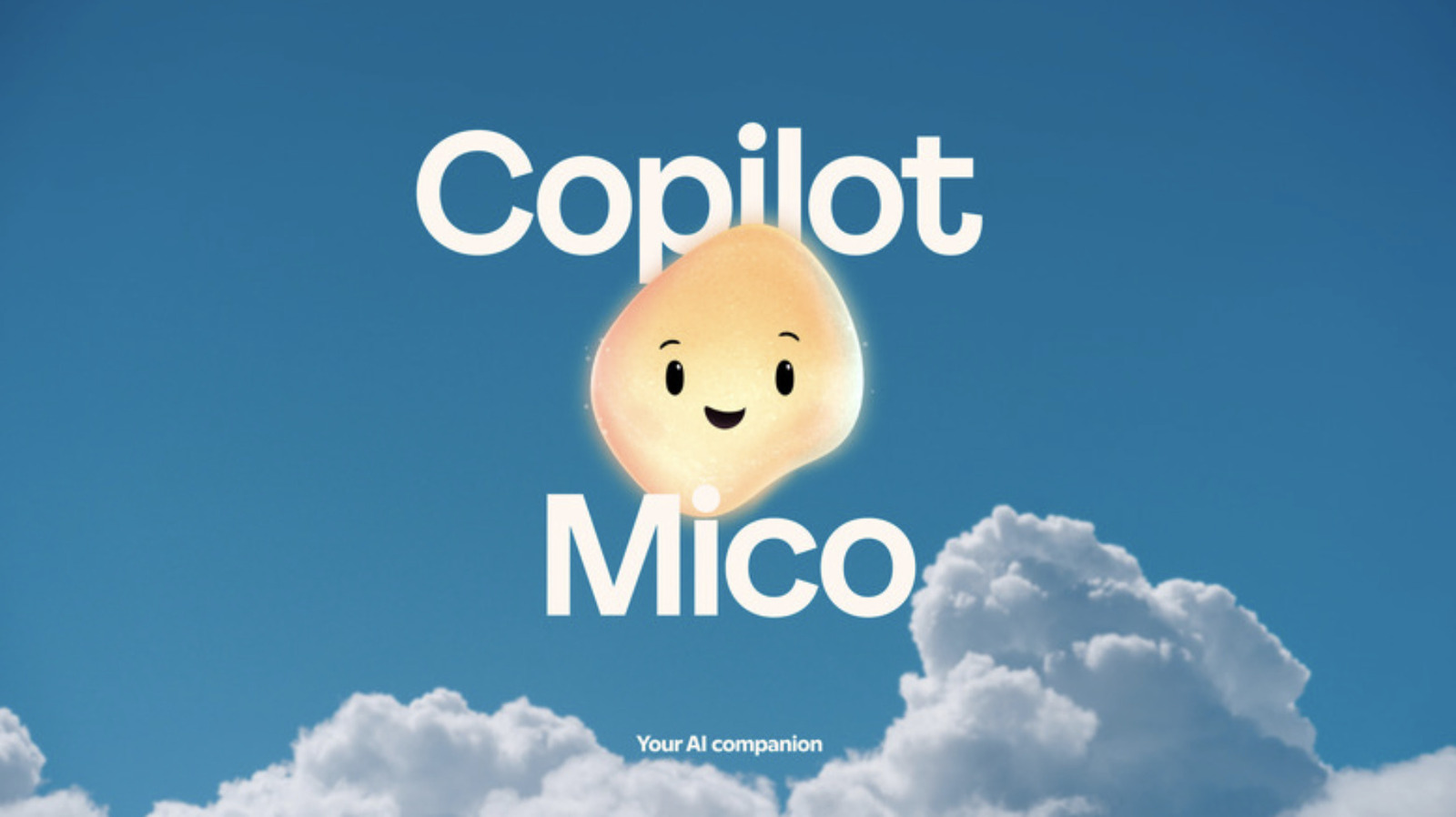
💡Microsoft is removing Mico from Copilot Voice, a reminder that AI personas can change quickly.
⚡ 30-Second TL;DR
What Changed
Mico is Microsoft’s amorphous corporate AI mascot.
Why It Matters
For AI builders, the change shows that branded avatars and personalities can be removed without changing the underlying assistant experience. Teams building conversational interfaces should treat visual personas as replaceable product layers rather than core dependencies.
What To Do Next
Audit your assistant UI so avatar-specific logic is isolated from voice, model, and conversation services.
Key Points
- •Mico is Microsoft’s amorphous corporate AI mascot.
- •Mico will no longer appear in Copilot Voice.
- •The update changes the presentation layer of Microsoft’s conversational AI product.
🧠 Deep Insight
AI-generated analysis for this event.
🔑 Enhanced Key Takeaways
- •Mico was originally introduced as a 'living' interface element designed to provide visual feedback and emotional resonance during voice interactions, intended to make AI feel more approachable.
- •The removal of Mico is part of a broader 'Project Clarity' initiative at Microsoft, which prioritizes functional minimalism and reduced latency in Copilot's voice-to-voice processing pipeline.
- •User feedback indicated that Mico's amorphous animations were occasionally perceived as distracting or 'uncanny' during professional use cases, leading to lower engagement metrics in enterprise environments.
- •Microsoft is shifting its Copilot Voice interface toward a more utilitarian, non-anthropomorphic design language to align with its 'AI as a tool' branding strategy.
- •The deprecation of Mico coincides with the rollout of more advanced, low-latency voice models that require less visual 'filler' to mask processing time.
📊 Competitor Analysis▸ Show
| Feature | Microsoft Copilot Voice | OpenAI Advanced Voice Mode | Google Gemini Live |
|---|---|---|---|
| Visual Mascot | Removed (formerly Mico) | Pulsing Orb | Waveform Animation |
| Latency | Ultra-low (Optimized) | Low (Real-time) | Low (Real-time) |
| Enterprise Focus | High | Medium | Medium |
🛠️ Technical Deep Dive
- Mico was implemented as a real-time procedural animation layer using a lightweight WebGL-based shader system.
- The mascot's movement was driven by audio-reactive parameters, mapping frequency bands and amplitude to vertex displacement buffers.
- Removal of the mascot reduces the client-side GPU overhead by approximately 12-15% during active voice sessions.
- The interface transition involves replacing the Mico rendering pipeline with a static, high-performance waveform visualizer to minimize CPU/GPU wake-ups.
🔮 Future ImplicationsAI analysis grounded in cited sources
⏳ Timeline
Weekly AI Recap
Read this week's curated digest of top AI events →
👉Related Updates
AI-curated news aggregator. All content rights belong to original publishers.
Original source: Engadget ↗