Meta's PQC Migration Framework & Lessons
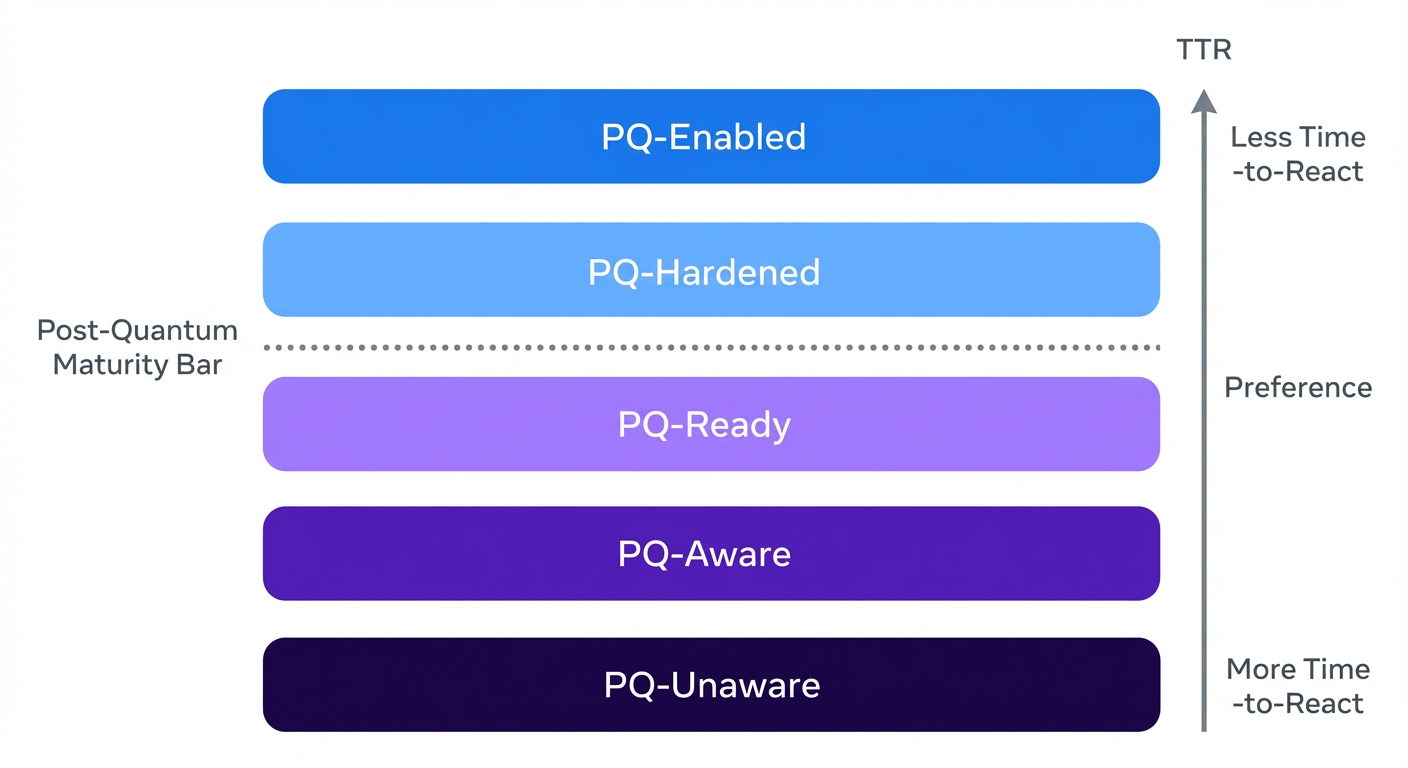
💡Meta's PQC blueprint: levels, lessons for quantum-secure infra
⚡ 30-Second TL;DR
What Changed
Proposes PQC Migration Levels for organizational use cases
Why It Matters
Provides a structured roadmap for enterprises to future-proof cryptography against quantum threats, vital for secure AI infrastructure. Reduces migration risks through leveled approach.
What To Do Next
Assess your crypto stack using Meta's PQC Migration Levels.
Key Points
- •Proposes PQC Migration Levels for organizational use cases
- •Shares framework from Meta's real-world PQC rollout
- •Highlights lessons to build quantum-resilient systems
- •Outlines approach for industry-wide PQC transition
🧠 Deep Insight
AI-generated analysis for this event — not the original article.
🔑 Enhanced Key Takeaways
- •Meta's migration strategy prioritizes a hybrid approach, combining classical algorithms (like ECDH) with quantum-resistant ones (like ML-KEM/Kyber) to maintain security during the transition period.
- •The framework emphasizes 'crypto-agility,' enabling the rapid swapping of cryptographic primitives without requiring fundamental architectural overhauls as NIST standards evolve.
- •Meta identified that the primary bottleneck in PQC adoption is not just algorithm performance, but the increased packet size of PQC keys and signatures, which can cause fragmentation in existing network protocols.
📊 Competitor Analysis▸ Show
| Feature | Meta (PQC Framework) | Google (PQC Implementation) | Cloudflare (PQC Deployment) |
|---|---|---|---|
| Primary Focus | Internal infrastructure & service-to-service | Chrome/TLS & Android ecosystem | Edge network & web traffic |
| Algorithm Choice | ML-KEM (Kyber) / ML-DSA (Dilithium) | ML-KEM (Kyber) | ML-KEM (Kyber) |
| Key Strategy | Migration Levels framework | Browser-first rollout | Edge-side hybrid key exchange |
🛠️ Technical Deep Dive
- •Utilizes NIST-standardized algorithms: ML-KEM (FIPS 203) for key encapsulation and ML-DSA (FIPS 204) for digital signatures.
- •Implements a 'Hybrid Key Exchange' mechanism where a classical ECDH shared secret is concatenated with a PQC-derived secret to ensure security if either algorithm is compromised.
- •Addresses MTU (Maximum Transmission Unit) constraints by optimizing handshake message sizes to prevent packet loss in UDP-based transport protocols like QUIC.
- •Employs a phased deployment strategy: Level 0 (Assessment), Level 1 (Hybrid/Experimental), Level 2 (Mandatory PQC), and Level 3 (Full PQC-only).
🔮 Future ImplicationsAI analysis grounded in cited sources
⏳ Timeline
Weekly AI Recap
Read this week's curated digest of top AI events →
👉Related Updates
AI-curated news aggregator. All content rights belong to original publishers.
Original source: Meta Engineering Blog ↗
This is a summary, not the original. Read the source, or get the weekly briefing.
The weekly digest
One email a week. Unsubscribe anytime.