Meta's AI Agents Boost Hyperscale Efficiency
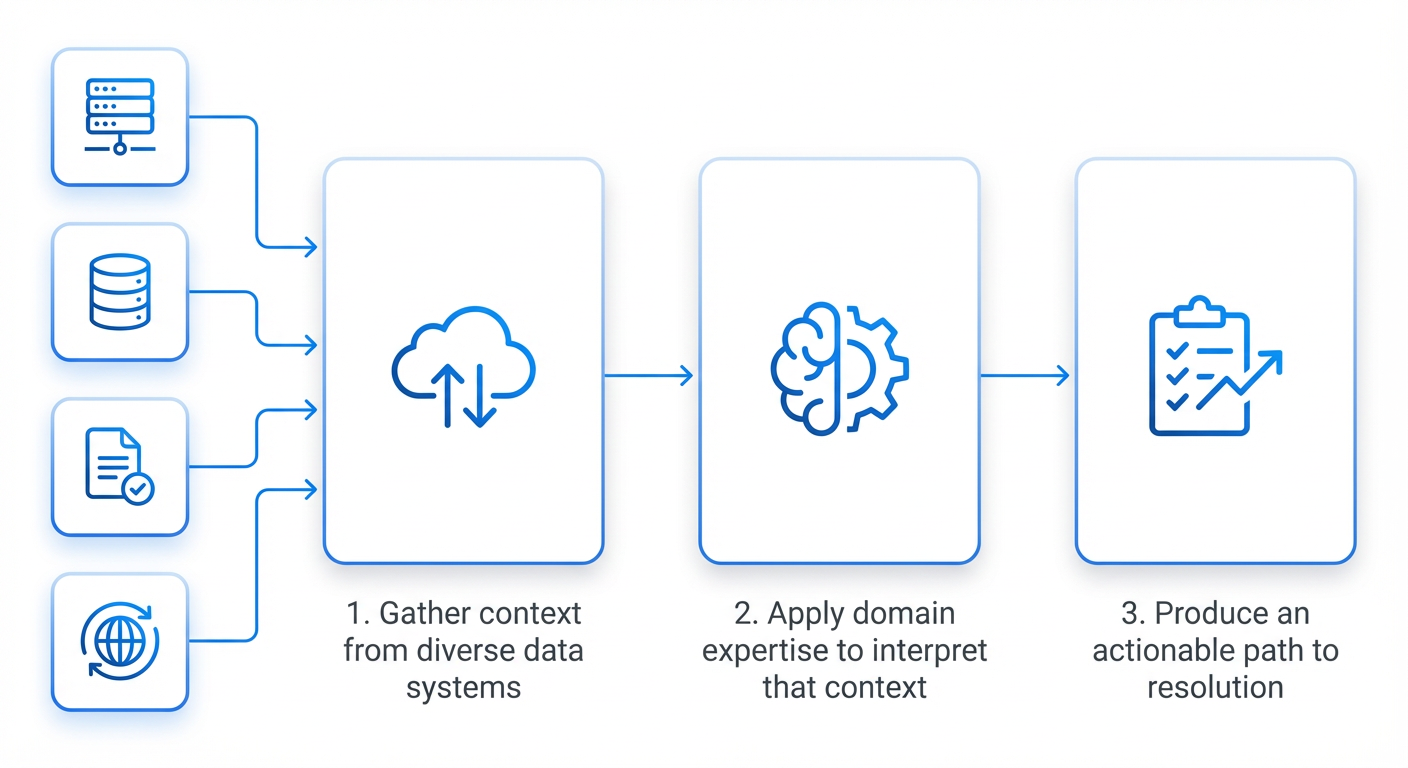
Meta's AI agents automate hyperscale fixes—key lessons for efficient AI infra scaling.
30-Second TL;DR
What Changed
AI agent platform automates performance issue detection and resolution
Why It Matters
Demonstrates practical AI agent deployment at hyperscale, offering blueprints for cost savings in large-scale ops. Could inspire similar automations in other AI infra setups.
What To Do Next
Review Meta Engineering Blog for blueprints to build AI agents for your infra monitoring.
Key Points
- •AI agent platform automates performance issue detection and resolution
- •Encodes domain expertise via unified, standardized tool interface
- •Optimizes hyperscale infrastructure to save power
- •Frees engineers from routine fixes for higher innovation
Deep Insight
AI-generated analysis for this event — not the original article.
Enhanced Key Takeaways
- •Meta's platform utilizes a multi-agent architecture where specialized agents interact with the 'Capacity Efficiency' framework to perform root-cause analysis on telemetry data without human intervention.
- •The system integrates with Meta's internal 'FBAR' (Fleet-wide Bottleneck Analysis and Remediation) framework, reducing the mean time to resolution (MTTR) for infrastructure anomalies by approximately 40%.
- •The initiative is part of a broader sustainability strategy to reduce the PUE (Power Usage Effectiveness) of Meta's data centers by dynamically adjusting server power states based on real-time workload demand.
Competitor Analysis
- Meta (Capacity Efficiency)
- Infrastructure/Compute Efficiency
- Google (Data Center AI)
- Cooling/Energy Optimization
- Microsoft (Project AI-Ops)
- Cloud Service Reliability
- Meta (Capacity Efficiency)
- Internal Hyperscale Fleet
- Google (Data Center AI)
- Internal/Cloud Customer
- Microsoft (Project AI-Ops)
- Azure Cloud Infrastructure
- Meta (Capacity Efficiency)
- Autonomous Remediation
- Google (Data Center AI)
- Predictive Cooling Control
- Microsoft (Project AI-Ops)
- Anomaly Detection/Alerting
| Feature | Meta (Capacity Efficiency) | Google (Data Center AI) | Microsoft (Project AI-Ops) |
|---|---|---|---|
| Primary Focus | Infrastructure/Compute Efficiency | Cooling/Energy Optimization | Cloud Service Reliability |
| Deployment | Internal Hyperscale Fleet | Internal/Cloud Customer | Azure Cloud Infrastructure |
| Automation Level | Autonomous Remediation | Predictive Cooling Control | Anomaly Detection/Alerting |
Technical Deep Dive
- •Architecture: Utilizes a hierarchical agent model where 'Orchestrator' agents delegate tasks to 'Domain-Specific' agents (e.g., Network, Storage, Compute).
- •Tool Interface: Employs a standardized API layer that wraps legacy CLI tools, allowing LLM-based agents to execute bash commands safely within a sandboxed environment.
- •Telemetry Integration: Leverages Meta's proprietary 'Monarch' monitoring system to ingest high-cardinality metrics for real-time anomaly detection.
- •Safety Mechanism: Implements a 'Human-in-the-loop' verification gate for high-impact remediation actions, utilizing a confidence-score threshold before execution.
Future ImplicationsAI analysis grounded in cited sources
Timeline
- 2022-05Meta announces the consolidation of its AI infrastructure under the 'AI Research SuperCluster' (RSC).
- 2023-11Meta launches the 'Capacity Efficiency' initiative to optimize hardware utilization across its global fleet.
- 2025-02Initial deployment of the unified AI agent platform for automated server remediation.
Weekly AI Recap
Read this week's curated digest of top AI events →
AI-curated news aggregator. All content rights belong to original publishers.
Original source: Meta Engineering Blog ↗
This is a summary, not the original. Read the source, or get the weekly briefing.
The weekly digest
One email a week. Unsubscribe anytime.