Meta Modernizes WebRTC Across 50+ Use Cases
Meta's fork-escape strategy scales WebRTC for 50+ apps—vital real-time infra for AI video tools
30-Second TL;DR
What Changed
Forked WebRTC drifted from upstream in Meta's monorepo
Why It Matters
Enables large-scale teams to customize OSS without losing upstream benefits, reducing maintenance costs. Relevant for AI apps needing reliable real-time comms like video analysis or collaborative tools.
What To Do Next
Study Meta's dual-stack WebRTC repo on GitHub for your real-time AI demo infrastructure.
Key Points
- •Forked WebRTC drifted from upstream in Meta's monorepo
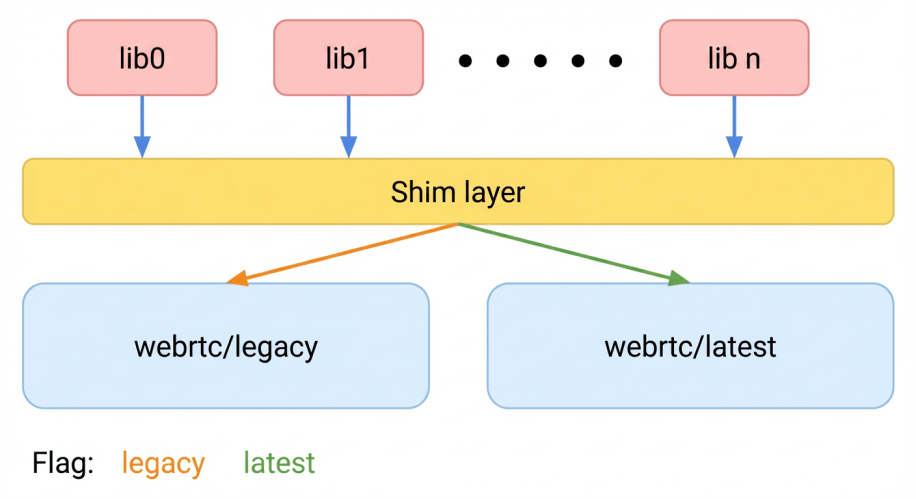
- •Developed dual-stack architecture for sync with community upgrades
- •Modernized across 50+ real-time audio/video use cases
- •Powers Meta's various platforms without forking isolation
Deep Insight
AI-generated analysis for this event — not the original article.
Enhanced Key Takeaways
- •Meta's dual-stack architecture utilizes a 'shim' layer that abstracts the underlying WebRTC implementation, allowing the application layer to remain agnostic to whether it is running on the upstream or the internal fork.
- •The transition was driven by the high maintenance cost of 'cherry-picking' security patches and performance improvements from the upstream WebRTC project, which previously caused significant engineering overhead.
- •By integrating this into their monorepo, Meta has enabled automated regression testing that runs against both the upstream and internal stacks simultaneously, ensuring parity before any code is merged.
Technical Deep Dive
- •Implementation of a 'Virtual WebRTC' abstraction layer that maps standard WebRTC APIs to either the upstream stack or Meta's optimized internal stack.
- •Utilization of a unified build system (Buck2) to manage dependencies across the dual-stack, facilitating seamless switching between build configurations.
- •Integration of automated CI/CD pipelines that perform cross-stack validation, ensuring that performance metrics (latency, jitter, packet loss) remain within acceptable thresholds for both stacks.
- •Modularization of the WebRTC codebase within the monorepo to isolate platform-specific hardware acceleration (e.g., AV1/HEVC encoding) from the core signaling and transport logic.
Future ImplicationsAI analysis grounded in cited sources
Timeline
- 2018-05Meta begins significant internal customization of the WebRTC codebase for Messenger and WhatsApp.
- 2022-11Meta initiates the 'WebRTC Modernization' project to address technical debt and drift from upstream.
- 2024-03Initial deployment of the dual-stack architecture in a subset of Meta's real-time communication services.
- 2025-09Full migration of 50+ internal use cases to the dual-stack WebRTC infrastructure.
Weekly AI Recap
Read this week's curated digest of top AI events →
AI-curated news aggregator. All content rights belong to original publishers.
Original source: Meta Engineering Blog ↗
This is a summary, not the original. Read the source, or get the weekly briefing.
The weekly digest
One email a week. Unsubscribe anytime.