Meta adds parental alerts for teen AI self-harm discussions
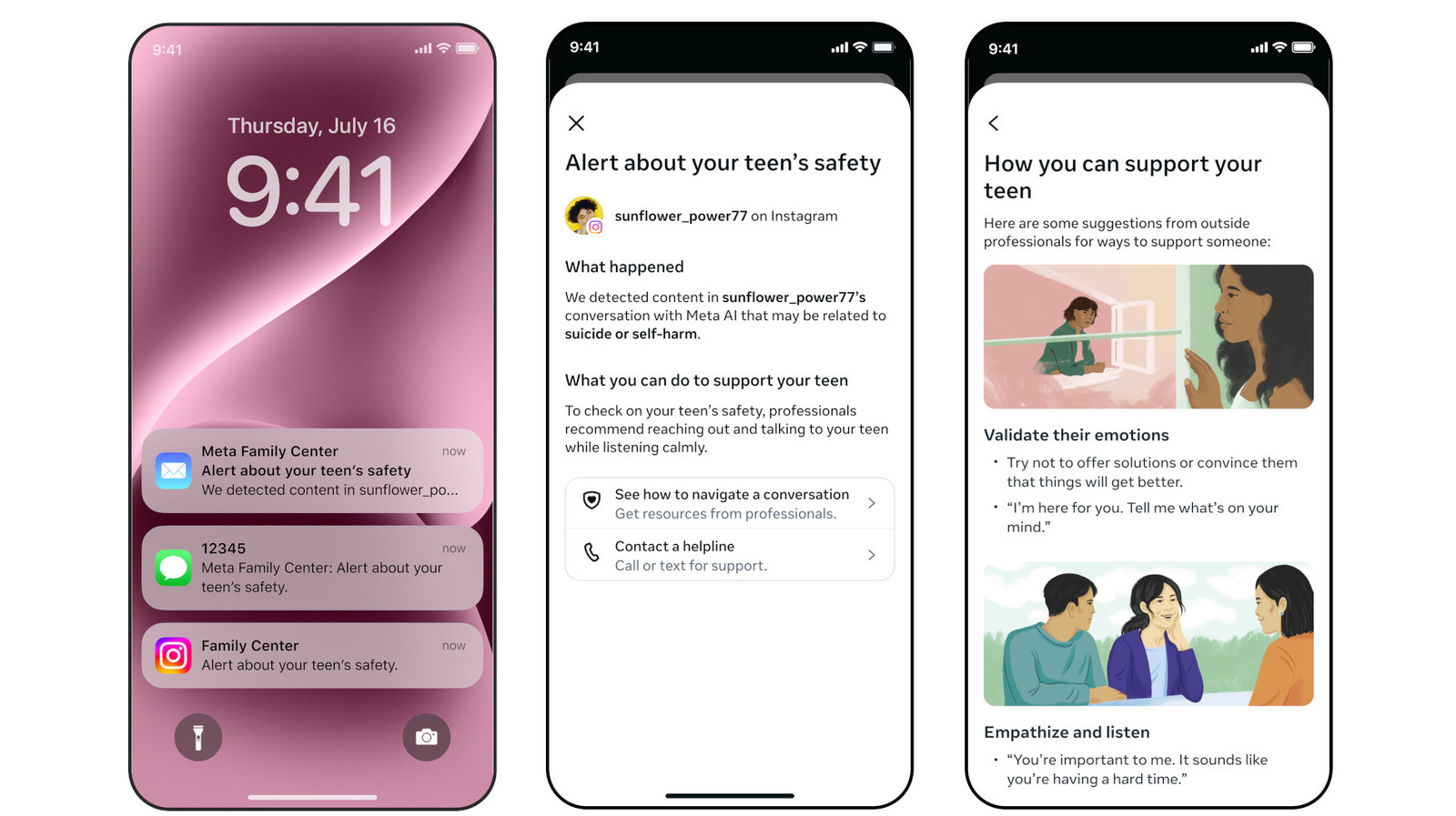
💡Learn how Meta is integrating safety guardrails and parental oversight into generative AI interactions for teens.
⚡ 30-Second TL;DR
What Changed
Meta implements automated safety monitoring for teen AI interactions
Why It Matters
This move highlights the growing pressure on AI companies to implement robust safety guardrails for minors. It sets a precedent for how social platforms must balance AI utility with parental oversight and mental health protection.
What To Do Next
Review your AI application's safety guardrails and implement a content moderation layer specifically tuned for high-risk user intent detection.
Key Points
- •Meta implements automated safety monitoring for teen AI interactions
- •System triggers alerts to parents when self-harm topics are detected
- •Feature aims to mitigate risks associated with AI-teen engagement
- •Part of ongoing efforts to improve safety guardrails in generative AI
🧠 Deep Insight
AI-generated analysis for this event.
🔑 Enhanced Key Takeaways
- •The feature utilizes Meta's Llama-based safety classifiers to perform real-time sentiment and keyword analysis on teen-AI chat logs.
- •Parents must opt-in to the 'Family Center' supervision tools to receive these specific AI-related notifications.
- •Meta has integrated these alerts with existing crisis resources, automatically providing teens with contact information for suicide prevention hotlines when self-harm intent is detected.
- •The rollout follows increased regulatory pressure from the U.S. Senate and EU regulators regarding the impact of generative AI on adolescent mental health.
- •Meta's implementation includes a 'human-in-the-loop' review process for edge cases to reduce false positives that could unnecessarily trigger parental intervention.
📊 Competitor Analysis▸ Show
| Feature | Meta (AI Safety) | Google (Gemini) | OpenAI (ChatGPT) |
|---|---|---|---|
| Parental Alerts | Active (Family Center) | Limited/Account-based | Restricted/Monitoring |
| Self-Harm Detection | Real-time Classifier | Keyword/Pattern | Pattern/Refusal |
| Intervention | Direct Notification | Resource Links | Resource Links |
🛠️ Technical Deep Dive
- Employs a multi-layered classification architecture using fine-tuned Llama models specifically trained on safety-aligned datasets.
- Utilizes low-latency inference pipelines to scan chat tokens before they are fully rendered to the user interface.
- Implements differential privacy techniques to ensure that while alerts are sent, the specific content of the private chat remains encrypted and inaccessible to Meta staff.
- Uses a heuristic-based scoring system to differentiate between clinical self-harm intent and general discussions about mental health or literature.
🔮 Future ImplicationsAI analysis grounded in cited sources
⏳ Timeline
Weekly AI Recap
Read this week's curated digest of top AI events →
👉Related Updates
AI Needs Radiologists as Much as Radiologists Need AI

Google fined €750,000 by AGCOM over gambling content
Google DeepMind and Isomorphic Labs' approach to bioresilience

OnePlus officially exits US and Europe markets
AI-curated news aggregator. All content rights belong to original publishers.
Original source: Engadget ↗