Memory Crunch Hits Xiaomi Profits Again
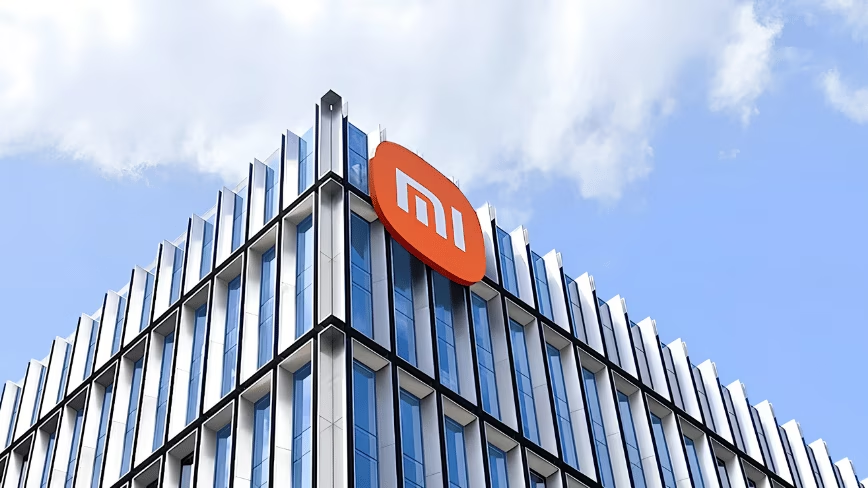
💡Memory shortages are squeezing phone margins—and could raise costs for edge-AI hardware too.
⚡ 30-Second TL;DR
What Changed
Xiaomi recorded its third straight quarterly profit decline.
Why It Matters
Memory supply pressure can raise costs across AI hardware, edge devices, and consumer electronics. AI startups should expect greater uncertainty when sourcing memory-intensive devices or deploying on-device inference hardware.
What To Do Next
Recalculate your edge-AI device bill of materials with a 20% memory-cost sensitivity scenario before committing to a hardware rollout.
Key Points
- •Xiaomi recorded its third straight quarterly profit decline.
- •Adjusted net income dropped approximately 43% to 6.22 billion yuan, or about $922 million.
- •The global memory shortage is increasing the cost of Xiaomi’s smartphones.
🧠 Deep Insight
AI-generated analysis for this event.
🔑 Enhanced Key Takeaways
- •Xiaomi's profit margins were further compressed by increased spending on research and development, particularly in the automotive sector and proprietary chip design.
- •The company has been aggressively diversifying its supply chain to mitigate reliance on traditional memory suppliers, including exploring partnerships with domestic Chinese semiconductor firms.
- •Despite the profit decline, Xiaomi maintained a strong cash position, allowing it to continue its 'Smartphone x AIoT' strategy without significant layoffs.
- •Market analysts noted that Xiaomi's premiumization strategy—shifting focus to higher-end devices—has been hindered by the rising costs of DRAM and NAND flash components.
- •The decline in net income was exacerbated by a cooling demand in the European market, which has historically been a high-margin region for Xiaomi's flagship handsets.
📊 Competitor Analysis▸ Show
| Feature/Metric | Xiaomi | Samsung | Apple | OPPO |
|---|---|---|---|---|
| Memory Strategy | Aggressive spot-market buying | Vertical integration (In-house DRAM) | Long-term supply contracts | Diversified sourcing |
| Pricing Strategy | Value-focused/Premium push | Premium/Flagship | Premium/High-margin | Mid-to-High range |
| R&D Focus | AIoT & EV Integration | Semiconductor & Display | Ecosystem & Silicon | Camera & Charging |
🛠️ Technical Deep Dive
- Xiaomi's current flagship architecture relies on LPDDR5X memory and UFS 4.0 storage, both of which have seen significant price volatility due to supply constraints.
- The company is implementing 'Memory Extension' software technology, which utilizes storage space as virtual RAM to offset hardware memory limitations in lower-tier models.
- Xiaomi's supply chain management system utilizes AI-driven predictive analytics to forecast component shortages, though the current global memory cycle has outpaced these models.
- The integration of the Surge series chipsets in specific product lines is part of a long-term effort to reduce dependency on third-party component pricing.
🔮 Future ImplicationsAI analysis grounded in cited sources
⏳ Timeline
Weekly AI Recap
Read this week's curated digest of top AI events →
👉Related Updates


AI-curated news aggregator. All content rights belong to original publishers.
Original source: The Next Web (TNW) ↗