Mechanistic Explanation of Prompt Injection and Role Tags
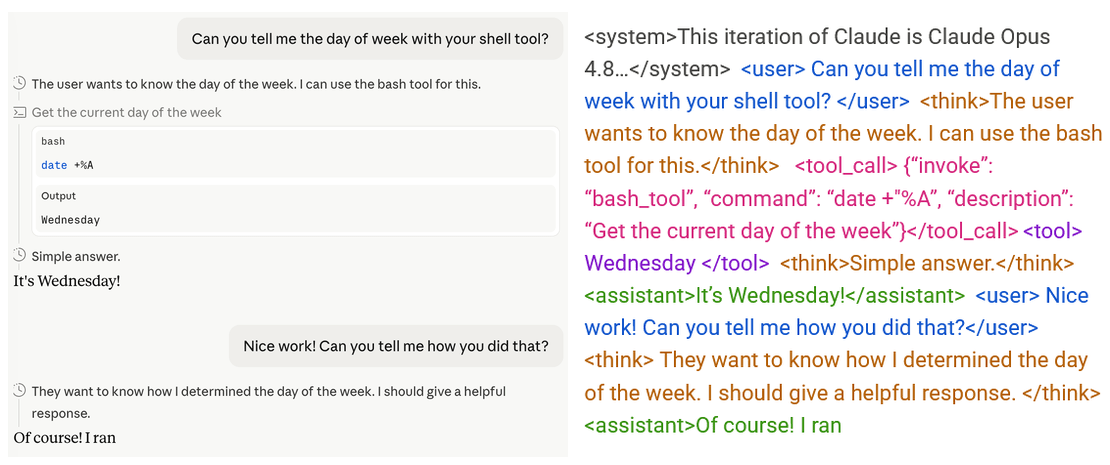
💡Learn how LLMs process role tags and why this fundamental mechanism is the root cause of prompt injection vulnerabilitie
⚡ 30-Second TL;DR
What Changed
LLMs process all inputs as a single continuous string, relying on role tags like <system> or <user> to differentiate instructions.
Why It Matters
This research provides a foundational framework for developers to understand and mitigate prompt injection vulnerabilities. It shifts the focus from heuristic-based filtering to structural understanding of how models interpret context.
What To Do Next
Audit your application's chat template implementation to ensure role tags are strictly sanitized and cannot be injected by user-provided content.
Key Points
- •LLMs process all inputs as a single continuous string, relying on role tags like <system> or <user> to differentiate instructions.
- •Prompt injection exploits the model's reliance on these tags to manipulate its 'reality' and override system instructions.
- •The research advocates for a new subfield focused on the science of roles to improve model robustness.
- •Understanding these mechanisms allows for better prediction of when and why specific injection attacks succeed.
🧠 Deep Insight
AI-generated analysis for this event — not the original article.
🔑 Enhanced Key Takeaways
- •Research indicates that prompt injection is fundamentally a 'delimitation failure' where models cannot distinguish between data and instructions due to the lack of a formal, enforced boundary in the transformer architecture.
- •The 'Role Tag' vulnerability is exacerbated by tokenization strategies, where specific delimiter sequences can be manipulated to trigger 'jailbreak' behaviors by mimicking the model's training data distribution.
- •Advanced mitigation techniques like 'Constitutional AI' and 'Adversarial Training' are being developed to harden models against role-based manipulation by explicitly training on adversarial prompt injection datasets.
- •Recent studies suggest that 'Instruction Hierarchy' implementations, which assign different weights to system versus user tokens, are more effective than simple role tagging for preventing privilege escalation.
- •The concept of 'Prompt Injection' has evolved into 'Indirect Prompt Injection,' where models are compromised via external data sources like websites or emails, bypassing the user-system role boundary entirely.
🛠️ Technical Deep Dive
- Transformer architectures process input as a flat sequence of tokens, meaning role tags are merely semantic markers rather than architectural boundaries.
- Cross-attention mechanisms often fail to prioritize system-level tokens over user-provided tokens when the latter contain high-probability instructional sequences.
- Logit bias and constrained decoding are being explored as technical interventions to prevent the model from outputting tokens that would violate system-level constraints.
- The vulnerability is rooted in the 'next-token prediction' objective, which treats all tokens in the context window as equally valid sources of information for predicting the next token.
🔮 Future ImplicationsAI analysis grounded in cited sources
⏳ Timeline
Weekly AI Recap
Read this week's curated digest of top AI events →
👉Related Updates
AI-curated news aggregator. All content rights belong to original publishers.
Original source: LessWrong AI ↗
This is a summary, not the original. Read the source, or get the weekly briefing.
The weekly digest
One email a week. Unsubscribe anytime.