Matic Bets on Voice to Differentiate Robot Vacuums
💡See how full voice control could reshape interaction design for household robots.
⚡ 30-Second TL;DR
What Changed
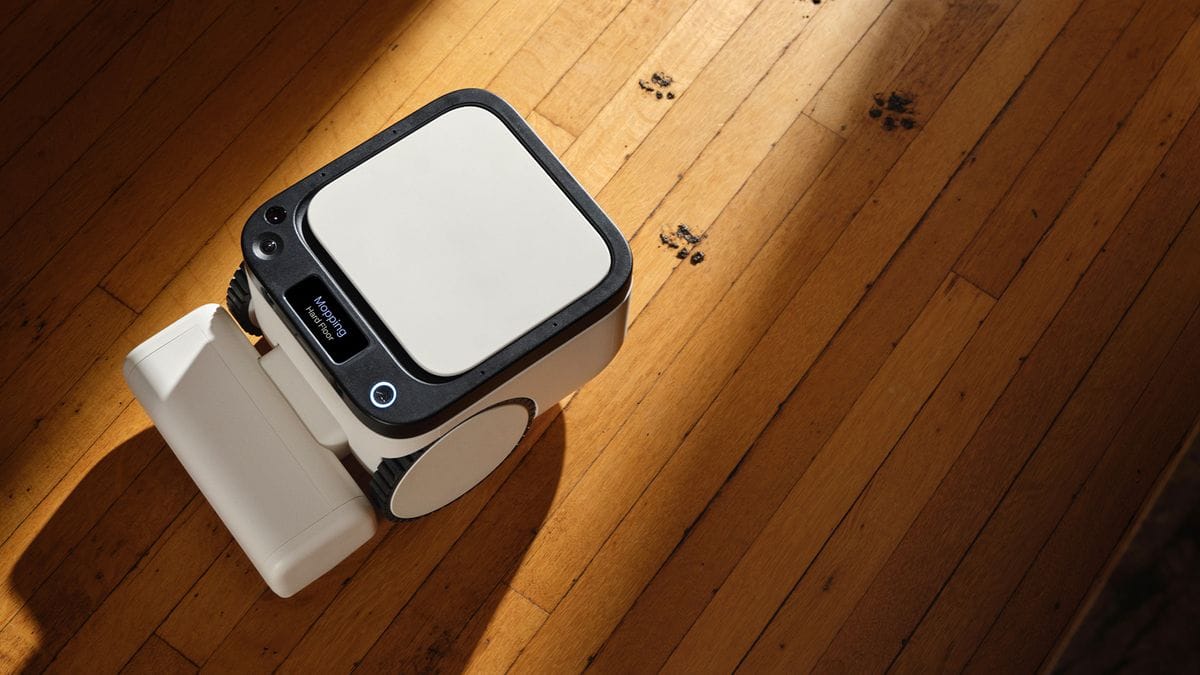
Matic's robot vacuum supports full voice-command control.
Why It Matters
If reliable, fully voice-driven control could make robot vacuums more accessible and create a stronger role for conversational interfaces in household robotics. It may also raise user expectations for natural-language control across consumer devices.
What To Do Next
Benchmark Matic's voice-control experience with representative commands, measuring recognition accuracy, response latency, and failure recovery before considering an integration or partnership.
Key Points
- •Matic's robot vacuum supports full voice-command control.
- •Voice interaction is the product's primary competitive differentiator.
- •The product competes in a market where Chinese robot vacuum makers are prominent.
🧠 Deep Insight
AI-generated analysis for this event.
🔑 Enhanced Key Takeaways
- •Matic was founded by former Google employees, including Navneet Dalal, who previously worked on Google's Nest and computer vision projects.
- •The vacuum utilizes advanced on-device processing to handle voice commands, prioritizing user privacy by minimizing cloud-based data transmission.
- •Unlike traditional robot vacuums that rely on random or simple mapping, the Matic robot incorporates sophisticated computer vision to identify and avoid obstacles like toys, cables, and pet waste.
- •The company emphasizes a 'privacy-first' design philosophy, ensuring that video feeds and voice data are processed locally on the hardware rather than being uploaded to external servers.
- •Matic's business model focuses on a premium market segment, positioning its hardware as a high-end appliance rather than a mass-market commodity.
📊 Competitor Analysis▸ Show
| Feature | Matic | Roborock (S-Series) | iRobot (Roomba Combo) |
|---|---|---|---|
| Primary Control | Voice-First / Natural Language | App-Based / Voice Integration | App-Based / Voice Integration |
| Privacy Focus | Local-only processing | Cloud-dependent | Cloud-dependent |
| Navigation | Advanced Computer Vision | LiDAR + Vision | VSLAM / PrecisionVision |
| Market Positioning | Premium / Privacy-Centric | Mass-Market / Feature-Rich | Established / Ecosystem-Driven |
🛠️ Technical Deep Dive
- Architecture: Utilizes a custom-built hardware stack optimized for local machine learning inference to support real-time voice recognition without latency.
- Vision System: Employs high-resolution cameras combined with proprietary computer vision algorithms to perform semantic scene understanding, allowing the robot to recognize specific objects and room contexts.
- Voice Processing: Implements a natural language processing (NLP) engine capable of understanding complex, multi-part commands (e.g., 'Clean up the spill in the kitchen') rather than simple keyword triggers.
- Privacy Implementation: Hardware-level isolation for sensor data, ensuring that raw video and audio streams are never transmitted to the cloud.
🔮 Future ImplicationsAI analysis grounded in cited sources
⏳ Timeline
Weekly AI Recap
Read this week's curated digest of top AI events →
👉Related Updates


AI-curated news aggregator. All content rights belong to original publishers.
Original source: Bloomberg Technology ↗