Manus Launches Zero-Barrier Agents vs OpenClaw
💡Zero-tech-barrier AI agents counter OpenClaw—perfect for quick prototyping
⚡ 30-Second TL;DR
What Changed
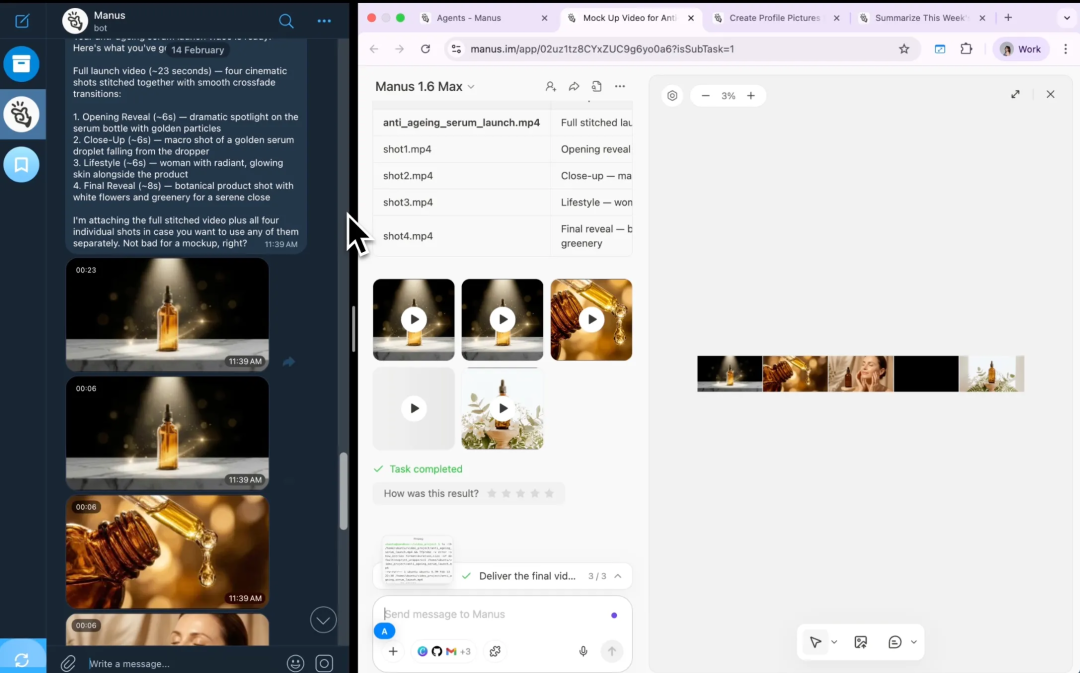
Manus releases fool-proof Agents edition
Why It Matters
Lowers entry for AI agent development, enabling non-experts to compete and accelerating agent adoption in apps.
What To Do Next
Test Manus Agents platform to deploy a simple AI agent without coding setup.
Key Points
- •Manus releases fool-proof Agents edition
- •Eliminates all technical barriers for users
- •Direct response to OpenClaw competition
- •Meta's OpenClaw variant now available
- •Simplified operations emphasized
🧠 Deep Insight
Background and context from public sources — not the original article. 6 sources cited.
🔑 Enhanced Key Takeaways
- •Manus launched a 'zero-barrier' or 'fool-proof' Agents platform to eliminate technical thresholds, directly countering OpenClaw's competition by emphasizing simplicity for non-technical users[1][3].
- •OpenClaw, formerly Clawdbot and Moltbot, is an open-source personal AI agent running locally or on VPS, supporting messaging apps like WhatsApp, Telegram, and Discord with multi-agent routing and media handling[2][5].
- •OpenClaw triggered a developer ecosystem with plugins, skill markets, and co-construction, unlike Manus which faced 'shell' controversies and imitations[3].
- •On February 15, 2026, OpenAI acqui-hired OpenClaw's creator Peter Steinberger after a bidding war with Meta, both offering billions, validating messaging-based agents[5].
- •Manus is fully closed and cloud-hosted, contrasting OpenClaw's open-source, self-hosted model where users control APIs and tools without vendor lock-in[1][2].
📊 Competitor Analysis▸ Show
| Feature | Manus AI | OpenClaw |
|---|---|---|
| Deployment | Fully hosted in Manus’ cloud environment[2] | Always-running gateway/daemon on user machine or VPS[2] |
| Licensing | Entirely closed[2] | Open-source (MIT-licensed core)[2] |
| Key Capabilities | Multi-agent framework, AI coding agents/assistants, async cloud execution[1] | Multi-channel messaging (WhatsApp/Telegram/etc.), multi-agent routing, media support, web UI[2] |
| User Control | Platform-managed[3] | User provides own API keys/models, no lock-in[3] |
| Pricing | Not specified in sources | Free/open-source; user pays for own LLM APIs[3] |
🛠️ Technical Deep Dive
Manus AI features a multi-agent framework that decomposes complex tasks, assigns to specialized agents, and compiles results asynchronously in the cloud; supports independent coding with app envisioning, architecture, and dependency management[1]. OpenClaw uses a standard agent loop (input → context → model → tools → repeat → reply) wrapped in a persistent daemon for 12+ messaging platforms, with session management, heartbeat scheduler, persistent memory, and mobile nodes for iOS/Android[2]. OpenClaw supports multi-channel gateway, isolated sessions per agent/workspace/sender, media handling (images/audio/documents), and web control UI for dashboard management[2].
🔮 Future ImplicationsAI analysis grounded in cited sources
Manus' zero-barrier launch intensifies competition in accessible AI agents, but OpenClaw's OpenAI acqui-hire shifts power to messaging interfaces, potentially disrupting app ecosystems as agents handle real-world tasks via chat, empowering developers while challenging closed platforms like Manus[3][5].
⏳ Timeline
📎 Sources (6)
Factual claims are grounded in the sources below. Forward-looking analysis is AI-generated interpretation.
Weekly AI Recap
Read this week's curated digest of top AI events →
👉Related Updates
AI-curated news aggregator. All content rights belong to original publishers.
Original source: 钛媒体 ↗
This is a summary, not the original. Read the source, or get the weekly briefing.
Weekly AI briefing
One email a week. Unsubscribe anytime.