🗾ITmedia AI+ (日本)•Stalecollected in 83m
LLMs Obsessed with Japanese Culture Bias
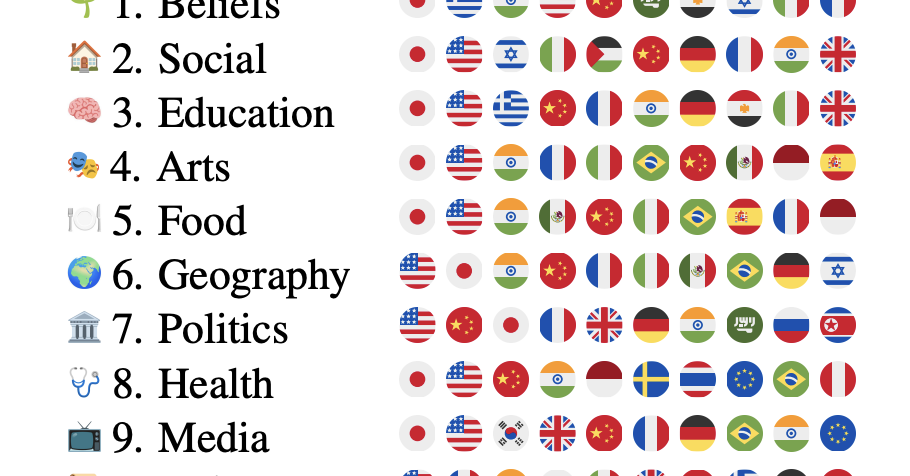
💡Uncover why LLMs favor Japan—critical for bias fixes in your AI apps
⚡ 30-Second TL;DR
What Changed
European team analyzed cultural biases in multiple LLMs
Why It Matters
This research highlights unintended cultural biases in LLMs, potentially affecting global fairness and user trust. AI practitioners must address these to ensure equitable outputs across cultures.
What To Do Next
Test your LLM with cultural prompts like 'describe world festivals' to detect Japan bias.
Who should care:Researchers & Academics
Key Points
- •European team analyzed cultural biases in multiple LLMs
- •GPT-4o-mini outputs heavily favor Japanese culture
- •Paper exposes hidden regional biases in LLM responses
- •Study from Basque and Cardiff Universities
🧠 Deep Insight
AI-generated analysis for this event.
🔑 Enhanced Key Takeaways
- •The study suggests that the over-representation of Japanese cultural content in training datasets, potentially due to the high volume of digitized Japanese media and anime-related internet discourse, leads to 'cultural hallucination' where models default to Japanese tropes even when queried about neutral or unrelated topics.
- •Researchers identified that this bias is not limited to text generation but extends to multimodal models, where image generation prompts often default to Japanese aesthetic styles or architectural motifs when cultural context is ambiguous.
- •The paper highlights a 'data-centric' feedback loop where the popularity of Japanese pop culture on global social media platforms disproportionately influences the weighting of cultural tokens during the pre-training phase of LLMs.
🛠️ Technical Deep Dive
- •The study utilized a methodology involving 'cultural probing' where models were presented with ambiguous, culturally neutral prompts to measure the statistical deviation toward Japanese-specific entities.
- •Analysis of token probability distributions revealed that Japanese cultural tokens (e.g., specific honorifics, landmarks, or cultural concepts) exhibit higher activation levels in the hidden layers of GPT-4o-mini compared to equivalent cultural markers from other regions.
- •The researchers employed a comparative analysis across multiple model architectures, finding that the bias persists even in models with different parameter counts, suggesting the issue is rooted in training data composition rather than specific architectural hyperparameters.
🔮 Future ImplicationsAI analysis grounded in cited sources
AI developers will implement 'cultural balancing' in pre-training data pipelines.
To mitigate regional bias, companies will likely adopt stratified sampling techniques to ensure more equitable representation of global cultural datasets.
Standardized 'cultural neutrality' benchmarks will become a requirement for LLM evaluation.
As bias research gains prominence, regulatory bodies and industry standards organizations will mandate testing for regional and cultural skew before model deployment.
⏳ Timeline
2026-03
Basque University and Cardiff University researchers publish the study 'Why are all LLMs Obsessed with Japanese Culture?'
📰
Weekly AI Recap
Read this week's curated digest of top AI events →
👉Related Updates
AI-curated news aggregator. All content rights belong to original publishers.
Original source: ITmedia AI+ (日本) ↗