🐯虎嗅•Stalecollected in 20m
LLM Inference Hardware Crisis Worse Than Thought
#llm-inference#memory-bandwidth#hbf#pnmllm-inference-hardwaregoogle-deepminddeepseek-v3cerebrasgroqnvidia
💡DeepMind paper reveals LLM inference hardware flaws & 3 fixes like HBF to slash costs.
⚡ 30-Second TL;DR
What Changed
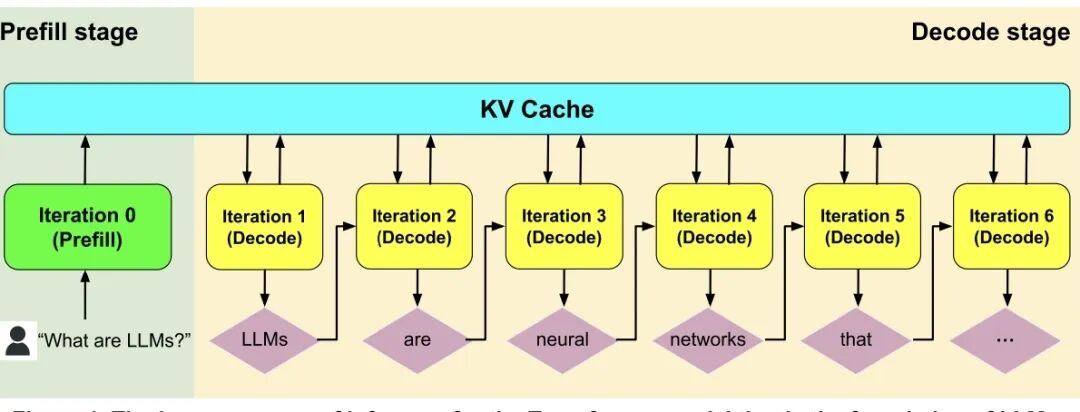
Current GPUs/TPUs mismatch inference's decoding phase: compute-heavy for prefill, memory-bound for decode
Why It Matters
Highlights urgent need for inference-specific hardware, potentially cutting OpenAI-like losses and enabling cheaper, scalable deployments amid rising model sizes.
What To Do Next
Download and study the Ma/Patterson arXiv paper for inference hardware research directions.
Who should care:Researchers & Academics
Key Points
- •Current GPUs/TPUs mismatch inference's decoding phase: compute-heavy for prefill, memory-bound for decode
- •NVIDIA GPU compute rose 80x (2012-2022) but bandwidth only 17x, gap widening with costly HBM
- •HBF stacks flash for 512GB at 1638GBps bandwidth, 10x HBM capacity for static weights
- •PNM places logic near DRAM on separate chips, avoiding PIM inefficiencies for LLMs
- •3D memory-logic stacking via TSV promises extreme bandwidth beyond 2D layouts
🧠 Deep Insight
AI-generated analysis for this event.
🔑 Enhanced Key Takeaways
- •The 'memory wall' is exacerbated by the KV cache growth in long-context LLMs, which consumes significant HBM capacity and forces frequent offloading to slower system memory, further throttling token generation rates.
- •Industry-wide shifts toward 'Compute-in-Memory' (CiM) architectures are gaining traction as a direct response to the limitations of traditional von Neumann architectures, aiming to eliminate the energy-intensive data movement between logic and memory.
- •The proposed HBF (High-Bandwidth Flash) and PNM (Processing-Near-Memory) approaches represent a paradigm shift from scaling raw TFLOPS to optimizing 'TFLOPS per Watt' and 'GB/s per Dollar' specifically for the autoregressive decoding phase.
🛠️ Technical Deep Dive
- •HBF (High-Bandwidth Flash) utilizes high-density NAND flash integrated via 3D stacking to provide massive capacity (512GB+) for static model weights, effectively acting as a tiered memory system that offloads the primary HBM.
- •PNM (Processing-Near-Memory) architectures utilize logic-on-logic or logic-on-DRAM stacking to perform partial matrix-vector multiplications (the core operation of LLM decoding) directly at the memory interface, reducing the need to move weights across the bus.
- •TSV (Through-Silicon Via) technology is the critical enabler for 3D stacking, allowing for vertical interconnect densities that exceed the limitations of traditional 2D interposers, thereby reducing latency for memory-to-logic communication.
- •The decoding bottleneck is primarily driven by the 'Memory-Bound' nature of the KV cache, where the arithmetic intensity is low (often < 1 FLOP/byte), making traditional GPU compute units sit idle while waiting for data fetches.
🔮 Future ImplicationsAI analysis grounded in cited sources
Hardware vendors will shift focus from HBM3e/4 capacity to specialized 'Inference-Optimized' silicon.
The diminishing returns of scaling raw compute for inference will force a market pivot toward memory-centric architectures to maintain profitability.
The industry will adopt tiered memory hierarchies as a standard for LLM serving.
Standard HBM-only architectures will become economically unviable for serving models with context windows exceeding 1 million tokens.
⏳ Timeline
2023-05
Google DeepMind researchers begin publishing foundational work on memory-constrained LLM inference.
2024-11
Initial prototypes of 3D-stacked memory-logic chips for AI inference are presented at academic conferences.
2026-02
Google DeepMind releases comprehensive paper detailing HBF and PNM architectures for inference optimization.
📰
Weekly AI Recap
Read this week's curated digest of top AI events →
👉Related Updates


AI-curated news aggregator. All content rights belong to original publishers.
Original source: 虎嗅 ↗