Li Auto Launches New L9 with Advanced Autonomous Driving
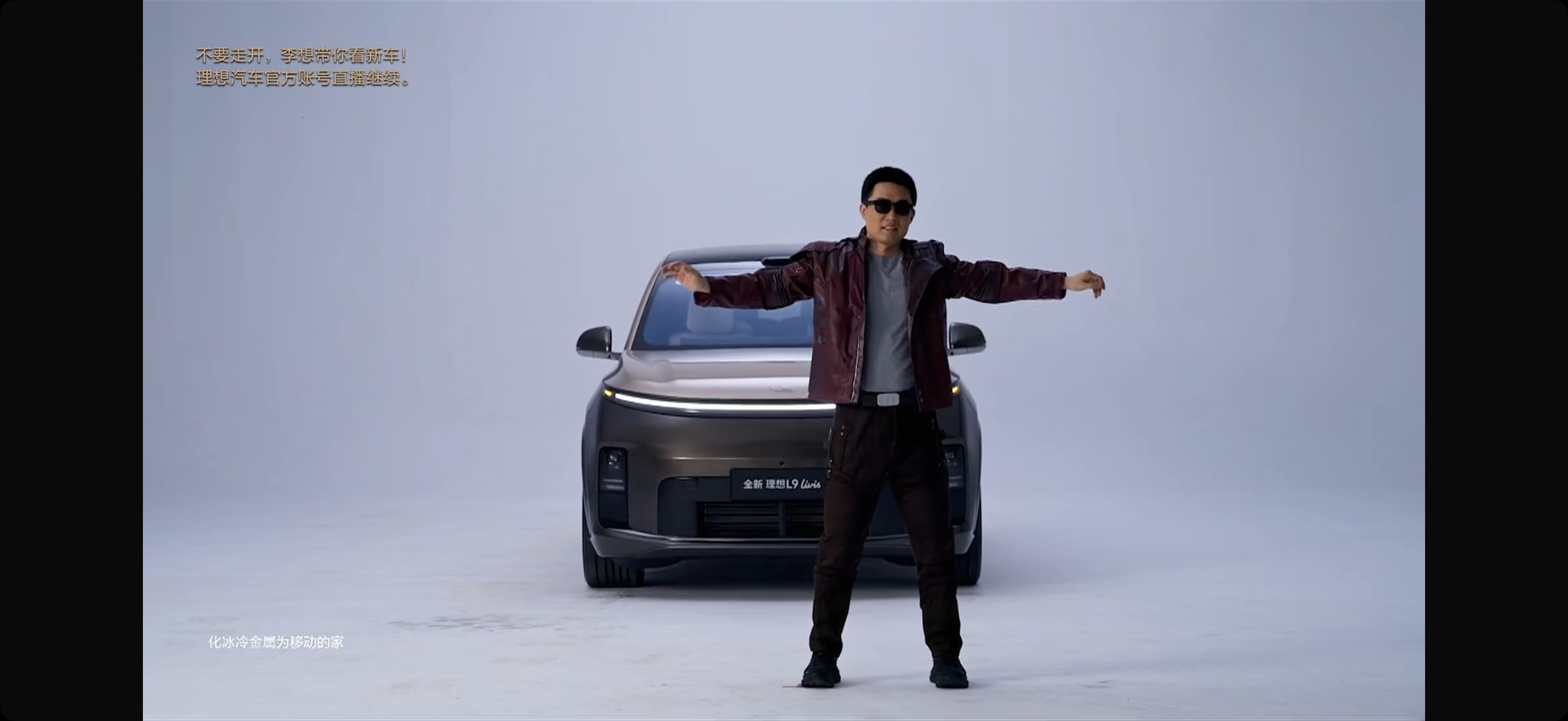
💡See how Li Auto is deploying VLA large models and 2560 TOPS compute in mass-produced vehicles.
⚡ 30-Second TL;DR
What Changed
Equipped with dual 5nm Mach M100 chips providing 2560 TOPS of computing power.
Why It Matters
The integration of VLA (Vision-Language-Action) models into production vehicles signals a shift toward end-to-end autonomous driving architectures in the Chinese market.
What To Do Next
Analyze the performance of VLA models in edge-computing automotive environments to optimize your own perception-to-action pipelines.
Key Points
- •Equipped with dual 5nm Mach M100 chips providing 2560 TOPS of computing power.
- •Integrates 3D ViT perception model and Mach VLA autonomous driving large model.
- •Features a fully wire-controlled active chassis with steering, braking, and rear-wheel steering.
- •Supports 420km pure electric range and 1650km comprehensive range.
🧠 Deep Insight
Web-grounded analysis with 22 cited sources.
🔑 Enhanced Key Takeaways
- •The Mach M100 chips are self-developed by Li Auto, utilizing a 5nm automotive-grade process and a dynamic dataflow architecture, which reduces end-to-end latency by 40% and makes vehicle response speeds twice as fast as human reaction times.
- •The fully wire-controlled active chassis integrates steer-by-wire, four-wheel steering, and fully electric mechanical braking (EMB), offering multiple layers of safety redundancy and an 800V active suspension system capable of millisecond-level response.
- •The L9 Livis trim is positioned as a pioneer of embodied AI in mobility and will see an International Exclusive Version launch in Q3 2026, targeting markets in Central Asia, the Middle East, and beyond.
- •The upgraded Mach VLA 2.1 system, co-developed with the M100 chip, delivers a tenfold increase in multimodal computation, enhancing capabilities in risk prediction and intent understanding for autonomous driving, automated parking, and intelligent interaction.
📊 Competitor Analysis▸ Show
| Feature / Model | Li Auto L9 (New) | NIO ES8 (3rd Gen) | Xpeng G9 (2024 Max) |
|---|---|---|---|
| Pricing (RMB) | 459,800 - 509,800 | 406,800 (BaaS) - 558,000 (outright) | 284,900 - 354,900 (XNGP version) |
| AD Computing Power (TOPS) | 2560 (Dual Mach M100) | Not explicitly stated for 3rd Gen; uses NIO's NX9031 chip | 508 (Dual NVIDIA Orin-X) |
| Pure Electric Range (CLTC km) | 420 | Up to 930 (with 150kWh battery) | 570, 650, 702 (variants) |
| Comprehensive Range (CLTC km) | 1650 | N/A (BEV) | N/A (BEV) |
| Chassis Technology | Fully wire-controlled active chassis (SBW, EMB, RWS, 800V active suspension) | Adaptive air suspension with active anti-roll | Adaptive air suspension system |
| 0-100 km/h (seconds) | 4.9 | 3.97 | Not specified for 2024 G9, previous G9 3.9 |
| ADAS Features | 3D ViT, Mach VLA 2.1, full-scenario NOA | Aquila 2.0 sensor suite (3 LiDAR, 8MP cameras, 4D radar), NIO World Model ADAS | XNGP (nationwide no-map NOA), 2 LiDAR, 5 radar, 12 ultrasonic, 12 cameras |
🛠️ Technical Deep Dive
- Mach M100 Chip: Self-developed by Li Auto, fabricated using a 5nm automotive-grade process, each chip delivers up to 1,280 TOPS of computing power. It features an edge-side dynamic dataflow architecture, designed to meet high-concurrency and high-compute demands for AI, reducing end-to-end latency by 40% compared to traditional GPU architectures. The architecture employs compiler-architecture co-design, orchestrating computation and data movement, and largely eliminates caching for greater efficiency.
- Mach VLA 2.1 Large Model: Co-developed synchronously with the M100 chip, this system provides a tenfold increase in multimodal computation. It supports advanced features like autonomous driving, automated parking, and intelligent interaction, enhancing capabilities in risk prediction and intent understanding.
- 3D ViT Perception Model: This model fuses data from LiDAR and visual sensors to extend the visible range by 50% and accurately reconstruct semantic details of the real world.
- Wire-Controlled Active Chassis: The system is a 'complete' full-by-wire chassis, integrating steer-by-wire (SBW), four-wheel steering, and fully electric mechanical braking (EMB). This provides multiple layers of safety redundancy. The 800V fully active suspension system delivers over 10,000 Newtons of lift force per wheel with millisecond-level response, enabling precise body posture control. EMB reduces braking reaction time from approximately 150 milliseconds to 80-100 milliseconds.
🔮 Future ImplicationsAI analysis grounded in cited sources
⏳ Timeline
📎 Sources (22)
Factual claims are grounded in the sources below. Forward-looking analysis is AI-generated interpretation.
- Google Search Source
- Google Search Source
- Google Search Source
- Google Search Source
- Google Search Source
- Google Search Source
- Google Search Source
- Google Search Source
- Google Search Source
- Google Search Source
- Google Search Source
- Google Search Source
- Google Search Source
- Google Search Source
- Google Search Source
- Google Search Source
- Google Search Source
- Google Search Source
- Google Search Source
- Google Search Source
- Google Search Source
- Google Search Source
Weekly AI Recap
Read this week's curated digest of top AI events →
👉Related Updates

AI-curated news aggregator. All content rights belong to original publishers.
Original source: 36氪 ↗