🐯虎嗅•Stalecollected in 59m
LeCun: Ditch LLMs for JEPA World Models to AGI
💡Meta's LeCun unveils JEPA to replace LLMs for real AGI physics reasoning
⚡ 30-Second TL;DR
What Changed
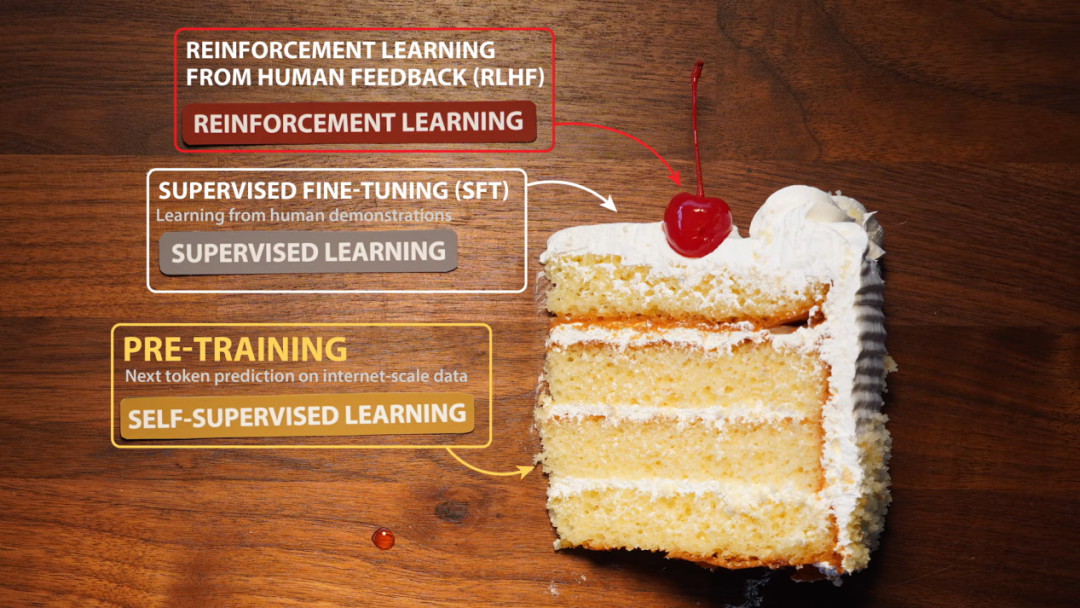
LLMs mimic training data stats via next-token prediction, failing global causal reasoning.
Why It Matters
LeCun's Meta-backed push challenges $trillion LLM scaling race, potentially redirecting research to unsupervised world models. Could accelerate embodied AI but risks splitting community efforts.
What To Do Next
Prototype V-JEPA in PyTorch for unsupervised video understanding on Kinetics dataset.
Who should care:Researchers & Academics
Key Points
- •LLMs mimic training data stats via next-token prediction, failing global causal reasoning.
- •JEPA encodes X/Y into embeddings, predicts in latent space to avoid pixel-level errors.
- •World models predict physical outcomes for planning, essential for AGI agents.
- •Solves representation collapse using Barlow Twins to diversify features.
🧠 Deep Insight
AI-generated analysis for this event.
🔑 Enhanced Key Takeaways
- •LeCun's JEPA architecture is specifically designed to overcome the 'curse of dimensionality' in video prediction by operating in latent space, which avoids the computational intractability of pixel-level generative modeling.
- •The transition from I-JEPA (Image) to V-JEPA (Video) represents a shift toward self-supervised learning that leverages temporal context without requiring human-labeled data, aiming to achieve human-level common sense physics.
- •Meta's research strategy positions JEPA as a foundational component for 'Agentic AI,' where the model acts as a world simulator allowing an agent to perform 'mental rehearsals' of actions before executing them in the real world.
📊 Competitor Analysis▸ Show
| Feature | JEPA (Meta) | Autoregressive LLMs (OpenAI/Google) | Diffusion Models (Stability/Runway) |
|---|---|---|---|
| Prediction Space | Latent (Abstract) | Token (Discrete) | Pixel/Latent (Generative) |
| Primary Goal | World Modeling/Planning | Text/Code Generation | Media Synthesis |
| Causal Reasoning | High (via latent dynamics) | Low (statistical mimicry) | Very Low |
| Computational Cost | Efficient (no decoding) | High (autoregressive loop) | High (iterative denoising) |
🛠️ Technical Deep Dive
- Architecture: Utilizes a Siamese network structure consisting of a context encoder and a predictor, where the predictor estimates the representation of a target block given a context block.
- Objective Function: Employs a non-generative loss function that minimizes the distance between the predicted latent representation and the actual target representation, bypassing pixel reconstruction.
- Regularization: Incorporates Barlow Twins or similar redundancy-reduction techniques to prevent representation collapse, ensuring the model learns informative, non-redundant features.
- Temporal Dynamics: V-JEPA extends this by predicting future latent states in video sequences, effectively learning a hierarchical representation of physical motion and object persistence.
🔮 Future ImplicationsAI analysis grounded in cited sources
JEPA-based models will achieve superior performance in robotics control compared to LLM-based planners.
By modeling physical dynamics in latent space, JEPA provides a more accurate internal simulation of cause-and-effect than token-based probability distributions.
The industry will see a divergence between 'Generative AI' for content and 'World Models' for autonomous agents.
The fundamental architectural trade-offs between high-fidelity generation and accurate physical prediction necessitate specialized model architectures for different use cases.
⏳ Timeline
2022-03
Yann LeCun publishes 'A Path Towards Autonomous Machine Intelligence' outlining the JEPA concept.
2023-01
Meta AI introduces I-JEPA (Image Joint-Embedding Predictive Architecture).
2024-02
Meta releases V-JEPA, extending the architecture to video and temporal understanding.
📰
Weekly AI Recap
Read this week's curated digest of top AI events →
👉Related Updates
AI-curated news aggregator. All content rights belong to original publishers.
Original source: 虎嗅 ↗