⚛️Stalecollected in 43m

Latency and fidelity in high-performance F1 simulators
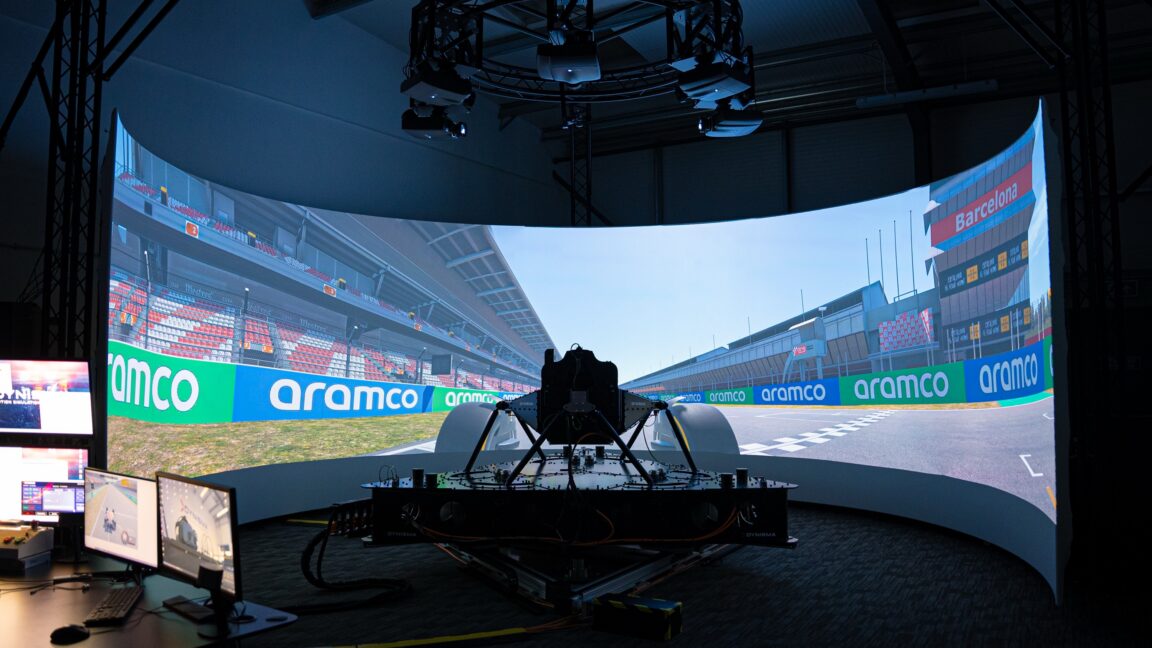
Latency and fidelity in high-performance F1 simulators
PostLinkedIn
⚛️Read original on Ars Technica

💡See how F1 teams solve extreme latency issues—lessons applicable to real-time AI and robotics.

⚡ 30-Second TL;DR

What Changed

Latency is the primary bottleneck for high-fidelity simulation environments

Why It Matters

Demonstrates the extreme requirements for real-time systems. AI developers working on robotics or real-time inference should study these optimization techniques.

What To Do Next

Profile your inference pipeline using tools like NVIDIA Nsight to identify and reduce micro-latency bottlenecks.

Who should care:Developers & AI Engineers

Key Points

  • Latency is the primary bottleneck for high-fidelity simulation environments
  • Bandwidth management is critical for real-time data synchronization
  • Fidelity requirements drive multi-million dollar infrastructure investments

🧠 Deep Insight

Web-grounded analysis with 29 cited sources.

🔑 Enhanced Key Takeaways

  • F1 simulators are not only for driver training but also serve as crucial engineering tools, enabling teams to virtually test new car components and setups, which significantly reduces development time and costs by minimizing the need for physical track testing.
  • The 'Driver-in-the-Loop' (DiL) simulation is fundamental, involving a human driver actively controlling the virtual car in real-time to provide subjective feedback essential for fine-tuning car behavior and race strategies, an aspect that purely computer-based simulations cannot fully replicate.
  • Cutting-edge motion platforms, such as those developed by Dynisma, achieve ultra-low latency of 3-4 milliseconds, a critical improvement over typical simulator latencies of 20-50ms, allowing drivers to perceive and react to subtle, high-frequency cues like the precise onset of oversteer.
  • F1 teams leverage highly accurate track models created through LiDAR scanning, which captures intricate details of circuits, including surface textures and kerbs, often in collaboration with specialized software providers like rFpro to ensure hyper-realistic visual fidelity.
  • Modern F1 cars are equipped with 250-300 sensors that generate over a terabyte of raw data per race weekend, transmitted to the pit wall and factory via a proprietary WiMax 802.16 network with European latency as low as 10-15ms, facilitating real-time strategic decisions and continuous car development.
📊 Competitor Analysis▸ Show
Company/TechnologyKey FeaturesLatencyMotion SystemPrice Range (Professional)
Dynisma (DMG-360XY, DMG-S)F1-grade, high-fidelity motion, compact DMG-S model, used by Alpine, Cadillac, Ferrari< 5ms (DMG-S), 3-4ms (DMG-1)Advanced motion generators, high motion bandwidth (50Hz for DMG-S)£1.9M - £2.9M (DMG-1), £123,090+ (F1 Authentics replicas)
SimCraft (APEX, GRID1)Center of Mass architecture, high cue fidelity, low response times, modular design, up to 6 DOFLow (claimed)Center of Mass motion systems$59,900 - $149,900 (APEX models)
Cool Performance (Formula Pro, GT Pro)Built by ex-F1/GT drivers, D-BOX FIA licensed motion, in-house components, VR compatibleNot specifiedD-BOX 3 or 6 DOF electro-mechanical actuatorsFrom £30,600 (Formula Pro), From £28,900 (GT Pro)
SimXperience (Stage 5, ESR-3)G-Seat for sustained body pressure, G-Belt tension system, SimVibe tactile feedbackNot specifiedG-Seat (6DOF motion feedback), Seat Mover (pivoting seat)Consumer grade up to tens of thousands, professional over $100K
Stewart Hexapod Platforms (General)Six actuators in triangular layout, 6 Degrees of Freedom (DOF)Often introduces mechanical coupling between axes, diminishing cue fidelityHexapod / Stewart PlatformsVaries widely, often used in high-end professional setups

🛠️ Technical Deep Dive

  • Motion Platforms:
    • F1 teams primarily use sophisticated motion platforms, often based on six degrees of freedom (6DOF) systems, to replicate car movements like heave, yaw, roll, and G-forces during cornering and braking.
    • Dynisma's motion generators are noted for achieving imperceptible latency of 3-4ms and a motion bandwidth of up to 50Hz, crucial for simulating high-frequency cues such as oversteer.
    • Two main types exist: Stewart Hexapod Platforms (using six actuators in a triangular layout) and Center of Mass Motion Systems (rotating the entire cockpit around its physical center of mass). Center of Mass systems are praised for preserving rotational integrity and high cue fidelity.
    • Motion systems can range from 2DOF (basic tilting) to 6DOF (simulating all aspects of motion), with 6DOF offering the highest realism for professional training.
  • Visual Systems:
    • High-resolution, multi-projector solutions are common, providing a seamless 180° or even 360° field of view for immersive peripheral vision.
    • Track environments are meticulously created using LiDAR scanning, which generates 3D maps capturing every detail of the circuit, including surface characteristics and kerbs.
    • Virtual Reality (VR) and Extended Reality (XR) headsets are increasingly compatible with simulators, offering alternative immersive visual experiences.
  • Data and Software:
    • Simulators integrate real-time telemetry from actual F1 cars, with top teams using 250-300 sensors sampling at up to 1,000 times per second on critical channels.
    • External simulation software like rFpro is used for highly realistic track environments, while games like Assetto Corsa, iRacing, and Le Mans Ultimate are also utilized, particularly for more accessible or secondary simulator rigs.
    • Computational Fluid Dynamics (CFD) is used in conjunction with simulators to test hundreds of aerodynamic configurations virtually.
  • Latency Management:
    • Beyond motion platform latency, display lag and network latency for telemetry are critical. F1's proprietary WiMax 802.16 network ensures low latency (10-15ms in Europe, 300-400ms for fly-away races) for real-time data transfer.
    • For online sim racing, a ping of less than 100ms is generally acceptable, though lower is preferred, and bandwidth requirements are surprisingly low as physics calculations are often distributed.
  • Haptic Feedback:
    • Authentic F1 steering wheels with force feedback, professional pedal sets, and active seatbelts that dynamically react to braking and turning forces enhance immersion.
    • Systems like VR-TractionLoss™ simulate loss of traction during acceleration or oversteer, while G-seats provide sustained body pressure feedback to mimic G-forces.

🔮 Future ImplicationsAI analysis grounded in cited sources

AI will enable near-perfect correlation between simulator and real-world car performance.
As AI and machine learning continue to advance, they will refine vehicle models and predict car behavior with such precision that simulated results will almost perfectly match actual track performance, further reducing the need for physical testing.
Virtual and Augmented Reality will become standard interfaces for both driver training and fan engagement.
The increasing sophistication of VR/AR technology will offer hyper-realistic immersive training for drivers and new, interactive viewing experiences for fans, with F1 teams already integrating VR and F1 exploring immersive VR apps.
High-fidelity simulator technology will become more widely accessible across various motorsport tiers and to advanced prosumers.
Companies are developing more compact and cost-effective versions of F1-grade simulators, democratizing access to advanced simulation benefits beyond top-tier teams.

Timeline

1974
Atari releases Gran Trak 10, one of the first car racing video games.
1982
Namco's Pole Position arcade game is released, noted for its 'unbelievable driving realism' and introduction of AI drivers and qualifying laps.
1992
MicroProse's Formula One Grand Prix (by Geoff Crammond) significantly advances sim racing with multiplayer capabilities and realistic physics like drafting.
2000s Early
McLaren is among the first F1 teams to adopt a Driver-in-the-Loop (DiL) simulator, gaining prominence after the 2009 ban on private track testing.
2008
iRacing is launched, marking a new era in sim racing with its focus on realistic online racing experiences.
2017
Dynisma Motion Generators (DMG) is founded by Ash Warne, becoming a key supplier of advanced DiL simulators to F1 teams.
📰

Weekly AI Recap

Read this week's curated digest of top AI events →

👉Related Updates

AI-curated news aggregator. All content rights belong to original publishers.
Original source: Ars Technica