Katalyst's Link spacecraft pursues NASA's Swift observatory
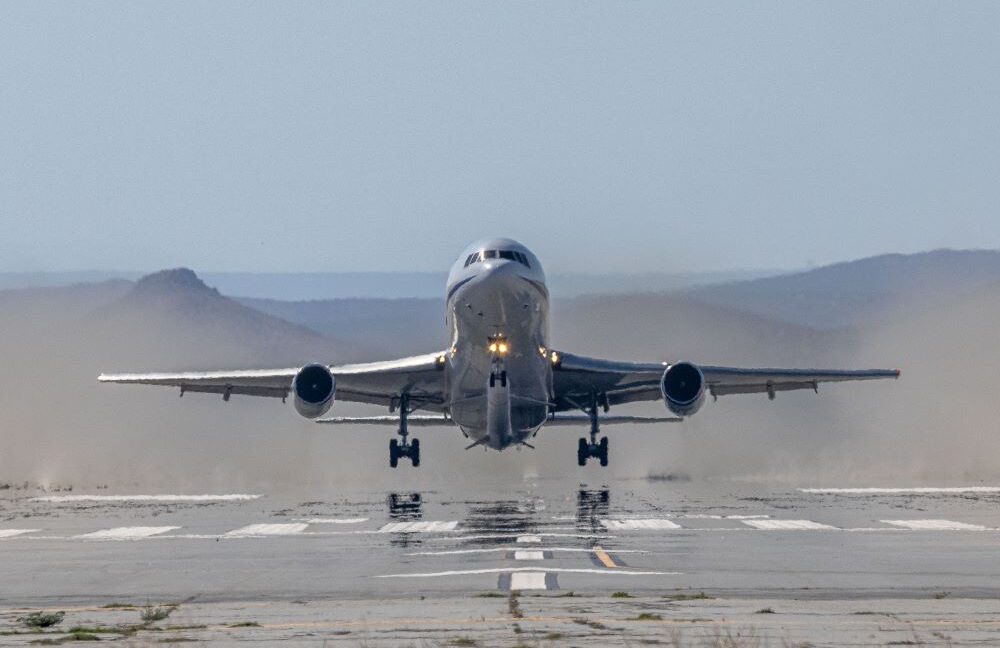
💡A critical test for autonomous orbital robotics and satellite servicing capabilities in space.
⚡ 30-Second TL;DR
What Changed
Katalyst launched a dedicated rescue mission for NASA's Swift observatory.
Why It Matters
This mission highlights the growing importance of autonomous orbital maneuvering and robotic servicing in space infrastructure maintenance.
What To Do Next
Monitor the mission's progress to understand the application of autonomous navigation algorithms in real-world orbital robotics.
Key Points
- •Katalyst launched a dedicated rescue mission for NASA's Swift observatory.
- •The Link spacecraft is currently navigating toward the target satellite.
- •The rendezvous operation is scheduled to span several weeks.
🧠 Deep Insight
AI-generated analysis for this event — not the original article.
🔑 Enhanced Key Takeaways
- •The Swift observatory, officially known as the Neil Gehrels Swift Observatory, has been operational since 2004 and was facing potential decommissioning due to orbital decay.
- •Katalyst's Link spacecraft utilizes a proprietary autonomous proximity operations (APO) system designed to dock with non-cooperative targets that lack standard docking interfaces.
- •This mission is part of a broader NASA initiative to explore commercial partnerships for satellite life-extension and debris mitigation services.
- •The Link spacecraft is equipped with advanced LIDAR and computer vision sensors to safely approach the aging Swift observatory without causing structural damage.
- •The mission aims to perform a 'reboost' maneuver, which will raise Swift's orbit to extend its scientific mission life by an estimated five to seven years.
📊 Competitor Analysis▸ Show
| Feature | Katalyst Link | Astroscale ELSA-M | Northrop Grumman MRV |
|---|---|---|---|
| Primary Focus | Life Extension | Debris Removal | Life Extension/Servicing |
| Docking Method | Autonomous Non-Cooperative | Magnetic Capture | Robotic Arm/Docking Port |
| Target Type | Scientific Observatories | Spent Rocket Bodies | Geostationary Satellites |
🛠️ Technical Deep Dive
- Propulsion: The Link spacecraft utilizes a high-efficiency electric propulsion system for long-duration orbital maneuvering.
- Navigation: Employs a multi-modal sensor suite including long-range optical cameras and short-range scanning LIDAR for precise relative navigation.
- Autonomy: Features an onboard AI-driven guidance, navigation, and control (GNC) system capable of real-time trajectory adjustment without ground-link latency.
- Docking Interface: Uses a universal capture mechanism designed to interface with the launch adapter ring of the target satellite.
🔮 Future ImplicationsAI analysis grounded in cited sources
⏳ Timeline
Weekly AI Recap
Read this week's curated digest of top AI events →
👉Related Updates

AI-curated news aggregator. All content rights belong to original publishers.
Original source: Ars Technica ↗
This is a summary, not the original. Read the source, or get the weekly briefing.
Weekly AI briefing
One email a week. Unsubscribe anytime.