Karpathy's LLM Wiki Organizes Notes into AI Knowledge
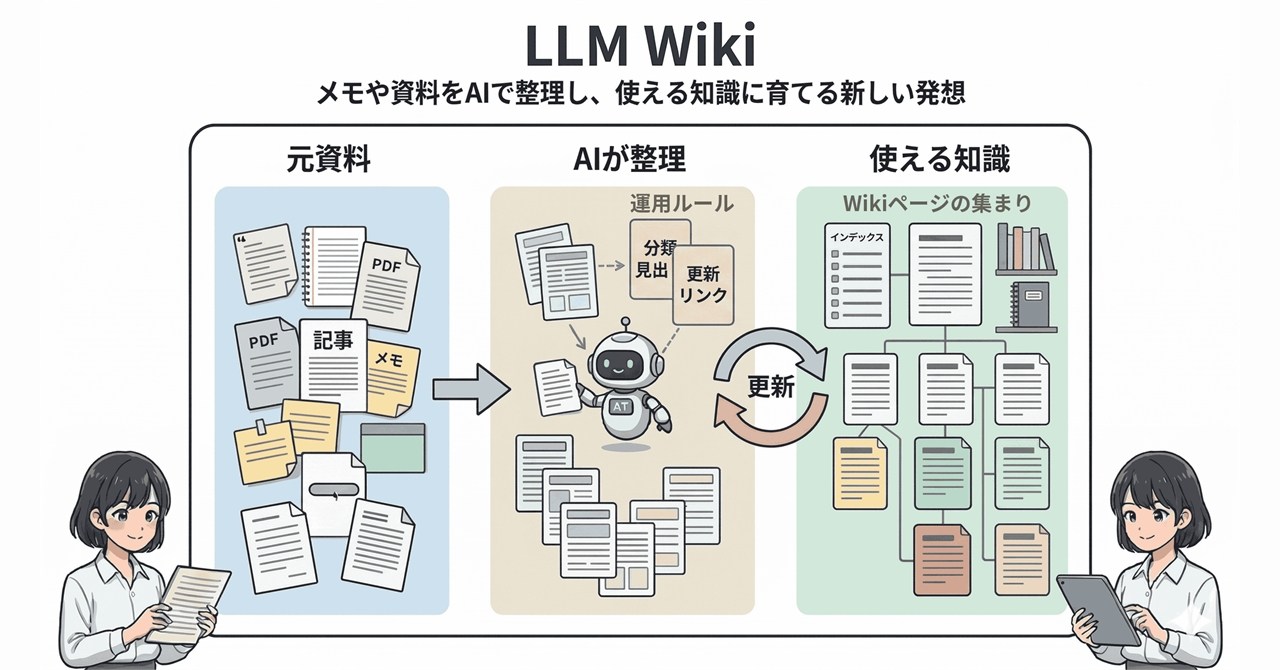
💡Karpathy's 5k-star LLM Wiki: AI turns notes into knowledge base, unlike RAG (explore tools now)
⚡ 30-Second TL;DR
What Changed
Proposed by AI expert Karpathy with 5k+ GitHub stars
Why It Matters
LLM Wiki offers a novel approach to personal knowledge management, potentially boosting productivity for AI devs handling scattered notes. It challenges RAG paradigms, fostering community-driven innovations in LLM apps.
What To Do Next
Clone Karpathy's LLM Wiki GitHub repo and test organizing your research notes into a personal wiki.
Key Points
- •Proposed by AI expert Karpathy with 5k+ GitHub stars
- •Uses AI to transform raw notes/docs into structured wiki knowledge
- •Explains key differences from RAG retrieval methods
- •Provides tools and community resources to get started
🧠 Deep Insight
AI-generated analysis for this event — not the original article.
🔑 Enhanced Key Takeaways
- •The 'LLM Wiki' concept is heavily influenced by Andrej Karpathy's 'Llama2.c' and 'minGPT' philosophy, emphasizing local, lightweight, and transparent implementations of LLM-based knowledge management rather than relying on massive, opaque cloud-based SaaS platforms.
- •Unlike standard RAG (Retrieval-Augmented Generation) which performs real-time vector similarity search on raw chunks, the LLM Wiki approach focuses on an 'indexing-as-synthesis' pipeline that uses LLMs to rewrite, interlink, and structure raw notes into a coherent graph-based knowledge base before query time.
- •The project leverages local embedding models (such as those from the Hugging Face ecosystem) and local vector databases (like ChromaDB or FAISS) to ensure data privacy, allowing users to maintain a 'second brain' entirely offline.
📊 Competitor Analysis▸ Show
| Feature | LLM Wiki (Karpathy-inspired) | Obsidian (with Smart Connections) | Notion AI |
|---|---|---|---|
| Architecture | Local-first, Graph-based | Local-first, Plugin-based | Cloud-native, SaaS |
| Pricing | Open Source (Free) | Freemium (Plugin costs vary) | Subscription |
| Benchmarks | High transparency/Privacy | High extensibility | High ease-of-use |
🛠️ Technical Deep Dive
- Pipeline Architecture: Utilizes a multi-stage pipeline: (1) Ingestion of markdown/text files, (2) Semantic chunking with overlap, (3) LLM-driven summarization and entity extraction, (4) Vector embedding generation, and (5) Graph construction for inter-document linking.
- Embedding Models: Typically defaults to sentence-transformers (e.g., all-MiniLM-L6-v2) for local execution.
- Knowledge Graph Integration: Uses LLMs to identify relationships between entities across disparate notes, creating a structured JSON or graph database format (e.g., Neo4j or simple adjacency lists) to improve retrieval context beyond simple vector similarity.
- Context Window Management: Implements recursive summarization to fit large note collections into the context window of smaller, local LLMs (e.g., Llama 3 or Mistral variants).
🔮 Future ImplicationsAI analysis grounded in cited sources
⏳ Timeline
Weekly AI Recap
Read this week's curated digest of top AI events →
👉Related Updates
AI-curated news aggregator. All content rights belong to original publishers.
Original source: ITmedia AI+ (日本) ↗
This is a summary, not the original. Read the source, or get the weekly briefing.
The weekly digest
One email a week. Unsubscribe anytime.