Jim Keller: AI Still Follows Old Performance Laws
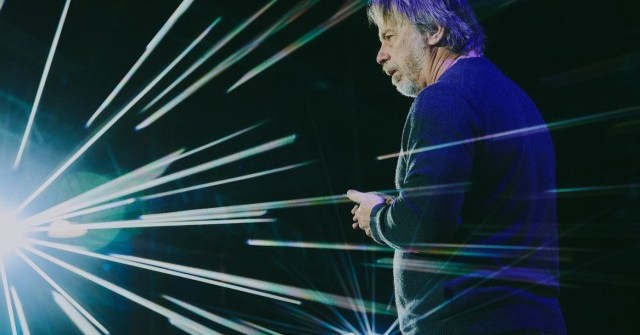
💡Industry legend Jim Keller shares his take on AI hardware scaling laws and Tenstorrent's competitive strategy.
⚡ 30-Second TL;DR
What Changed
Tenstorrent is showcasing the performance of its 'Galaxy' AI server platform.
Why It Matters
This perspective challenges the hype around 'new' AI physics, suggesting that infrastructure builders should focus on fundamental architectural efficiency rather than chasing speculative scaling trends.
What To Do Next
Evaluate Tenstorrent's hardware roadmap if you are building large-scale AI clusters and looking for alternatives to traditional GPU-centric architectures.
Key Points
- •Tenstorrent is showcasing the performance of its 'Galaxy' AI server platform.
- •CEO Jim Keller argues that AI hardware scaling still adheres to established performance laws.
- •The company is positioning itself to compete in the high-performance AI infrastructure market.
🧠 Deep Insight
AI-generated analysis for this event — not the original article.
🔑 Enhanced Key Takeaways
- •Tenstorrent's Galaxy server utilizes the Wormhole N300 AI accelerator cards, which are designed to be modular and scalable for large-scale AI training and inference clusters.
- •Jim Keller advocates for a 'RISC-V first' architecture, positioning Tenstorrent's hardware as an open-standard alternative to the proprietary CUDA ecosystem dominated by NVIDIA.
- •The Galaxy system architecture emphasizes high-bandwidth, low-latency interconnects that allow for disaggregated compute, enabling users to scale memory and compute resources independently.
- •Tenstorrent has been actively pursuing a business model that includes selling both physical hardware and intellectual property (IP) licenses for their AI chip designs to other silicon manufacturers.
- •Keller's 'performance laws' argument centers on the belief that AI compute efficiency is ultimately bound by power delivery, thermal management, and data movement bottlenecks rather than just transistor density.
📊 Competitor Analysis▸ Show
| Feature | Tenstorrent Galaxy | NVIDIA HGX H100/B200 | AMD Instinct MI300X |
|---|---|---|---|
| Architecture | RISC-V / Chiplet | Hopper/Blackwell (Proprietary) | CDNA 3 |
| Interconnect | Proprietary/Ethernet-based | NVLink / NVSwitch | Infinity Fabric |
| Software Stack | TT-Metalium | CUDA | ROCm |
| Primary Focus | Scalability/Open Standards | Ecosystem/Performance | Memory Capacity/Bandwidth |
🛠️ Technical Deep Dive
- Galaxy Server utilizes the Wormhole N300 chip, which features a 2D torus network-on-chip (NoC) architecture.
- The system supports a disaggregated design where AI compute nodes are separated from host CPUs, connected via high-speed Ethernet or PCIe.
- Tenstorrent's software stack, TT-Metalium, provides low-level control over the hardware, allowing developers to manage data movement and compute scheduling explicitly.
- The architecture leverages a heterogeneous mix of RISC-V cores for control and specialized Tensix cores for matrix multiplication and vector operations.
🔮 Future ImplicationsAI analysis grounded in cited sources
⏳ Timeline
Weekly AI Recap
Read this week's curated digest of top AI events →
👉Related Updates
AI-curated news aggregator. All content rights belong to original publishers.
Original source: ITmedia AI+ (日本) ↗
This is a summary, not the original. Read the source, or get the weekly briefing.
Weekly AI briefing
One email a week. Unsubscribe anytime.