Jaguar Land Rover Ends Domestic Production in China
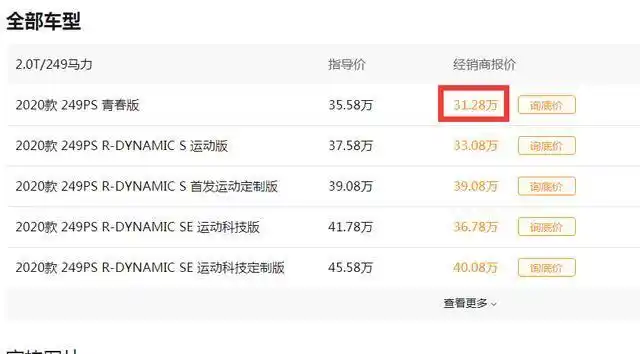
💡A classic case study on why global luxury brands fail in China when they ignore local tech trends and electrification.
⚡ 30-Second TL;DR
What Changed
All domestic production at the Changshu plant has ceased, with the facility now functioning as a contract manufacturer.
Why It Matters
This exit highlights the critical importance of local R&D and rapid electrification for foreign luxury brands operating in the highly competitive Chinese EV market.
What To Do Next
For global companies entering China, ensure local autonomy in product R&D to match the rapid pace of local tech innovation.
Key Points
- •All domestic production at the Changshu plant has ceased, with the facility now functioning as a contract manufacturer.
- •The brand failed to adapt to the Chinese market's demand for high-end EVs and smart cockpits, relying on outdated fuel-based architectures.
- •Forced bundling of profitable imported models with loss-making domestic models caused severe friction and financial losses for dealers.
🧠 Deep Insight
AI-generated analysis for this event — not the original article.
🔑 Enhanced Key Takeaways
- •The Changshu plant, a joint venture between JLR and Chery Automobile, will pivot to producing vehicles for Chery's own sub-brands and potentially other partners under a contract manufacturing model.
- •JLR's market share in China plummeted to below 1% in the luxury segment by early 2026, down from a peak of nearly 3% during the mid-2010s.
- •The 'forced bundling' policy mentioned was part of a controversial 'sales target' system that required dealers to accept inventory of slow-selling domestic models to gain access to high-margin imported Range Rover units.
- •Internal reports indicate that JLR's 'Reimagine' strategy, which prioritizes electrification, faced significant delays in China due to the inability to integrate local software stacks like Huawei or Baidu into their legacy vehicle architectures.
- •The cessation of domestic production follows a series of high-level executive turnovers in the JLR China division, with three different CEOs leading the region between 2022 and 2026.
📊 Competitor Analysis▸ Show
| Feature | Jaguar Land Rover (Legacy) | BMW (China JV) | NIO |
|---|---|---|---|
| Primary Powertrain | ICE / Mild Hybrid | ICE / PHEV / BEV | BEV Only |
| Smart Cockpit | Proprietary (Legacy) | iDrive (Localized) | NOMI AI / Localized |
| Localization | Low (Limited R&D) | High (Full R&D) | Native (Full R&D) |
| Market Positioning | Premium/Niche | Mass Premium | Tech-Luxury |
🛠️ Technical Deep Dive
- JLR's domestic Chinese lineup relied heavily on the PTA (Premium Transverse Architecture) and D7a platforms, which were not optimized for the high-voltage battery requirements of modern Chinese NEV (New Energy Vehicle) standards.
- The lack of a localized 'Electronic Architecture' (E/E) prevented the implementation of OTA (Over-the-Air) updates at the frequency expected by Chinese consumers.
- The infotainment systems utilized in the Changshu-produced models lacked integration with the Chinese digital ecosystem, specifically missing native support for WeChat, Tencent Maps, and high-level autonomous driving stacks common in domestic competitors.
🔮 Future ImplicationsAI analysis grounded in cited sources
⏳ Timeline
Weekly AI Recap
Read this week's curated digest of top AI events →
👉Related Updates

AI-curated news aggregator. All content rights belong to original publishers.
Original source: 虎嗅 ↗
This is a summary, not the original. Read the source, or get the weekly briefing.
Weekly AI briefing
One email a week. Unsubscribe anytime.